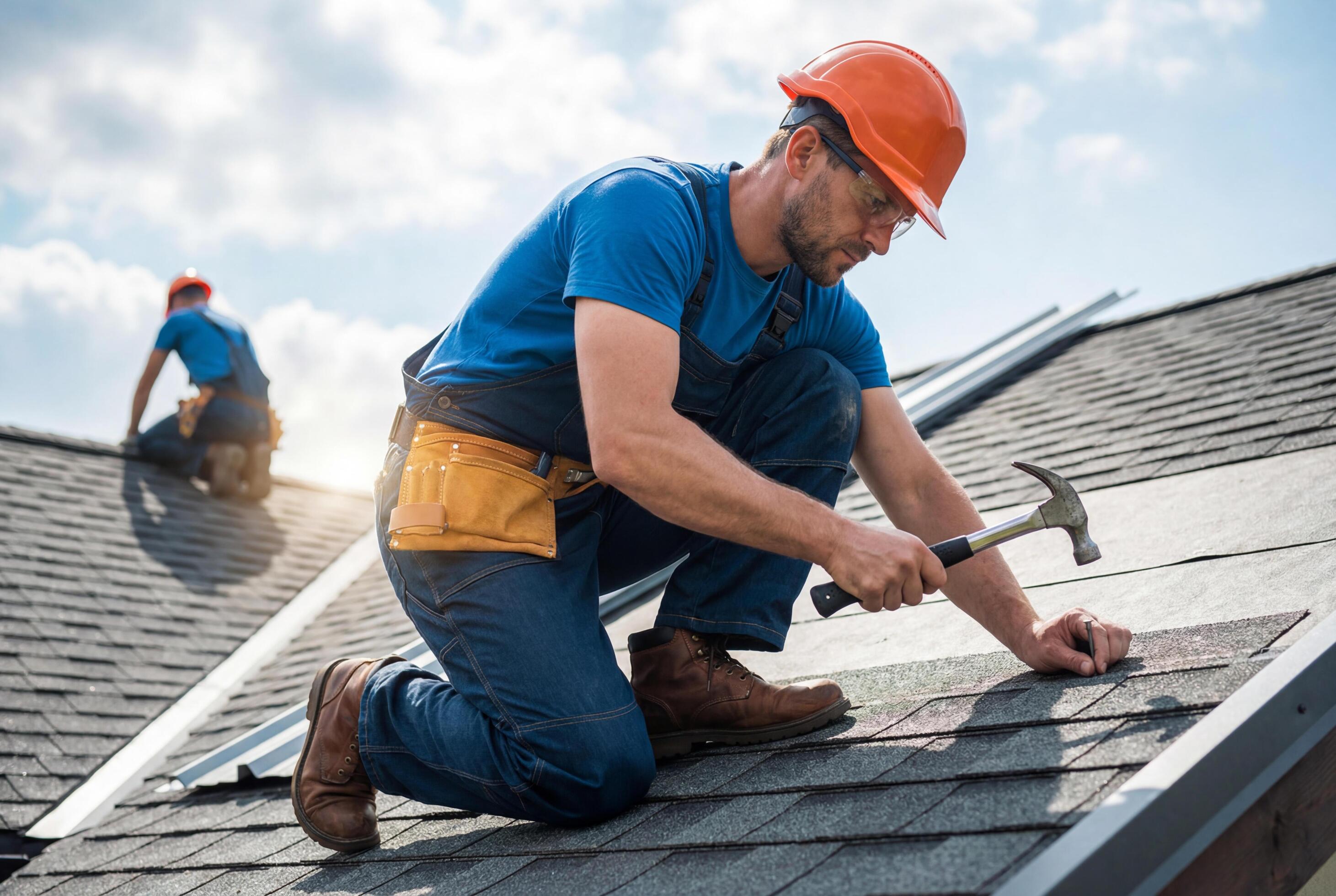
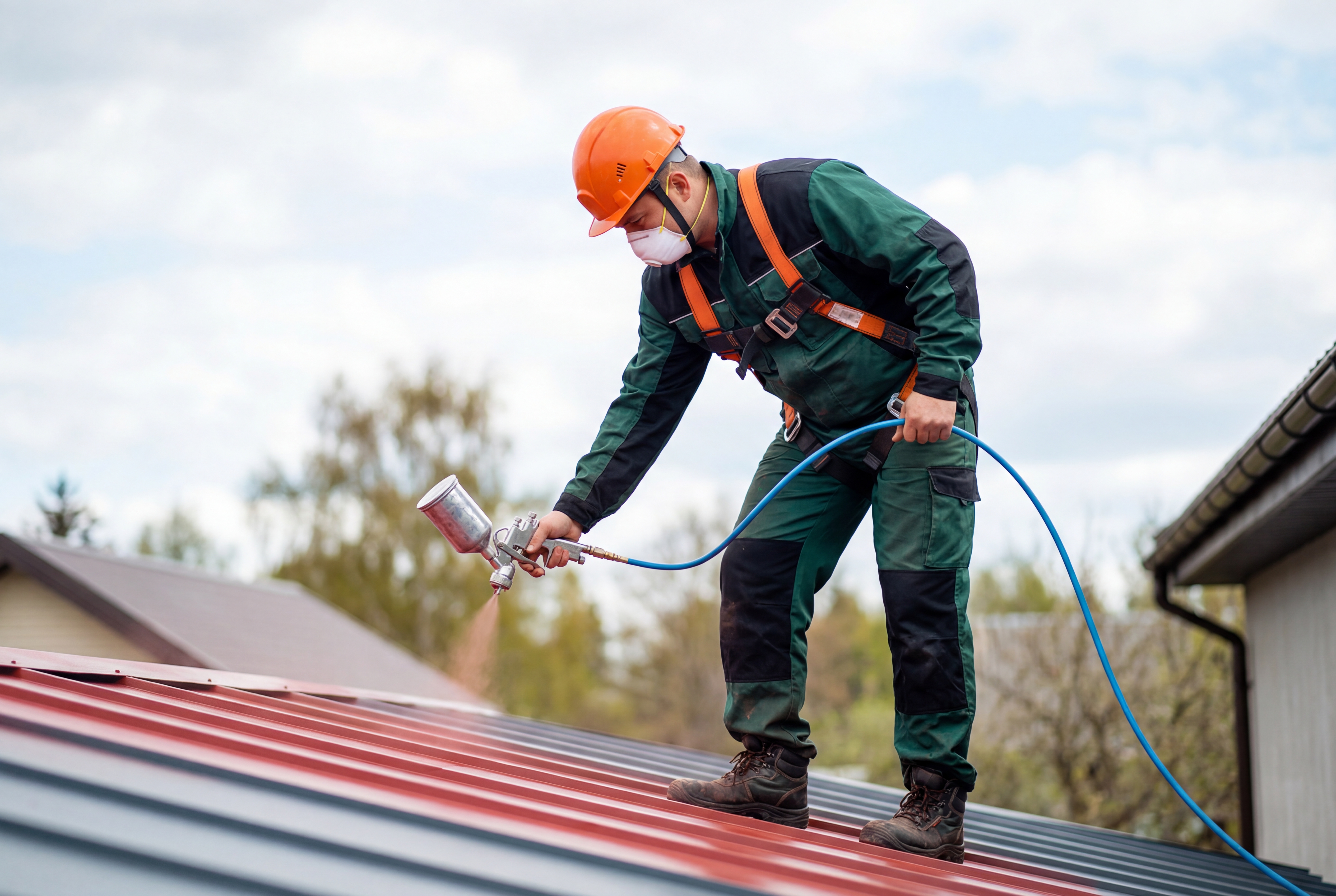
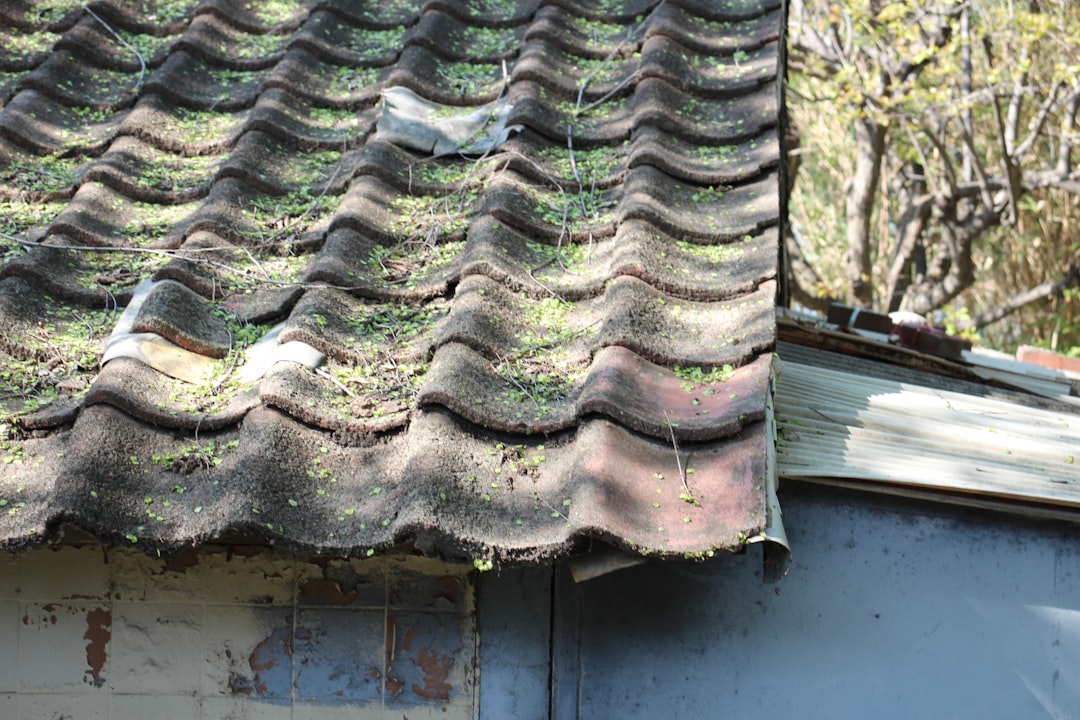
Water coming into the house through the roof puts you inside a narrow and specific window for getting it dry. Wet building materials dried within 24 to 48 hours usually do not grow mold, and the US Environmental Protection Agency and FEMA both draw the line at that interval. Past that point the same agencies send you their remediation guidelines. The Florida Department of Financial Services puts it plainly, your insurance contract requires temporary repairs immediately to prevent further damage. At PRG Roofing & Construction Inc. in Fort Myers, our crew works the emergency visit inside that window.
What To Do Before Anyone Gets On The Roof
Take pictures of the damage from inside before anything gets moved. The Florida Department of Financial Services asks you to photograph the damage, keep every receipt for emergency repair materials, and hold damaged property until your insurance company has inspected it. Then move what you can out from under the drip, and set a container under the active flow. Wet ceiling drywall gets heavy fast. When you call, tell our crew where the water is showing and how long it has been running, because that sets the size of the covering we load. Leave the roof itself to our crew, and keep the ladder in the garage until we arrive.
The First Hours After The Call
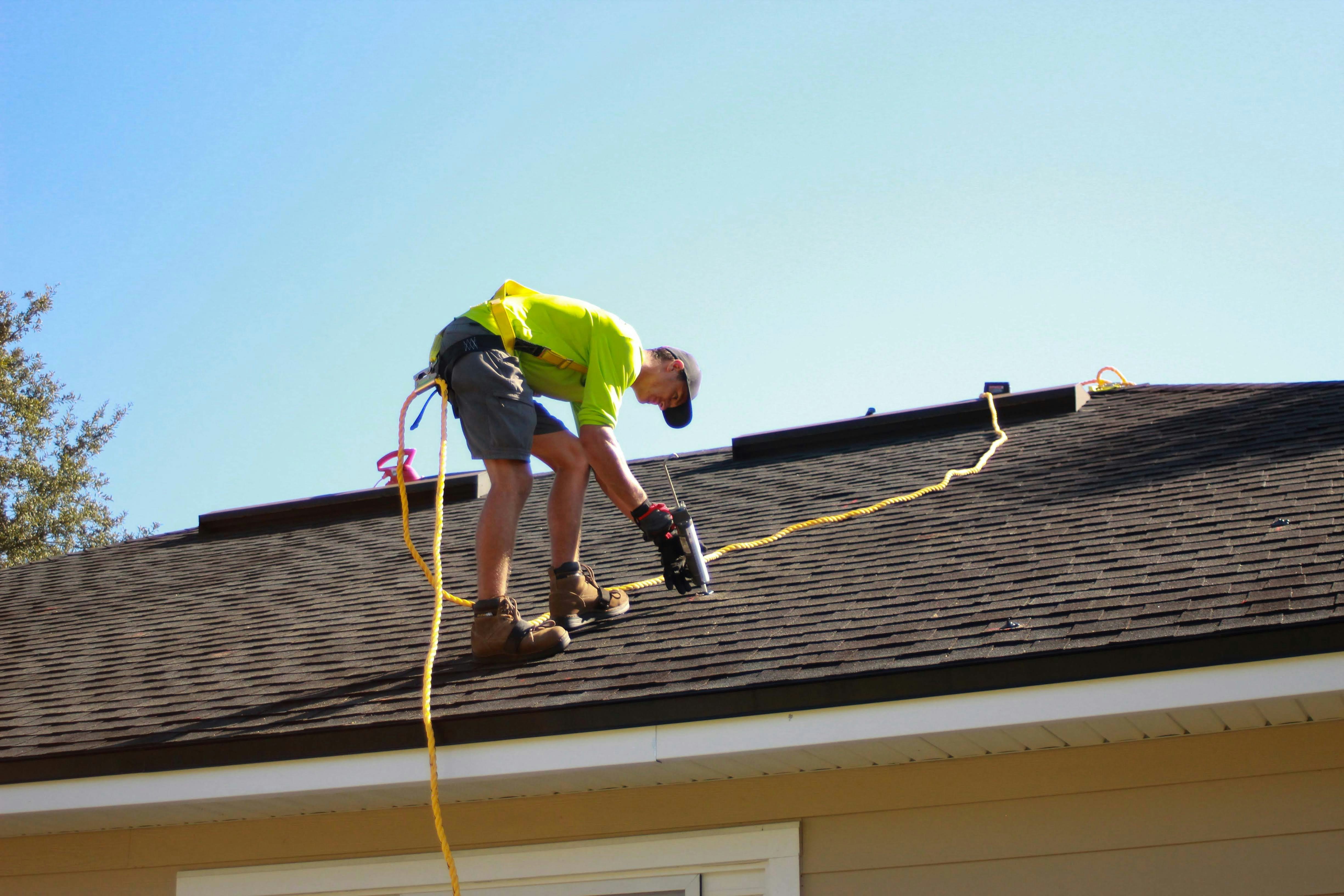
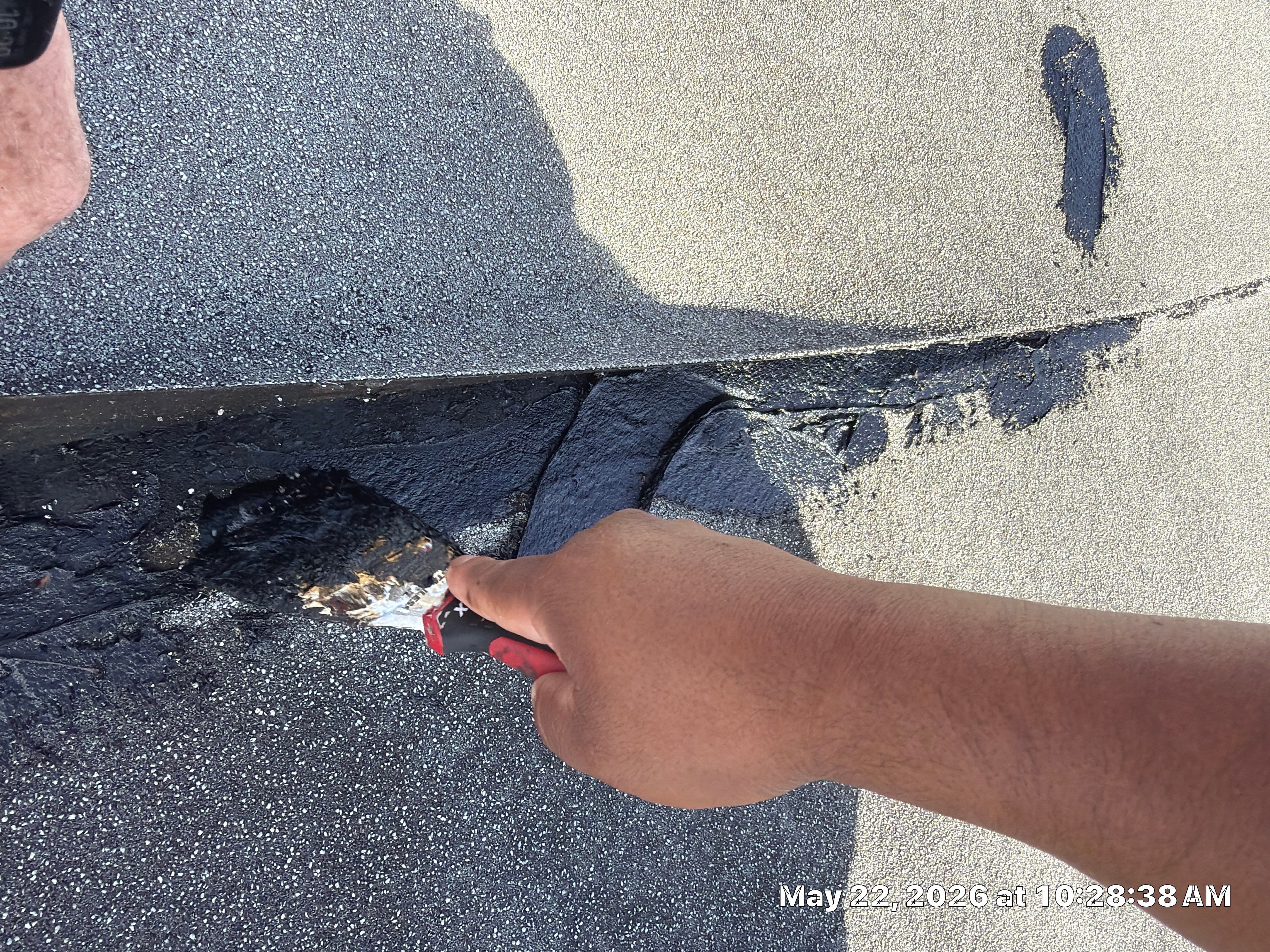
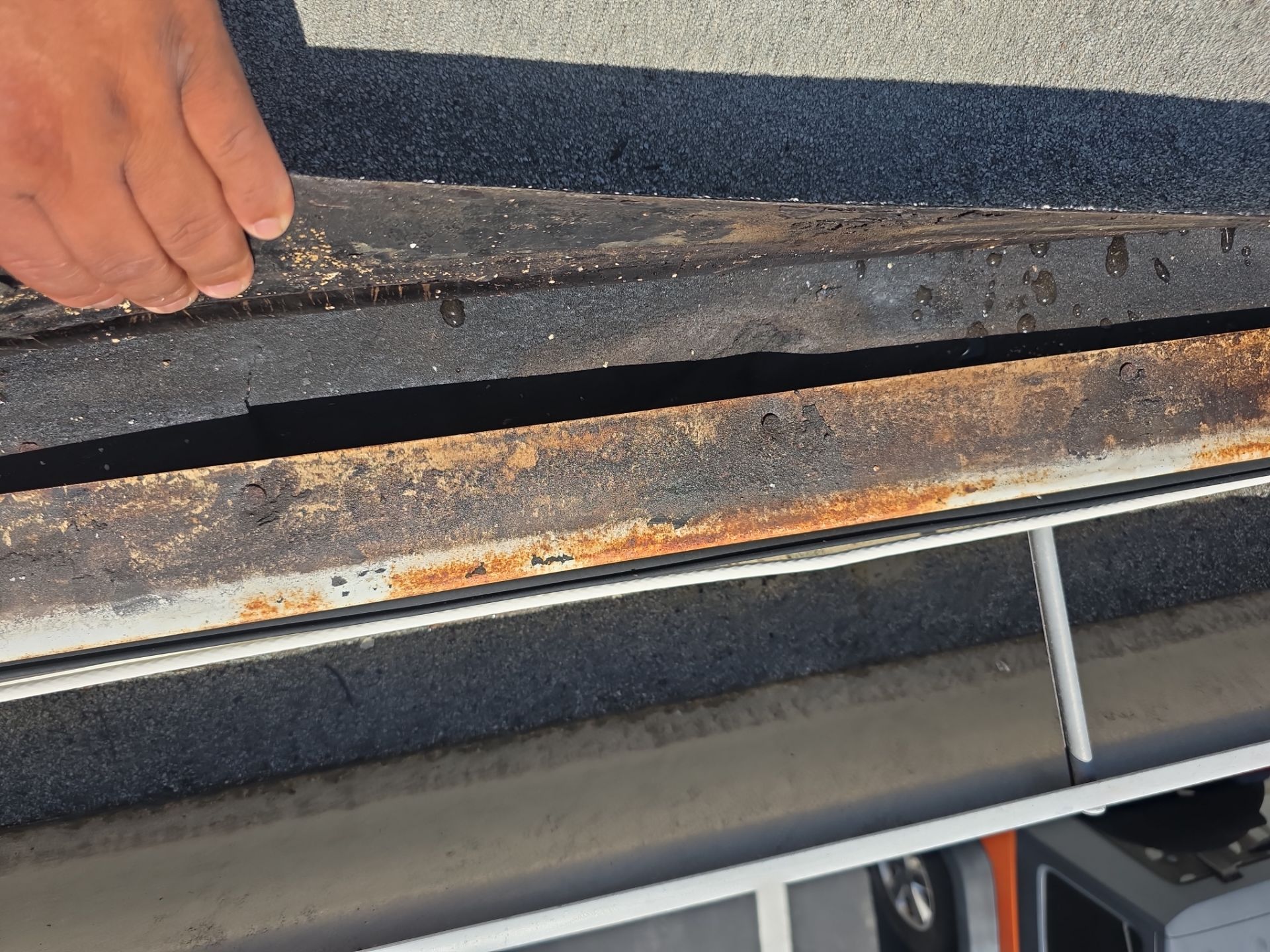
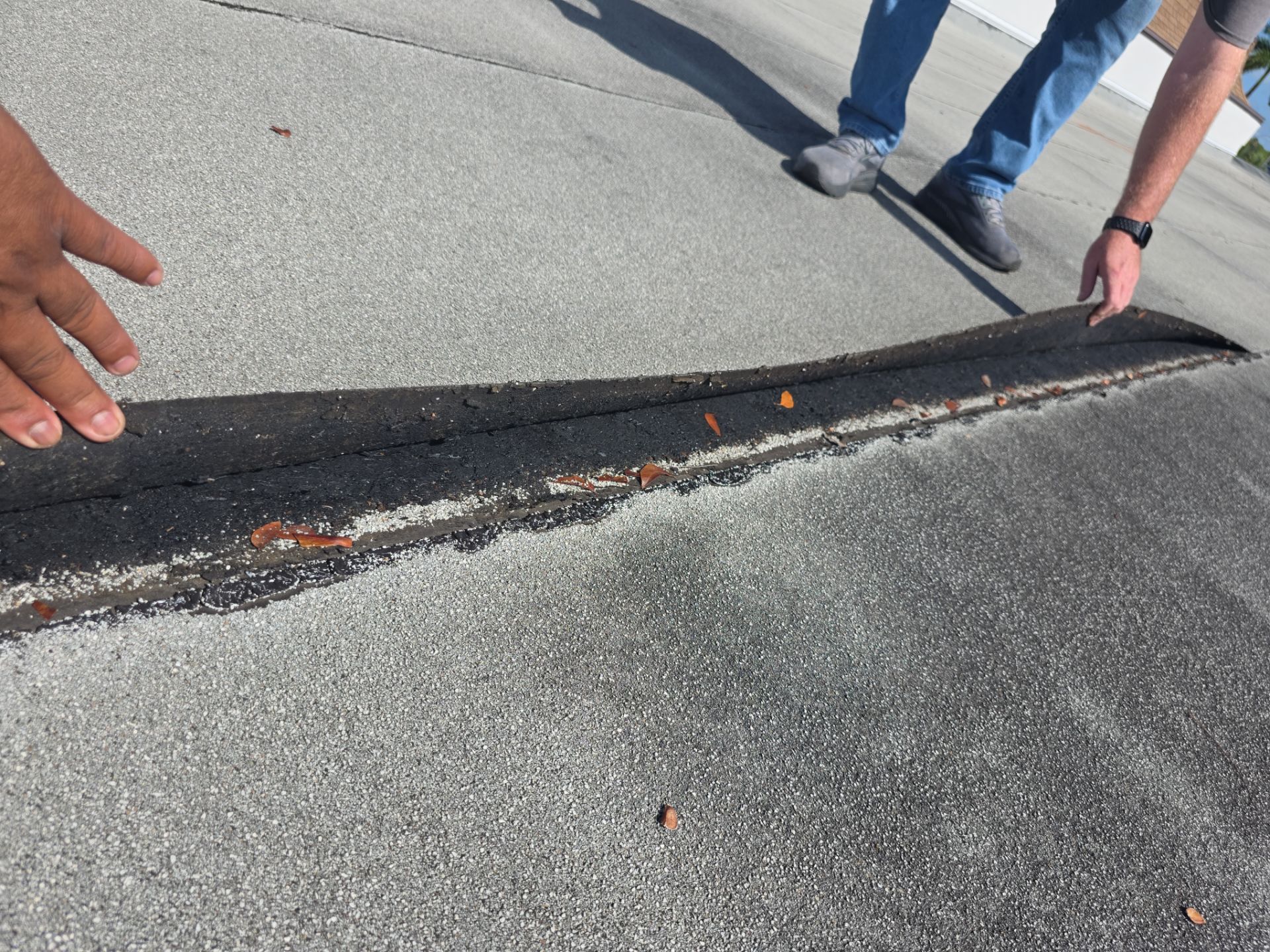
Our crew photographs the interior first, then goes up and shoots the same failure from the roof side, so both sets of photos carry the same date. We trace the entry point before any covering goes down. The covering is fastened into sound material, and the finished section is photographed with the time stamp attached before anyone comes off the roof. Those images go into your file alongside the scope we write.
The Paper Facing On Your Ceiling Board
Our crew notes the board condition from the attic side while the covering is still open, because that is the only look anyone gets at it dry. Standard ceiling drywall carries a paper facing on both sides, and that paper is organic material mold feeds on. Board that has not swelled and still has intact seams can be dried in place, and swollen or contaminated board needs to get replaced. Wet insulation above that board does not insulate the way dry insulation does. If flooding or a major water intrusion soaked the house and it could not be dried inside that window, the guidance is to assume mold is present, and to discard porous items like insulation that could not be cleaned and dried in time.
Your Attic Sits Outside The Air Conditioner's Reach
In a Florida home your air conditioner does most of the moisture removal, and it works on conditioned space only. Water sitting above the ceiling in an unconditioned attic gets none of that help. In a vented attic, which most Florida homes have, the attic air is essentially outdoor air. The federal climate map puts Lee County in the hot humid zone, so the outdoor air works against the drying through most of the year. Mold grows best above 60% relative humidity, and health agencies ask you to hold indoor humidity under 50% to 60%. Those numbers are hard to hold above a ceiling, so drying that space depends on stopping the water above it first.
What You Get From Our Tarping The Roof
The tarp buys you time, and we plan the permanent repair inside it. A sealed roof deck under the covering limits how much water reaches the house when a covering comes off, and our crew notes the condition of that layer while the section is open. Damp indoor rooms are linked to stuffy nose, coughing and wheezing, and stronger reactions in people with asthma or a mold allergy, so the drying and the repair belong on one schedule. You end the visit holding dated interior images, roof side images, the covered section, and a written scope for the permanent work. Our estimate for the permanent work is built on those same pages.
Call Us Before The Drying Window Closes
Every step of the emergency visit is built to land inside the drying window. Our crew documents the condition, gets the opening closed, and photographs the finished work. The covering can go on before the adjuster arrives, which is the temporary repair your policy requires. Call PRG Roofing & Construction Inc. in Fort Myers at (239) 237-2906.