A lot of our older patients call it “the wobbles.” Get up from the recliner and you have to wait a beat before walking. Spin around too fast at the stove and your hand shoots out for the counter. Then there’s the big-box store on a Saturday, with carts zipping past and the overhead lights, and you’re ready to leave your cart in aisle nine and head for the car. Weak legs might be part of it. They usually aren’t the whole story. The inner ear tends to play a bigger part than people realize, and vestibular physical therapy is how we work on it here in Ocotillo.
What the Inner Ear Does for Balance
Your ear does two jobs. One is hearing. The other happens in three tiny loops filled with fluid, way down inside. When your head moves, the fluid moves, and nerves report it. Your brain mixes that report with what your eyes see and what your feet feel. That’s balance. Like hearing, the loops get less sharp after sixty or seventy. An ear infection years ago can leave one side weaker. So can some medicines. Then the two ears disagree, and you feel it.
Signs Your Balance System Needs Some Help
Everyone’s a little different, but these are common:
- Looking up to grab the vase on the top shelf makes the room tilt for a second.
- After an hour at the mall, you’re wiped out and a little queasy.
- You keep a hand on the shower wall when you rinse shampoo out with your eyes closed.
- Grass bothers you. So do gravel and that bumpy brick patio at your daughter’s place.
- You’ve had a fall, or a few close calls.
How Vestibular Therapy Helps
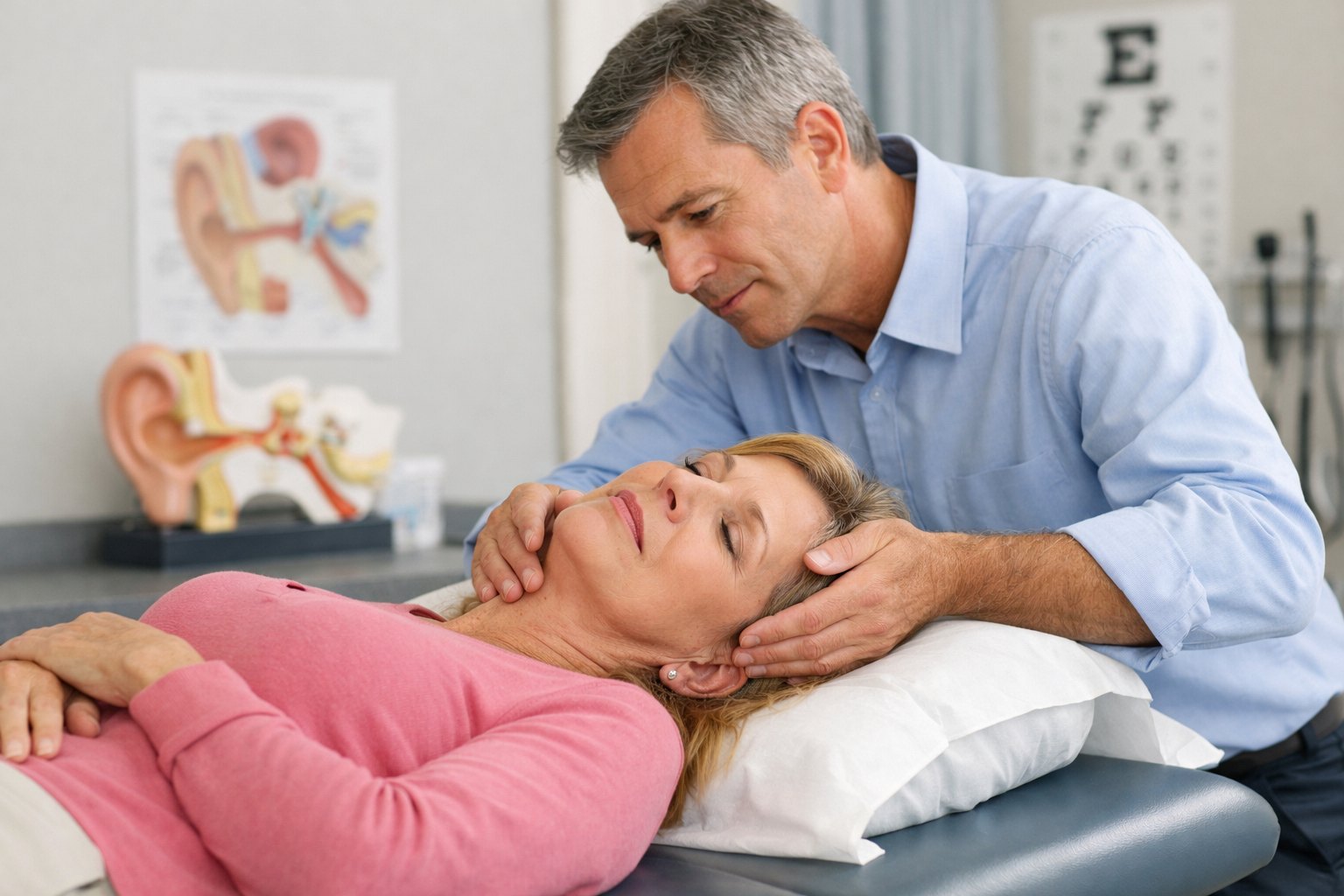
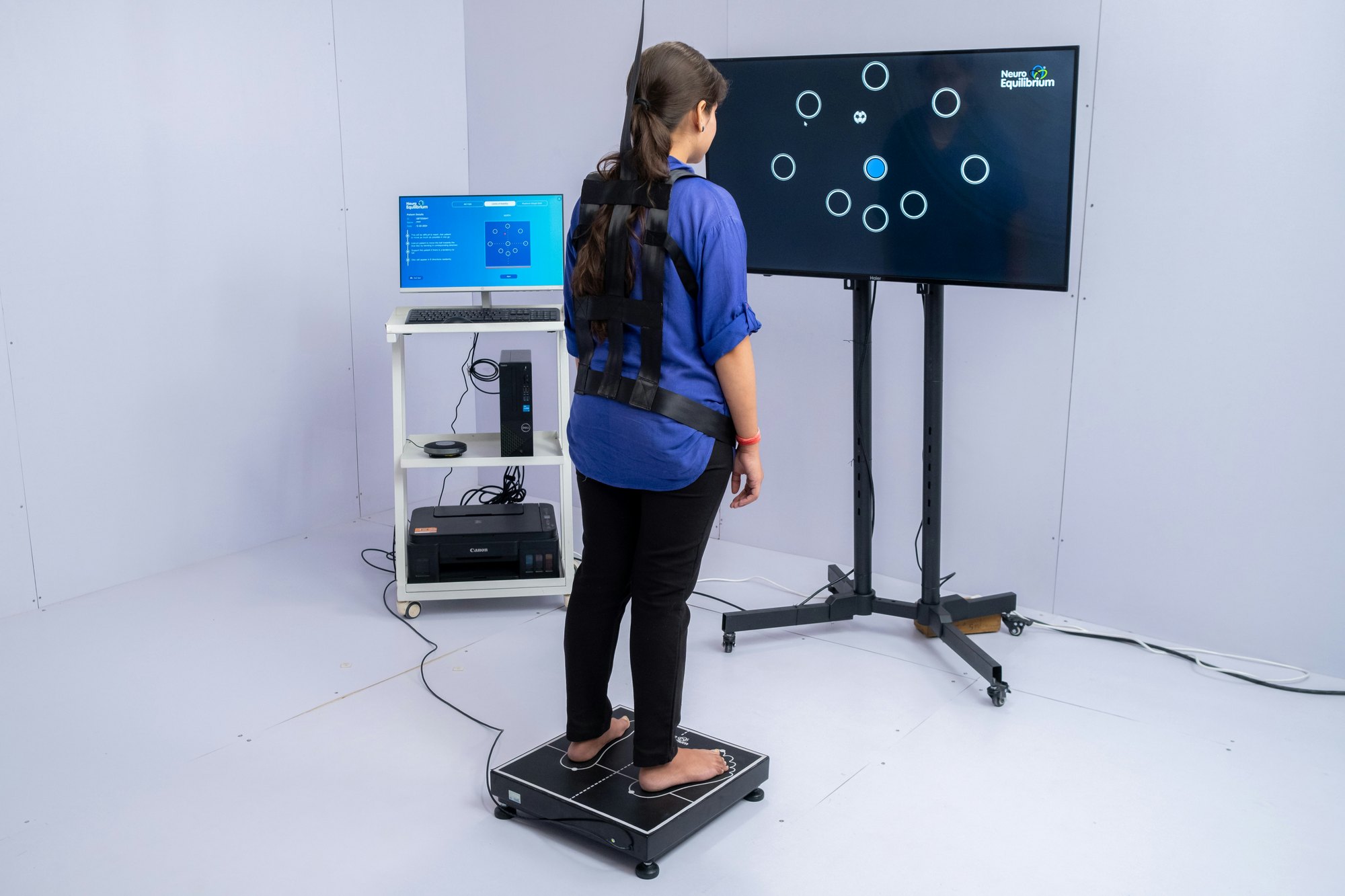
The brain can learn to work with what the inner ear is sending, even later in life. That’s the idea behind vestibular physical therapy. We start by testing your balance in different ways, checking how your eyes move when your head turns, and seeing which movements bring on that off feeling. If loose crystals in the ear are part of the problem, we can often move them back with a few head positions.
Then you’ll practice. Some exercises have you keep your eyes on a target while turning your head. Others work on standing balance, first with your eyes open, then closed, then on a foam pad. There are hallway walks with sudden turns. There’s a pool noodle on the floor to step over. Sit-to-stands build the thigh muscles that catch you when you trip. Afterward, you might feel a little off until lunch. That queasy feeling means the brain is relearning. And yes, we’ll bring up the throw rug in the hall, plus night lights and a grab bar by the tub.
Give it a month or two of practice. Most people tell us somewhere in there that they’ve stopped thinking about every step. Homework is short, maybe ten minutes at the kitchen counter, and it matters more than the clinic visits.
If you or someone you love has been feeling wobbly, call Modern Medicine of Sun Lakes, AZ, and ask about vestibular physical therapy.