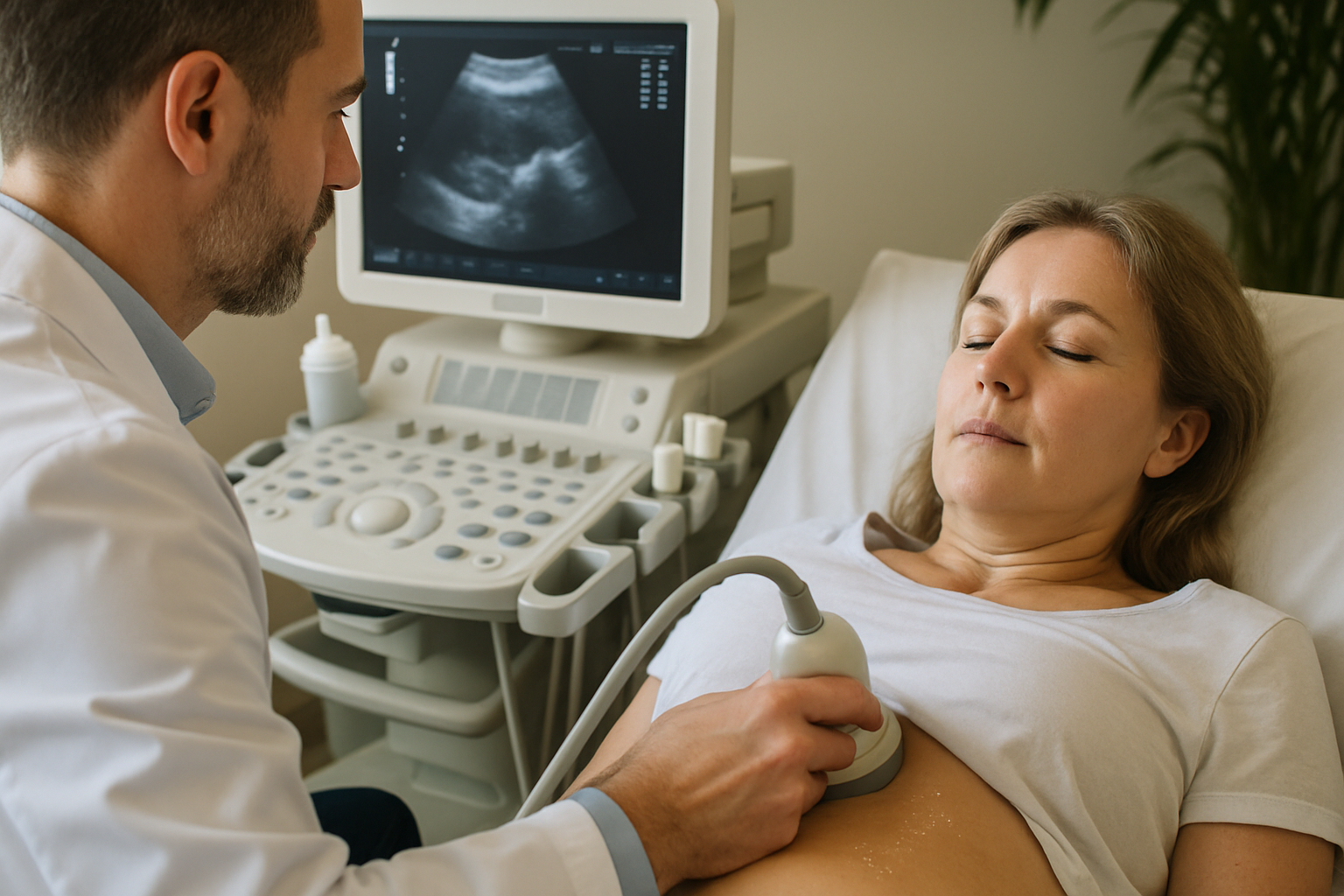
Most people don’t think about the bill until the scan is already ordered. Your shoulder has ached since you started pickleball at the rec center, or your knee swelled up after a long walk in Madera Canyon, and the doctor says you need imaging. Then come the questions. Is insurance going to cover it? Do you need approval first? For a lot of joint problems, an ultrasound done right in our office can answer the question for less money and less waiting.
How the Two Compare
People ask us this all the time, so here’s the quick version:
- Ultrasound can happen the same morning you come in. With an MRI, you usually get a phone call a week later to set it up somewhere else.
- Your share of the bill is usually lower with ultrasound. It still depends on your insurance, so ask.
- A lot of plans make the doctor’s office get permission before they’ll pay for an MRI. That paperwork alone can hold things up.
- For the ultrasound, you just sit on our table with your sleeve rolled up. For an MRI you lie flat in a narrow tube for a while, and it’s loud.
- We can show you the ultrasound on the screen and talk about it right then. MRI reports often take a few days to come back.
What Drives the Cost
Honestly, it’s hard to quote a price without knowing your plan. A $500 deductible you’ve already met this year is a very different story from one you haven’t touched, and Medicare has its own rules. In general, MRIs run higher. The machines are expensive, and you’re usually billed by an outside imaging center on top of your visit with us. Then there’s the gas money, a second trip, and maybe your daughter taking the morning off to drive you. Before we schedule anything, our front desk is happy to call your insurance and find out what you’d owe.
Where Ultrasound Shines
It’s really good at the stuff wrapped around a joint, things like tendons, ligaments, muscle, nerves, and any fluid that’s built up. Around Green Valley, that covers a big share of what walks in our door. Golfers with sore elbows, people with a torn rotator cuff, a puffy knee, an Achilles that’s been bugging someone since spring, numb fingers from carpal tunnel. And we can have you move while we watch, so if your shoulder only catches halfway up, we’ll see it. If you end up needing a shot, we can use the same ultrasound to guide the needle.
Cases That Need the MRI
Ultrasound has blind spots. It can’t see deep into the middle of the knee, so a meniscus tear can hide from it. Cartilage damage, a hairline fracture, or a problem inside the bone itself are also MRI jobs. We’ll also lean toward one if surgery is on the table, since the surgeon will want the full picture. Either way, we’ll tell you why we’re choosing one over the other, so you’re not paying for a scan you don’t need.
If a sore joint has you wondering what kind of imaging you need, call Modern Medicine of South East Tucson, AZ. We’ll help you get answers without spending more than you have to.