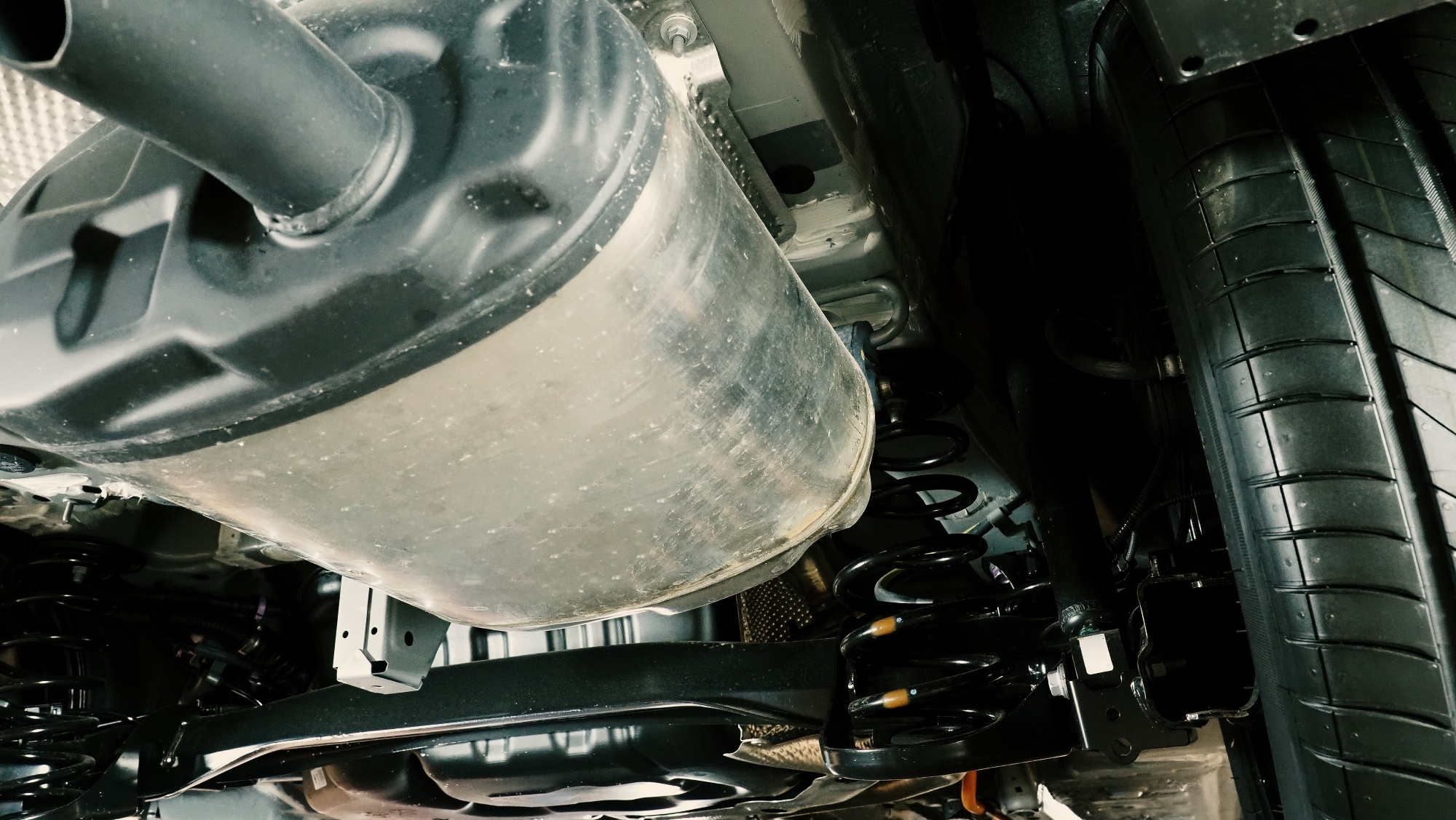
 That Range Rover sitting crooked in your San Leandro driveway this morning looked perfectly level when you parked it last night. You know the routine by now: the amber suspension warning flashes, the compressor hums for half a minute, and the truck rises back to normal height as if nothing happened. Here’s what most owners don’t realize until it’s too late. That compressor is working overtime to compensate for a leak, and every overnight correction cycle burns through motor brushes and bearing surfaces that weren’t designed for continuous duty. We see the aftermath at Precision Auto Care when the compressor finally quits and leaves the vehicle sitting on its bump stops.
Range Rover owners love these trucks for good reason, and we understand why you chose one over a conventional SUV with steel springs. The air suspension delivers a ride quality that nothing else in the segment can match, floating over broken pavement and adjusting height for highway cruising or off-road clearance at the touch of a button. That sophistication comes with complexity, though, and complexity means more places for problems to hide. Our San Leandro shop has developed systematic approaches to finding exactly what’s failed, so you’re not paying for guesswork or replacing components that tested perfectly fine.
The Overnight Sag That Ruins Compressors
Air springs develop tiny cracks at the crimped edges where rubber bonds to metal, and those cracks grow wider with every temperature cycle and every mile of East Bay roads. A fresh crack might leak so slowly that the system holds height for weeks before dropping noticeably overnight. That’s the deceptive phase, the period where owners assume everything’s fine because the truck looks level most mornings. Meanwhile, the compressor runs longer and more frequently to maintain pressure, generating heat that accelerates wear on internal components never meant to operate this hard. We catch these leaks early using low-pressure smoke that reveals escape points invisible to the naked eye.
Valve Block Problems That Confuse Everything
The valve block sits between your compressor and all four air springs, directing pressurized air wherever the control module commands it to go. Inside that block are solenoid valves and rubber O-rings that seal each channel from the others, and those O-rings harden with age until they no longer seal properly. Here’s where diagnosis gets tricky for shops that don’t understand these systems. Internal valve block leakage can make one corner drop while another rises, or it can bleed pressure from the entire system overnight, even when every air spring tests leak-free. We isolate each channel individually and measure pressure decay over time to identify exactly which seals have failed.
Height Sensors That Lie to the Computer
Four height sensors tell the suspension module where each corner sits relative to its target position, and the module adjusts air volume accordingly until the readings match the commanded height. Corrosion from road spray, impact damage from debris, or simple mounting bolt looseness can make these sensors report positions that don’t match reality. A sensor reading two inches low convinces the module to overfill that corner, which overworks the spring and accelerates wear on rubber that’s already under stress. We compare sensor output at multiple known heights and verify that resistance changes smoothly through full suspension travel before signing off on any repair.
Compressor Testing That Goes Beyond “Does It Run”
A compressor that hums when commanded might still be dying inside, producing less pressure and less flow than the system needs to maintain proper height. We measure output pressure against factory specifications, monitor current draw under load to spot worn motor windings, and check the desiccant dryer that removes moisture from incoming air before it enters the system. Saturated desiccant restricts airflow and forces the motor to work harder for less output, cutting years off the compressor’s service life. The relay that controls compressor operation can also weld its contacts closed, keeping the motor running even after the module commands it off and burning out the pump in a single afternoon.
Discovery Models Need Platform-Specific Knowledge
Discovery 3 and 4 models share suspension architecture with Range Rover Sport, but they use either Hitachi or AMK compressors, depending on production date and market destination. Diagnosis differs between these platforms, and parts aren’t always interchangeable despite looking similar. We identify exactly which compressor your vehicle uses, source the correct replacement or rebuild components, and calibrate the system using manufacturer software after any repair. Getting this wrong means installing parts that don’t fit or programming that doesn’t match your specific vehicle configuration.
San Leandro Range Rover Owners Get Real Answers
Precision Auto Care serves San Leandro drivers who refuse to accept “just replace everything” as a diagnostic strategy. We document what we find, explain what it means, and repair what’s actually broken so your Range Rover holds height overnight and stops triggering warnings every time you start the engine. That suspension fault light will appear more frequently as the leak worsens, and ignoring it guarantees a compressor replacement that costs far more than fixing the original problem would have. Call us at (510) 351-8211 and schedule your suspension diagnosis before the system that makes your Range Rover special becomes the system that leaves it sitting in your driveway.