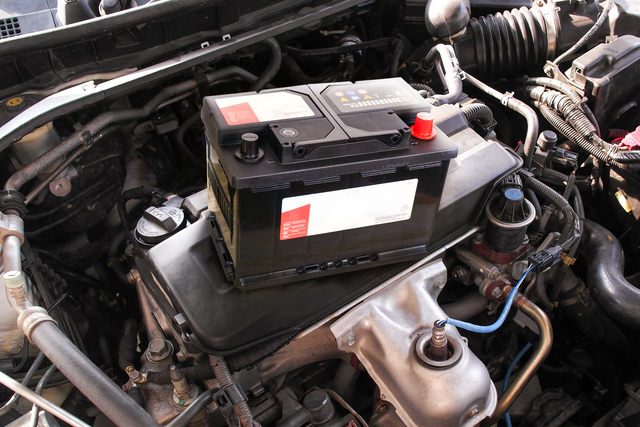
 That red battery icon on your Toyota’s cluster brings many San Leandro owners to our bay after a recent battery replacement. The light returns because the fault lives in the charging circuit, not the new battery. At Precision Auto Care in San Leandro, we test the alternator output waveform, the harness resistance, the quiescent draw, and the sensor data. Every recommendation follows measured numbers and a repeatable validation drive on local streets that match your daily use.
Measuring The Alternator’s Electrical Signature
A pass on a basic 13.8 to 14.6 volt check can hide defective rectifier diodes that leak alternating current into the network. We attach a scope across the battery posts and measure the AC ripple amplitude and frequency under idle and 2,000 rpm with the lights and blower on. Ripple above 50 millivolts, or a sawtooth pattern with missing peaks, indicates internal diode failure. On 2007–2013 Camry models, unstable ripple correlates with intermittent warning lights and spurious module faults. We record pre-repair waveforms, replace or rebuild the alternator when proven, then confirm a clean waveform below specification with the same load applied.
Tracing Voltage Drops Through The Main Harness
A healthy charge path needs low resistance from the alternator B+ to the battery and from the battery negative to the engine and chassis. We perform loaded voltage drop tests while the system carries 40 to 80 amps, then log results hot and cold. Acceptable drop is under 0.2 volts on the ground side and under 0.3 volts on the positive side. On a fourth-generation Highlander with the 2GR-FKS V6, the engine block to chassis strap often measures 0.4 to 0.6 volts at idle with the A/C on, which starves the battery and flags the warning. Cleaning or replacing the strap, then retesting under the same load, restores proper charge rate immediately.
Identifying Parasitic Drains That Kill Batteries
If your Toyota fails to start after sitting in San Leandro for a day, parasitic draw is likely. After the network sleeps, which can require up to 45 minutes, we clamp the battery cable with a low-amp probe and establish baseline current. Normal sleep draw is under 50 milliamps; anything higher demands circuit isolation. We pull fuses in sequence and watch the meter for a step change, then trace the branch with pinpoint tests at connectors. Common offenders include door ajar switches that chatter, telematics units that never sleep, and aftermarket accessories with poor grounding. We prove the fix by reentering sleep and documenting a stable draw under the threshold.
Verifying The Intelligent Battery Sensor Signal
Fifth-generation RAV4 and other late-model Toyotas use an Intelligent Battery Sensor on the negative terminal to report temperature, current, and state of charge. The engine control module adjusts the alternator duty from this data; corrupted values reduce charge and illuminate the warning. We compare the IBS current and temperature against an external clamp and thermistor; a mismatch indicates a sensor or harness issue. We load the system with headlights and a rear defogger, then watch the duty cycle and voltage response. If the IBS signal is noisy or flatlined, we inspect connectors for corrosion, repair wiring as needed, and only replace the sensor when the data remains incorrect after those corrections.
A San Leandro Shop That Finds The Real Problem
Precision Auto Care operates in San Leandro, and we serve San Leandro drivers who want proof before parts. Our report includes ripple amplitude, voltage drop numbers, sleep current, and sensor comparisons with photos and scope captures. Repairs are validated with a hot restart, an accessory load test, and a short city loop that mirrors stoplights and idle time on E 14th Street. If your Toyota shows a battery light, schedule a complete charging system diagnostic with Precision Auto Care in San Leandro at (510) 351-8211. We will identify the defect, correct the cause, and confirm stability under the same conditions that triggered the warning.