 The car’s suspension absorbs and reduces shock from road irregularities. It also makes your steering and brake systems work. For the steering system to point you where you want to go and the tires to generate friction in cornering and braking, the tires must be in contact with the ground. If every bump on the road caused wheel hop, automobiles would be far less safe than they are.
Suspension parts are sturdily built but located where they are unprotected. We routinely find automobiles with damaged suspension parts the owner is unaware of until s/he orders an inspection or a wheel alignment.
Numerous components make for a safe and effective suspension and steering system. Here are the most common suspension problems and the symptoms to look out for that can indicate you may need a suspension system repair:
- Deficient wheel alignment – Increased and uneven tire wear is a symptom and a result of this condition. You may also notice your car constantly veering to one side. Many tire shops recommend wheel alignment with new tires. If you frequently drive over broken and pot-holed pavement (anyone in California), you may want to consider a yearly wheel alignment to prolong the life of your tires.
- Worn-out shocks/struts – shocks and struts are wear items. We frequently see vehicles with 80,000 miles with the original shock absorbers. These components don’t last that long. As part of our inspection, we will check for leaking shocks. When our mechanic drives your car before releasing it to you, he will take notice of the ride. Worn-out shocks will make your car handle and steer dangerously.
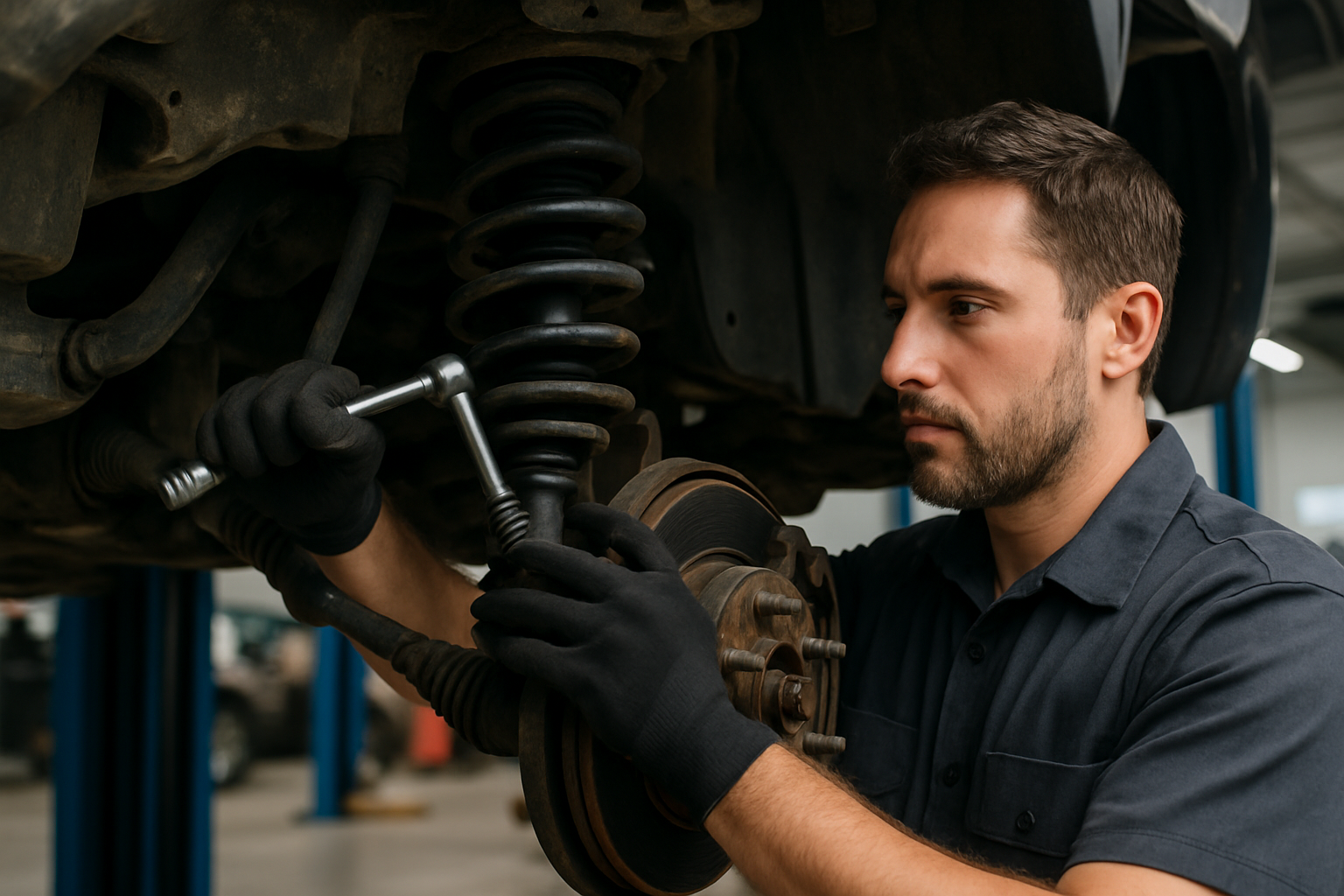
- Broken or collapsed springs – Springs control your car’s suspension as it moves up and down in response to uneven pavement but can break or suffer damage if overloaded. If one side of your car sits low, you may have a damaged spring.
- Worn-out ball joints – Ball joints allow the steering system to move up and down with the suspension and turn left and right for steering. Bad ball joints give you vague steering and looseness in the steering wheel. Clunking noises while driving over bumps is another sign you may see.
- Damaged control arms – Control arms connect the wheels to the car’s frame. They move around bushings that wear over time. These bushings, as well as allowing the control arms to rotate, provide the first cushion when the car encounters bumps. When the bushings wear out, you will notice sloppy steering and a choppy ride. Collisions with deep potholes or curbs may bend a control arm. Worn bushings and damaged control arms make wheel alignment impossible; we usually find damage during this procedure.
At our shop, we have dedicated suspension repair experts. Call us or visit our website to get a quote and book an appointment for a wheel alignment, a suspension inspection, or any service you require.