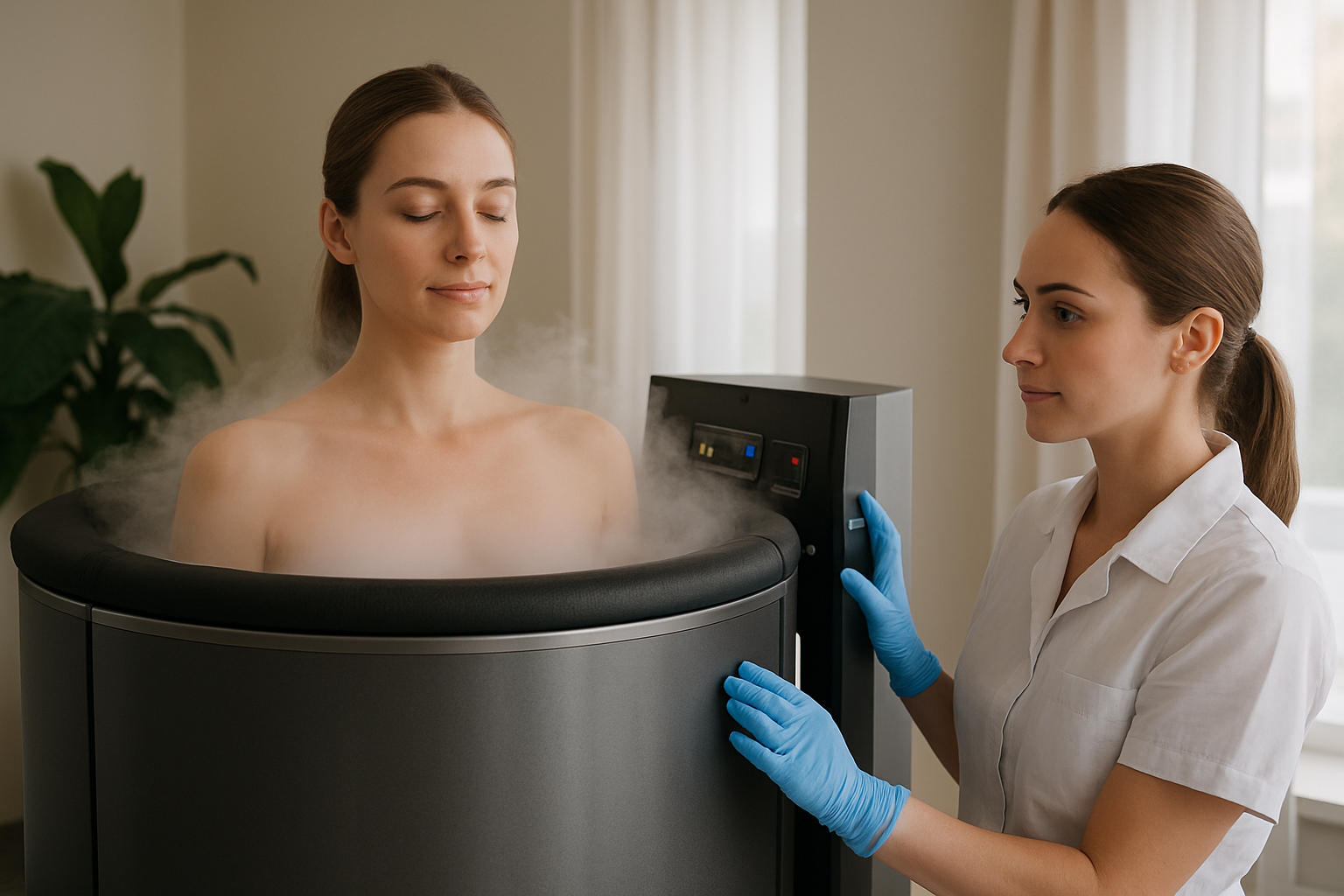
 Think about one knee finishing one hard training session, then recovering along two separate paths. On the first path, the knee recovers with ordinary breathing supplies, and the timeline runs its natural course. On the second path, that knee recovers while a richer oxygen supply circulates through the bloodstream, feeding it. Recovery Lab of Rancho Cucamonga built this article around that split, since hyperbaric oxygen therapy is what reshapes the second path.
Ordinary Breathing Carries a Built-In Limit
Your lungs draw in a consistent amount of oxygen with each breath you take. Your blood then carries that oxygen out to the tissue, working to recover. Air at normal pressure can only load so much oxygen into your blood at any moment. A knee recovering from a hard effort receives whatever your circulation manages to deliver, and the supply stops there.
How the Chamber Changes What Your Blood Can Hold
Inside our hyperbaric chamber, the air pressure rises while the oxygen concentration rises alongside it. That paired increase lets your lungs push more oxygen into your bloodstream than open air permits. Your body relies on oxygen to power the tissue repair that follows demanding training, so a fuller supply gives that repair more raw material. Hyperbaric therapy is widely used to support faster healing, which explains its steady place in athletic recovery routines.
Timing Matters as Much as the Therapy Itself
The recovery window right after hard training is when added oxygen tends to matter most for a working knee. You can schedule a session inside that window so the support arrives while your body is already in repair mode. Hyperbaric therapy also sits comfortably beside rest and gentle movement, rather than replacing either one. People often pair a session with a planned lighter day, so the body gets oxygen support and reduced load at the same time. A Recovery Specialist can help you place sessions sensibly around a race, a season, or a heavy block of training.
Where Hyperbaric Therapy Helps, and Where It Doesn’t
Here is the straight picture before you ever pick up the phone. Hyperbaric oxygen therapy supports a knee recovering from hard use, inflammation, or the ordinary wear and tear an active life produces. It is not a fix for a structural knee injury, and a sharp or lasting knee problem deserves a medical evaluation first. A Recovery Specialist begins your first visit by asking how the knee behaves during stairs, squats, and the hours after training. That conversation tells us whether hyperbaric therapy fits your situation or whether another recovery service would serve you better right now.
Two Knees, One Choice That Belongs to You
Return to those two recovering knees from the beginning of this article. The difference between them is not effort or willpower, since both knees do the same work. The difference is the oxygen environment surrounding that work, and that environment is something you get to choose. Active people who think in seasons rather than single days tend to value that kind of choice.
Bring Your Knee Questions to the Recovery Lab of Rancho Cucamonga
You have seen how a richer oxygen supply supports a recovering knee, so a direct conversation is what comes next. Call Recovery Lab of Rancho Cucamonga at (909) 685-5896 and tell us how your knee feels in the days after you train. We will explain what a hyperbaric series involves and help you judge whether it belongs in your recovery routine.