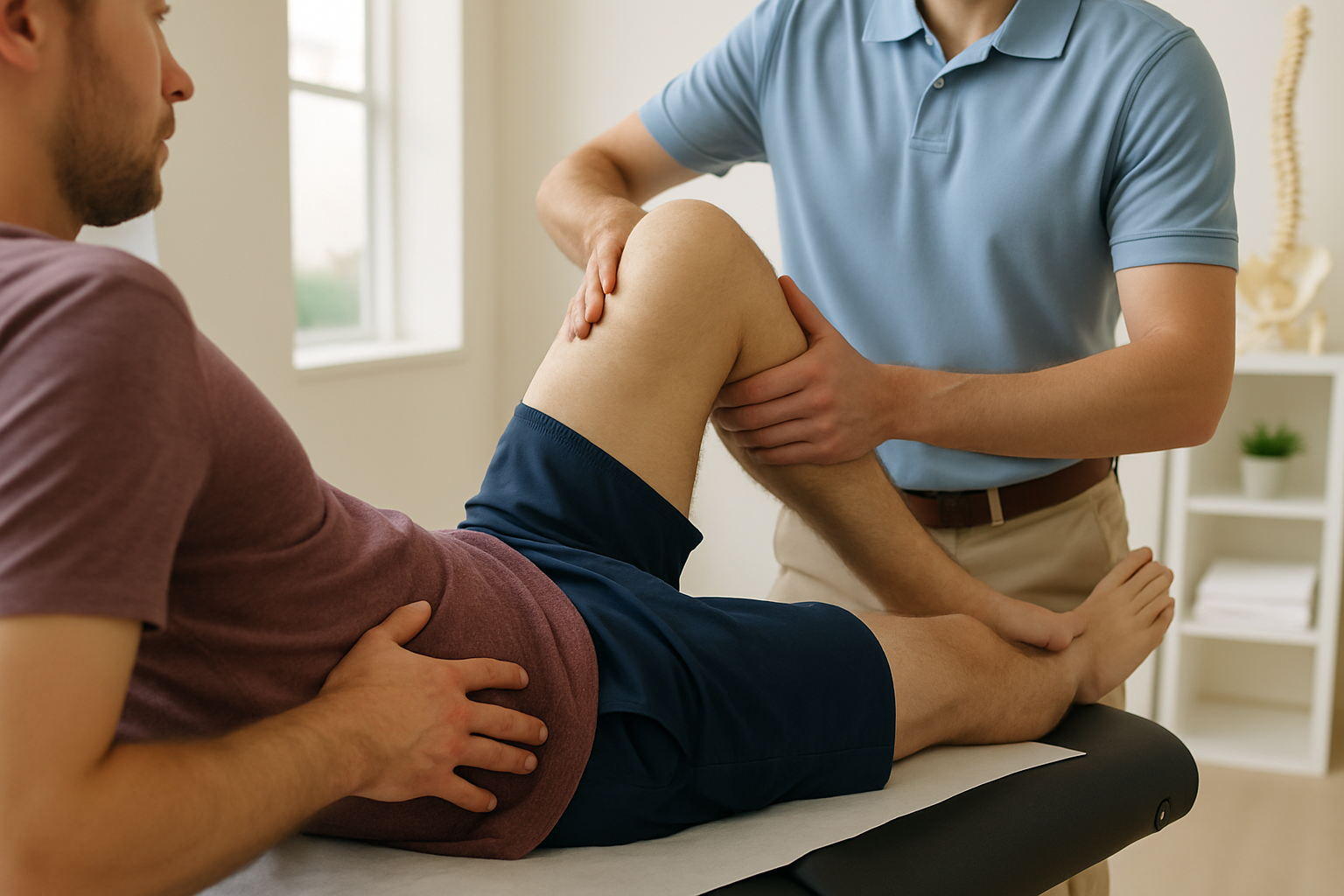
When your knee hurts, you want a knee doctor. Makes sense. The problem's at the knee, so that's where the fix should be. But here's something the best knee doctors know that most patients don't. A lot of knee pain doesn't start at the knee. It starts above it or below it, and the knee is just where it ends up hurting. So the doctor who only looks at your knee often misses the thing actually causing the trouble.
Why the Knee Takes the Blame
The knee sits in the middle of a chain. Hips and core up top, ankles and feet down below. When something in that chain is weak or moving wrong, the knee gets caught in the middle and absorbs the fallout.
Weak hips let the knee cave inward with every step, grinding it where it shouldn't grind. Tight or stiff ankles change how force travels up the leg, and the knee pays for it. Even the way your foot strikes the ground can throw the knee off. In all of these, the knee is the victim.
What a Good Knee Doctor Actually Checks
This is the tell of a doctor worth seeing. They don't just poke the sore spot:
- They watch you move, walk, squat, and step, since that's where the cause shows up
- They check the hips and core, not just the knee
- They look at the ankles and feet and how you load them
- They figure out what's driving the pain before settling on what hurts
- They explain what they found in words you can follow
A doctor who spends the whole visit focused on the knee alone is often one who'll have you back in a few months with the same problem.
Start Without Surgery
The right first stop for knee pain is a doctor who handles non-surgical orthopedic care. Most knee problems get better without an operating room, through strengthening, hands-on work, movement retraining, and injections when they're needed. Their job is to find the cause and work on the options that don't involve cutting.
A surgeon has a place. A ligament torn through that won't hold the joint. A meniscus that keeps locking up. Arthritis has worn down past anything else helping. For those, surgery's the right call. But starting there with ordinary knee pain usually just adds a step, since you'll likely get sent back to try the non-surgical route first.
When to Get In For a Check-Up
Worth getting looked at when knee pain has hung on past a couple of weeks, when stairs or squatting set it off, when the knee swells after activity, or when it's steering you away from things you used to do. A knee that buckles or catches counts too, since that one needs a closer look.
If knee pain has you unsure where to turn, Modern Medicine of Phoenix, AZ, can take a look at the whole picture, not just the sore spot, and map out the right next step. One phone call gets you in.