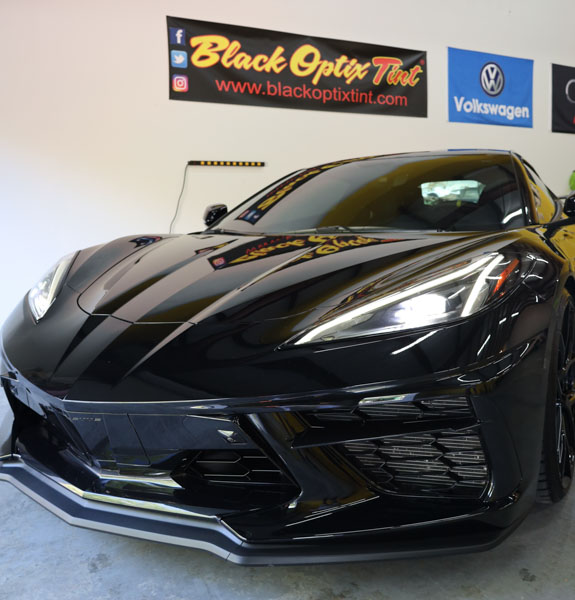
That's the belief almost everyone brings in, and it's easy to see why. If a film looks darker, it feels like it should stop more sun. But Florida law already limits how dark your front side windows can go. The law requires front side windows to let at least 28% of light through, the same for every vehicle on the road. So darkness isn't really the lever you're shopping for, because you're capped at the same shade whether you buy the budget film or the good one. When Fort Myers drivers pull up a ceramic quote at Black Optix Tint, that's the piece nobody has walked them through yet. Once you know the shade is fixed by law, the real question changes, and we walk you through it before you pay for anything.
So What Is The Extra Money Actually Buying?
Here's the part you can't see, and it's where the value lives. Roughly half the sun's heat arrives as infrared, a band your eyes never register. A dyed film mostly blocks visible light, the part you see as shade, so it does little about the heat you actually feel. Ceramic targets a different part of the sun. It uses non-metallic nano-ceramic particles that absorb and reflect that infrared band largely no matter how dark or light the film looks. A lighter ceramic film can reject far more of the sun's heat than a darker dyed one, because it targets the part of the sun you can't see. So the extra money buys you the infrared performance that keeps your cabin more comfortable at the exact legal shade you're already limited to.
How Do You Compare Two Films That Both Say 95%?
You've probably read three shops' pages that all claim big heat-rejection numbers, and you can't tell them apart. Here's the real reason it's confusing. There's no industry-wide standard for the infrared number, so each maker picks the slice of the spectrum where their film looks best and quotes that. Two films can both say "95%" and perform nowhere near the same in your seat. So don't shop the headline number. Ask us for the TSER at the shade you actually want, because that figure accounts for the whole heat range at one fixed shade, and it's the honest way to compare.
Why Does Standard Dyed Tint Change Over Time?
You may have seen this on an older vehicle. A dyed film darkens the glass with an organic dye, and over time the sun breaks that dye down. The color shifts toward purple, and whatever heat rejection it had fades along with it. A ceramic film holds its color and its performance instead of aging out on you. And because ceramic on your windows is window tint, we back it with our lifetime warranty, on U.S.-made film manufactured in North Carolina. So the comparison that actually counts shows up three summers from now, in what you're still driving.
Will Ceramic Mess With My Signal?
This one comes up a lot, and it's a smart thing to ask. Older heat-rejecting films used a thin metal layer, and that metal could interfere with your phone, GPS, satellite radio, and key fob. Ceramic doesn't use any metal at all. Your signal works exactly like it did before. You get the heat performance without the signal issue.
Let's Figure Out The Right Film For You
So the real question was never how dark you can go. It's how much heat the film rejects at the shade you're already limited to, and whether it'll still be doing that job years from now. Bring your vehicle by the Black Optix Tint shop in Fort Myers and we'll fit the film to how you actually drive, then go through the specs with you. Anthony leads our tint consultations and he'll ask the right questions before he recommends anything. Give him a call at (239) 666-1541 and we'll set time aside for you.