 A tint that runs darker than Florida law allows gets you pulled over, ticketed, and ordered to take the film off the glass. The redo lands on every driver who learned that lesson the long way around. Black Optix Tint has kept Estero customers out of that situation since the day we opened our Fort Myers shop, and the rule book is shorter than people expect once you've read it once.
What Florida Statutes 316.2953 And 316.2954 Say
Florida sets minimum Visible Light Transmission percentages by window position, and the state writes those numbers into Statutes 316.2953 and 316.2954. Sedans must keep front side windows above 28% Visible Light Transmission, and rear side windows and rear glass above 15%. SUVs and vans get more room on the rear glass at 6% minimum. The windshield receives a non-reflective tint strip above the AS-1 line, with no full coverage of dark film allowed across the windshield.
Why The Front Side Windows Get The Strictest Rule
The state writes the front-side rule with two priorities in mind: officers need to see into the driver's compartment during a stop, and you need clear sightlines at night. A 28% shade on the fronts is dark enough for meaningful privacy and heat reduction while keeping low-light visibility safe on Estero roads. Going below that line on the front sides gets you the ticket and the removal order, and it puts you back in our chair paying twice for film you can't keep.
The Front-Rear Shade Pairing Most Drivers Haven't Heard Of
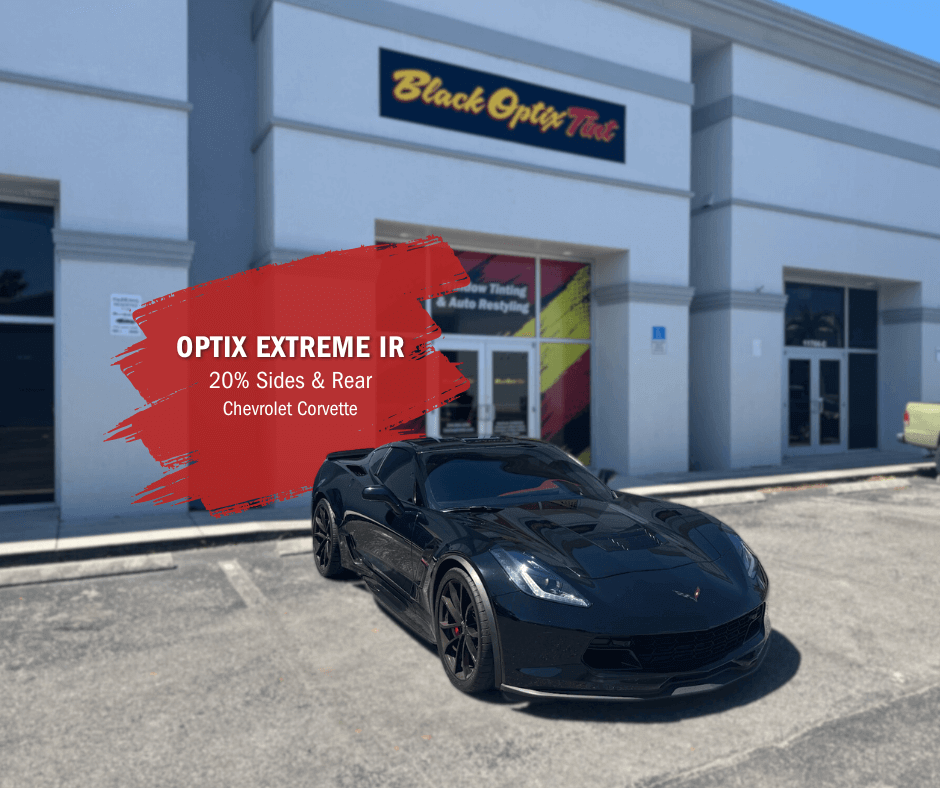
Florida lets drivers run a lighter shade on the front side windows and a darker shade across the rear sides and rear glass on the same vehicle. A 35% front paired with a 20% rear is legal on a sedan and gives a clean balance: clear visibility where you need it for driving, plus stronger privacy and heat rejection at the back where it doesn't compromise the view from the wheel. We pair shades like that every week, and most of our Estero customers leave with that build.
Where Ceramic Film Changes The Conversation
Ceramic film has the unusual property of rejecting heat almost independently of its visible shade. A 50% ceramic on the front side windows can keep cabin temperature noticeably lower without darkening the glass. Drivers who want to stay light visually, comply with the law cleanly, and still escape the worst of summer heat have a path forward that dyed film never offered. That separation between shade and heat performance is the part most drivers haven't been told before.
Medical Exemptions And How They Work In Florida
Florida grants tint exemptions for documented conditions like lupus, certain skin cancers, and photosensitivity disorders. The state requires a physician's certification on the prescribed form, and an exemption sticker gets affixed to the vehicle once approved. We help our customers understand which paperwork the state requires and which shades open up legally once the exemption is in place.
Send Us Your Year, Make, And Model
Want a legal tint build quoted for your specific vehicle? Send the year, make, and model to (239) 666-1541, or stop into our Fort Myers shop, and we'll come back with shade percentages tailored to how you drive on Estero streets and through the rest of Southwest Florida.
A tint that runs darker than Florida law allows gets you pulled over, ticketed, and ordered to take the film off the glass. The redo lands on every driver who learned that lesson the long way around. Black Optix Tint has kept Estero customers out of that situation since the day we opened our Fort Myers shop, and the rule book is shorter than people expect once you've read it once.
What Florida Statutes 316.2953 And 316.2954 Say
Florida sets minimum Visible Light Transmission percentages by window position, and the state writes those numbers into Statutes 316.2953 and 316.2954. Sedans must keep front side windows above 28% Visible Light Transmission, and rear side windows and rear glass above 15%. SUVs and vans get more room on the rear glass at 6% minimum. The windshield receives a non-reflective tint strip above the AS-1 line, with no full coverage of dark film allowed across the windshield.
Why The Front Side Windows Get The Strictest Rule
The state writes the front-side rule with two priorities in mind: officers need to see into the driver's compartment during a stop, and you need clear sightlines at night. A 28% shade on the fronts is dark enough for meaningful privacy and heat reduction while keeping low-light visibility safe on Estero roads. Going below that line on the front sides gets you the ticket and the removal order, and it puts you back in our chair paying twice for film you can't keep.
The Front-Rear Shade Pairing Most Drivers Haven't Heard Of
Florida lets drivers run a lighter shade on the front side windows and a darker shade across the rear sides and rear glass on the same vehicle. A 35% front paired with a 20% rear is legal on a sedan and gives a clean balance: clear visibility where you need it for driving, plus stronger privacy and heat rejection at the back where it doesn't compromise the view from the wheel. We pair shades like that every week, and most of our Estero customers leave with that build.
Where Ceramic Film Changes The Conversation
Ceramic film has the unusual property of rejecting heat almost independently of its visible shade. A 50% ceramic on the front side windows can keep cabin temperature noticeably lower without darkening the glass. Drivers who want to stay light visually, comply with the law cleanly, and still escape the worst of summer heat have a path forward that dyed film never offered. That separation between shade and heat performance is the part most drivers haven't been told before.
Medical Exemptions And How They Work In Florida
Florida grants tint exemptions for documented conditions like lupus, certain skin cancers, and photosensitivity disorders. The state requires a physician's certification on the prescribed form, and an exemption sticker gets affixed to the vehicle once approved. We help our customers understand which paperwork the state requires and which shades open up legally once the exemption is in place.
Send Us Your Year, Make, And Model
Want a legal tint build quoted for your specific vehicle? Send the year, make, and model to (239) 666-1541, or stop into our Fort Myers shop, and we'll come back with shade percentages tailored to how you drive on Estero streets and through the rest of Southwest Florida.
Estero, FL - What Tint Percentage Should You Get on Your Car in Florida?
SYNOPSIS: Black Optix Tint explains Florida tint laws, ideal shade combinations, ceramic film benefits, and how medical exemptions apply for Estero drivers.
BY: ,
A tint that runs darker than Florida law allows gets you pulled over, ticketed, and ordered to take the film off the glass. The redo lands on every driver who learned that lesson the long way around. Black Optix Tint has kept Estero customers out of that situation since the day we opened our Fort Myers shop, and the rule book is shorter than people expect once you've read it once.
What Florida Statutes 316.2953 And 316.2954 Say
Florida sets minimum Visible Light Transmission percentages by window position, and the state writes those numbers into Statutes 316.2953 and 316.2954. Sedans must keep front side windows above 28% Visible Light Transmission, and rear side windows and rear glass above 15%. SUVs and vans get more room on the rear glass at 6% minimum. The windshield receives a non-reflective tint strip above the AS-1 line, with no full coverage of dark film allowed across the windshield.
Why The Front Side Windows Get The Strictest Rule
The state writes the front-side rule with two priorities in mind: officers need to see into the driver's compartment during a stop, and you need clear sightlines at night. A 28% shade on the fronts is dark enough for meaningful privacy and heat reduction while keeping low-light visibility safe on Estero roads. Going below that line on the front sides gets you the ticket and the removal order, and it puts you back in our chair paying twice for film you can't keep.
The Front-Rear Shade Pairing Most Drivers Haven't Heard Of
Florida lets drivers run a lighter shade on the front side windows and a darker shade across the rear sides and rear glass on the same vehicle. A 35% front paired with a 20% rear is legal on a sedan and gives a clean balance: clear visibility where you need it for driving, plus stronger privacy and heat rejection at the back where it doesn't compromise the view from the wheel. We pair shades like that every week, and most of our Estero customers leave with that build.
Where Ceramic Film Changes The Conversation
Ceramic film has the unusual property of rejecting heat almost independently of its visible shade. A 50% ceramic on the front side windows can keep cabin temperature noticeably lower without darkening the glass. Drivers who want to stay light visually, comply with the law cleanly, and still escape the worst of summer heat have a path forward that dyed film never offered. That separation between shade and heat performance is the part most drivers haven't been told before.
Medical Exemptions And How They Work In Florida
Florida grants tint exemptions for documented conditions like lupus, certain skin cancers, and photosensitivity disorders. The state requires a physician's certification on the prescribed form, and an exemption sticker gets affixed to the vehicle once approved. We help our customers understand which paperwork the state requires and which shades open up legally once the exemption is in place.
Send Us Your Year, Make, And Model
Want a legal tint build quoted for your specific vehicle? Send the year, make, and model to (239) 666-1541, or stop into our Fort Myers shop, and we'll come back with shade percentages tailored to how you drive on Estero streets and through the rest of Southwest Florida.