 Try to Avoid Static Loading the Body and Fixed Work Postures
Static postures put strain on the muscles due to a lack of blood flow. During static muscular effort, the muscles are restricted to which at some point blood flow is almost completely staunched. Restricting the flow of blood to the muscle results in muscular fatigue, discomfort, and inefficiencies. Static effort in the short term can mean higher energy consumption and a increase in heart rate. Long term effects of static work leads to the deterioration of muscles, connective tissues, and joints. Static postures can mean the holding items in one arm extended or prolonged standing, or pushing/pulling objects for a distance lasting 10 or more minutes.
Design to Encourage Frequent Shifts in Posture
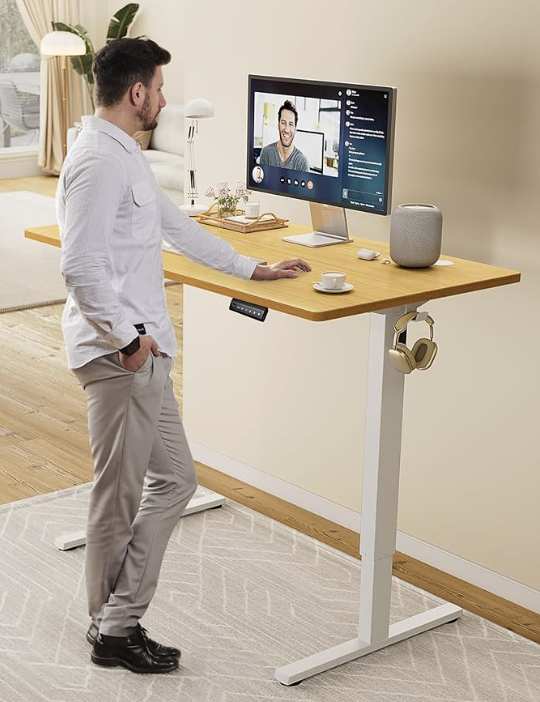
Ergonomists make it a point to counteract the effects of static muscular effort. They do this by designing workstations that encourage frequent shifting in body postures. They do their best to keep workers fidgeting and shifting laterally especially. One example is the adjustable-height workstation which encourages variation in postures. If you want to learn more from a specialized ergonomic specialist in the south Bay Area, contact Ergobility today.
Try to Avoid Static Loading the Body and Fixed Work Postures
Static postures put strain on the muscles due to a lack of blood flow. During static muscular effort, the muscles are restricted to which at some point blood flow is almost completely staunched. Restricting the flow of blood to the muscle results in muscular fatigue, discomfort, and inefficiencies. Static effort in the short term can mean higher energy consumption and a increase in heart rate. Long term effects of static work leads to the deterioration of muscles, connective tissues, and joints. Static postures can mean the holding items in one arm extended or prolonged standing, or pushing/pulling objects for a distance lasting 10 or more minutes.
Design to Encourage Frequent Shifts in Posture
Ergonomists make it a point to counteract the effects of static muscular effort. They do this by designing workstations that encourage frequent shifting in body postures. They do their best to keep workers fidgeting and shifting laterally especially. One example is the adjustable-height workstation which encourages variation in postures. If you want to learn more from a specialized ergonomic specialist in the south Bay Area, contact Ergobility today.
Fremont, CA - The CPE Ergonomist is the Best Ergonomic Specialists Consultant
SYNOPSIS: Workstations need to consider the worker and their body movements. The design should look at what causes the least stress on the limbs, joints, and soft tissues of the body.
Work must be positioned as best for the worker.
BY: Allen Yagjian, Ergobility LLC
An ergonomic consultant in the south Bay Area considers what not all ergonomists do, how to redesign a sedentary workstation. A CPE or certified professional ergonomist will not only properly fit the employee, but also fit a worker's range of motion and encourage movement and frequent changes in body postures.
The body is designed to move and because so, when designing the dimensions of the workplace, it shall consider the range of flexibility of the body and limbs. A worker for example who is leaning forward but constrained by bars of various heights, when the height of the bars are reduced from a shoulder height to belly height, the operator can then extend his reach by bending at the waist. Sometimes the trade off is that increased range comes at the price of a reduced capacity to apply external forces (i.e. push, pull).
Get Those Frequently Used Materials and Tools within An Easy Reach
When workstation designers place materials and tools, they do so by considering the comfortable reaches of the body. This saves both time, energy, and thus money. Also, easy to reach tools can further prevent an accident when the worker is likely to rush in a time crunch. Another six sigma idea is to make sure that the location of tools and materials are uniform and standardized at all workstations to minimize the errors among workers using all types of locations on the job site. It's mentally relaxing to know where a tool is, and becomes muscle memory.
Try to Avoid Static Loading the Body and Fixed Work Postures
Static postures put strain on the muscles due to a lack of blood flow. During static muscular effort, the muscles are restricted to which at some point blood flow is almost completely staunched. Restricting the flow of blood to the muscle results in muscular fatigue, discomfort, and inefficiencies. Static effort in the short term can mean higher energy consumption and a increase in heart rate. Long term effects of static work leads to the deterioration of muscles, connective tissues, and joints. Static postures can mean the holding items in one arm extended or prolonged standing, or pushing/pulling objects for a distance lasting 10 or more minutes.
Design to Encourage Frequent Shifts in Posture
Ergonomists make it a point to counteract the effects of static muscular effort. They do this by designing workstations that encourage frequent shifting in body postures. They do their best to keep workers fidgeting and shifting laterally especially. One example is the adjustable-height workstation which encourages variation in postures. If you want to learn more from a specialized ergonomic specialist in the south Bay Area, contact Ergobility today.
Try to Avoid Static Loading the Body and Fixed Work Postures
Static postures put strain on the muscles due to a lack of blood flow. During static muscular effort, the muscles are restricted to which at some point blood flow is almost completely staunched. Restricting the flow of blood to the muscle results in muscular fatigue, discomfort, and inefficiencies. Static effort in the short term can mean higher energy consumption and a increase in heart rate. Long term effects of static work leads to the deterioration of muscles, connective tissues, and joints. Static postures can mean the holding items in one arm extended or prolonged standing, or pushing/pulling objects for a distance lasting 10 or more minutes.
Design to Encourage Frequent Shifts in Posture
Ergonomists make it a point to counteract the effects of static muscular effort. They do this by designing workstations that encourage frequent shifting in body postures. They do their best to keep workers fidgeting and shifting laterally especially. One example is the adjustable-height workstation which encourages variation in postures. If you want to learn more from a specialized ergonomic specialist in the south Bay Area, contact Ergobility today.