Once the fog rolled over the hills of San Francisco, people often noticed the skyline before they noticed the work happening inside its warehouses, hospitals, laboratories, and theaters. Allen preferred it that way. He is an ergonomics expert with a reputation for solving stubborn workplace problems. He believed the best compliment was when no one noticed the danger he had quietly eliminated.
One Monday morning, he received a call from a research laboratory preparing to install a new imaging system. The equipment had arrived in dozens of heavy cases, each too bulky for one person but awkward even for two. The loading dock was narrow, the freight elevator was small, and the laboratory itself was tucked at the end of a corridor filled with sharp turns.
“It isn’t just lifting,” the facilities manager mentioned to him. “We’re lifting, pushing, carrying, rotating, and trying not to damage equipment worth more than most houses.”
By lunchtime, Allen was standing in the corridor with a notebook, watching the team rehearse the move with empty crates. He never rushed to solutions. Instead, he studied how people naturally worked. One technician bent awkwardly every time he lifted a case from the pallet. Another twisted while carrying equipment through the doorway. Two others leaned forward with all their weight just to keep a loaded cart moving over a small metal threshold. None of the individual actions looked dramatic, but together they formed a chain of unnecessary strain.
Rather than focusing on individual mistakes, Allen looked for the system creating them. He then measured the heights of the pallets, checked the rolling resistance of the carts, timed each stage of the move, and even counted how many times workers had to reposition their hands on every case.
His notes revealed a pattern. The lifting wasn't excessively heavy once the cases were at waist height. The carrying wasn't especially long once the route was organized. The real problem appeared whenever workers switched between tasks. They would lift a case, carry it a short distance, lower it onto a cart, push the cart across uneven flooring, lift the case again, and repeat the process several times. Every transition increased fatigue and introduced another opportunity for awkward posture.
The following morning, Allen, being onsite, then gathered the crew together. “We're not going to ask people to work harder,” she said. “We're going to make the work simpler.” His recommendations seemed almost a bit ordinary.
He had pallets elevated so workers began lifting from a comfortable height. The travel route was rearranged to eliminate unnecessary turns. Portable ramps replaced the troublesome threshold that had been forcing workers to shove the carts forward with sudden bursts of force. Equipment cases were grouped according to destination so there would be fewer stops and less repeated handling. He also reassigned roles so the strongest pushers stayed with the carts while others focused on guiding, opening doors, and positioning equipment.
The team looked skeptical. “That’s it?” one technician asked. “Well, test it out, and let me know.” Allen replied with a smile. “Small improvements multiply.”
They began the move. Immediately, the difference was obvious. The carts rolled smoothly instead of jerking over the threshold. Workers maintained upright postures while lifting. Since each case required fewer transfers, people spent less energy carrying equipment back and forth. Instead of struggling through every stage, the crew settled into a steady rhythm.
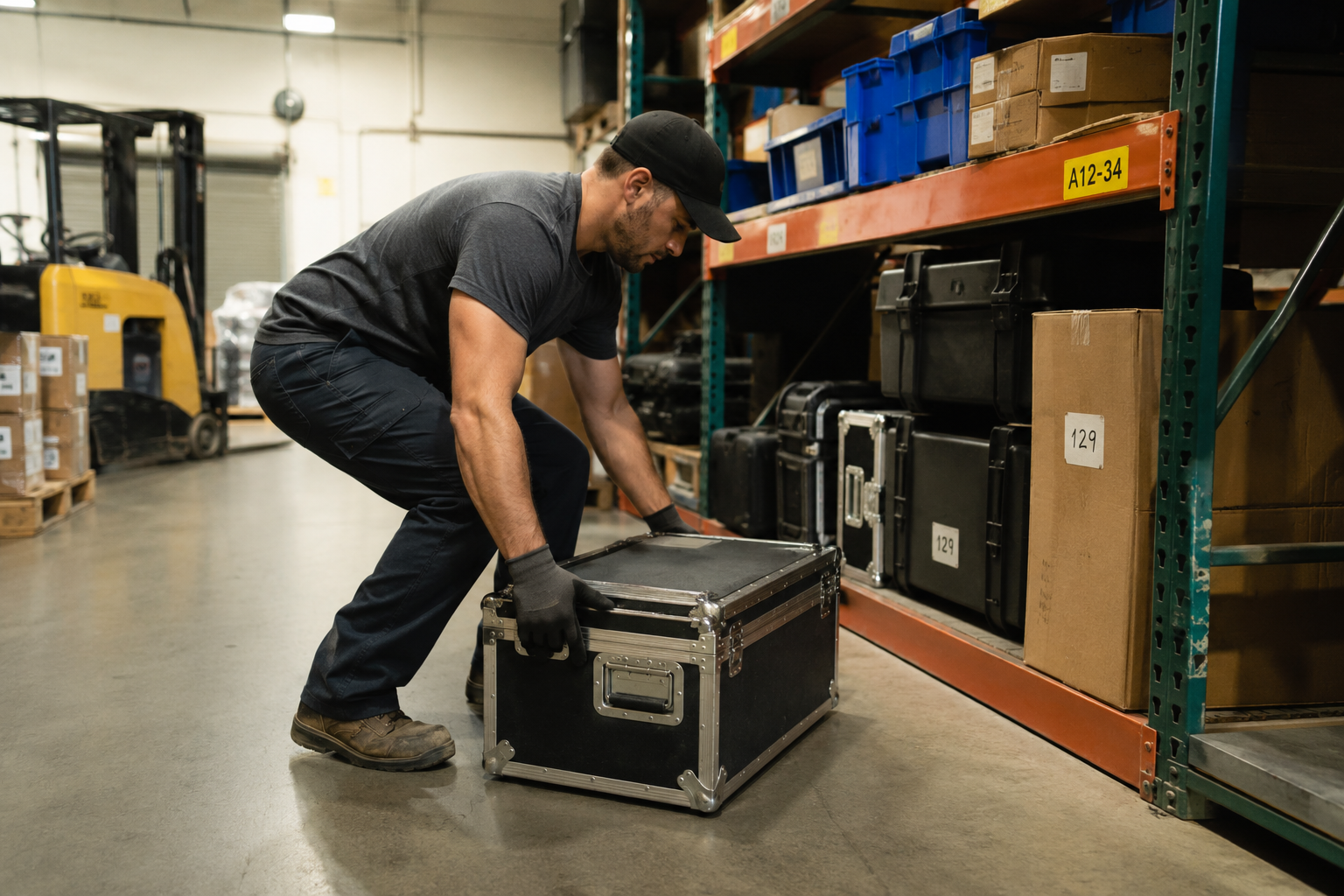
An operation expected to consume the entire day finished well before evening. More importantly, everyone finished with enough energy to continue preparing the laboratory instead of nursing sore backs and aching shoulders and later that week, the facilities manager reviewed the project and mentioned “No damaged equipment. No injuries. No close calls,” he said. “Honestly, it looked almost effortless.”
Allen replied, "yes, that’s the goal.” Most people would never think about ergonomics while watching those ordinary moments unfold. If you have a team that performs manual materials handling, call Ergobility, to talk to a consultant.