 What technologies now a days are shaping practice...
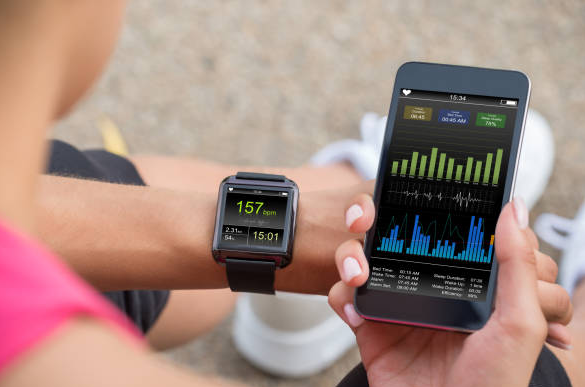
Wearable sensors such as IMUs placed on the head, torso, upper limbs, or wrists can quantify angles of body segments as well as velocity and repetition. This can estimate the body's exposure to repetitive motions.
Some technologies are based on vision solutions such as camera-based posture tracking to detect posture and motion. These approaches preserve privacy by focusing on pose rather than identifying individuals and can function when wearables are impractical.
Feedback modalities that are based on desk alerts, on-screen prompts, or audio cues are preferred and can deliver educational lessons during microbreaks to reinforce healthy habits and needed rest.
When ergonomic risks are detected the system sends the user an unobtrusive cue to adjust such features as height, the distance of the monitor, or their own sitting or standing posture. The system may also propose a microbreak or a brief stretch regiment that targets an area of the body.
The aggregated data will highlight high risk tasks which informs engineering controls and work-process redesign and helps ergonomists best assist the employees. The ergonomist will choose sensors and algorithms which have demonstrated validity for posture estimation in real settings. They will also ensure feedback the data aligns with safe ranges without encouraging trade off type behaviors. It is necessary to clearly communicate data collection scope, retention, and who can access data as well as provide opt-in or opt-out choices and options to review or delete personal data.
If you would like assistance with your program, call Ergobility to discuss with a consultant.
What technologies now a days are shaping practice...
Wearable sensors such as IMUs placed on the head, torso, upper limbs, or wrists can quantify angles of body segments as well as velocity and repetition. This can estimate the body's exposure to repetitive motions.
Some technologies are based on vision solutions such as camera-based posture tracking to detect posture and motion. These approaches preserve privacy by focusing on pose rather than identifying individuals and can function when wearables are impractical.
Feedback modalities that are based on desk alerts, on-screen prompts, or audio cues are preferred and can deliver educational lessons during microbreaks to reinforce healthy habits and needed rest.
When ergonomic risks are detected the system sends the user an unobtrusive cue to adjust such features as height, the distance of the monitor, or their own sitting or standing posture. The system may also propose a microbreak or a brief stretch regiment that targets an area of the body.
The aggregated data will highlight high risk tasks which informs engineering controls and work-process redesign and helps ergonomists best assist the employees. The ergonomist will choose sensors and algorithms which have demonstrated validity for posture estimation in real settings. They will also ensure feedback the data aligns with safe ranges without encouraging trade off type behaviors. It is necessary to clearly communicate data collection scope, retention, and who can access data as well as provide opt-in or opt-out choices and options to review or delete personal data.
If you would like assistance with your program, call Ergobility to discuss with a consultant.
Palo Alto, CA - Ergonomic Consultant For Evaluations by Top Ergonomist
SYNOPSIS: A growing ergonomics topic is how the use of wearable sensing technology with real-time feedback can reduce musculoskeletal risk in work environments like in surgical operations and computer use.
New ergonomic concepts brought to the workforce.
BY: Allen Yagjian, Ergobility LLC
New trending ergonomic technology utilizes wearable sensing and real-time feedback to drive reductions in musculoskeletal risks in both hybrid and remote work. Modern workstyles include a shift between both home and office work, so traditional stationary risk assessments are just not up to par any longer. The newest work regiment utilizes the coolest new technology integrating inertial sensors, computer-vision, and AI-driven feedback loops to continuously monitor posture and body mechanics in order to guide workers in the direction of safer habits without disrupting their work productivity.
This topic has captured the attention of ergonomists because hybrid work creates a slew of diverse workstation features and factors. From your laptop only situation at a kitchen table to an electric sit to stand desk in a dedicated home workstation setup the variation is broad. Ergonomic risk factors are present in workstations that do not allow workers to maintain a neutral posture and that is usually due to an improper fit of their workstation due to the lack of adjustable features. Wearable sensors and smart feedback loops address a couple gaps which include continuous exposure assessment and timely, personalized changes to reduce the risks. Studies demonstrate that real-time feedback is effective at reducing harmful neck flexion and awkward wrist positions for instance. When a person receives immediate cues, they are likely to make a quick adjustment and prevent further risk. Digital aggregation of this data can also be used by individuals and businesses to identify broad risk patterns that can lead to meaningful and effective changes.
What technologies now a days are shaping practice...
Wearable sensors such as IMUs placed on the head, torso, upper limbs, or wrists can quantify angles of body segments as well as velocity and repetition. This can estimate the body's exposure to repetitive motions.
Some technologies are based on vision solutions such as camera-based posture tracking to detect posture and motion. These approaches preserve privacy by focusing on pose rather than identifying individuals and can function when wearables are impractical.
Feedback modalities that are based on desk alerts, on-screen prompts, or audio cues are preferred and can deliver educational lessons during microbreaks to reinforce healthy habits and needed rest.
When ergonomic risks are detected the system sends the user an unobtrusive cue to adjust such features as height, the distance of the monitor, or their own sitting or standing posture. The system may also propose a microbreak or a brief stretch regiment that targets an area of the body.
The aggregated data will highlight high risk tasks which informs engineering controls and work-process redesign and helps ergonomists best assist the employees. The ergonomist will choose sensors and algorithms which have demonstrated validity for posture estimation in real settings. They will also ensure feedback the data aligns with safe ranges without encouraging trade off type behaviors. It is necessary to clearly communicate data collection scope, retention, and who can access data as well as provide opt-in or opt-out choices and options to review or delete personal data.
If you would like assistance with your program, call Ergobility to discuss with a consultant.
What technologies now a days are shaping practice...
Wearable sensors such as IMUs placed on the head, torso, upper limbs, or wrists can quantify angles of body segments as well as velocity and repetition. This can estimate the body's exposure to repetitive motions.
Some technologies are based on vision solutions such as camera-based posture tracking to detect posture and motion. These approaches preserve privacy by focusing on pose rather than identifying individuals and can function when wearables are impractical.
Feedback modalities that are based on desk alerts, on-screen prompts, or audio cues are preferred and can deliver educational lessons during microbreaks to reinforce healthy habits and needed rest.
When ergonomic risks are detected the system sends the user an unobtrusive cue to adjust such features as height, the distance of the monitor, or their own sitting or standing posture. The system may also propose a microbreak or a brief stretch regiment that targets an area of the body.
The aggregated data will highlight high risk tasks which informs engineering controls and work-process redesign and helps ergonomists best assist the employees. The ergonomist will choose sensors and algorithms which have demonstrated validity for posture estimation in real settings. They will also ensure feedback the data aligns with safe ranges without encouraging trade off type behaviors. It is necessary to clearly communicate data collection scope, retention, and who can access data as well as provide opt-in or opt-out choices and options to review or delete personal data.
If you would like assistance with your program, call Ergobility to discuss with a consultant.