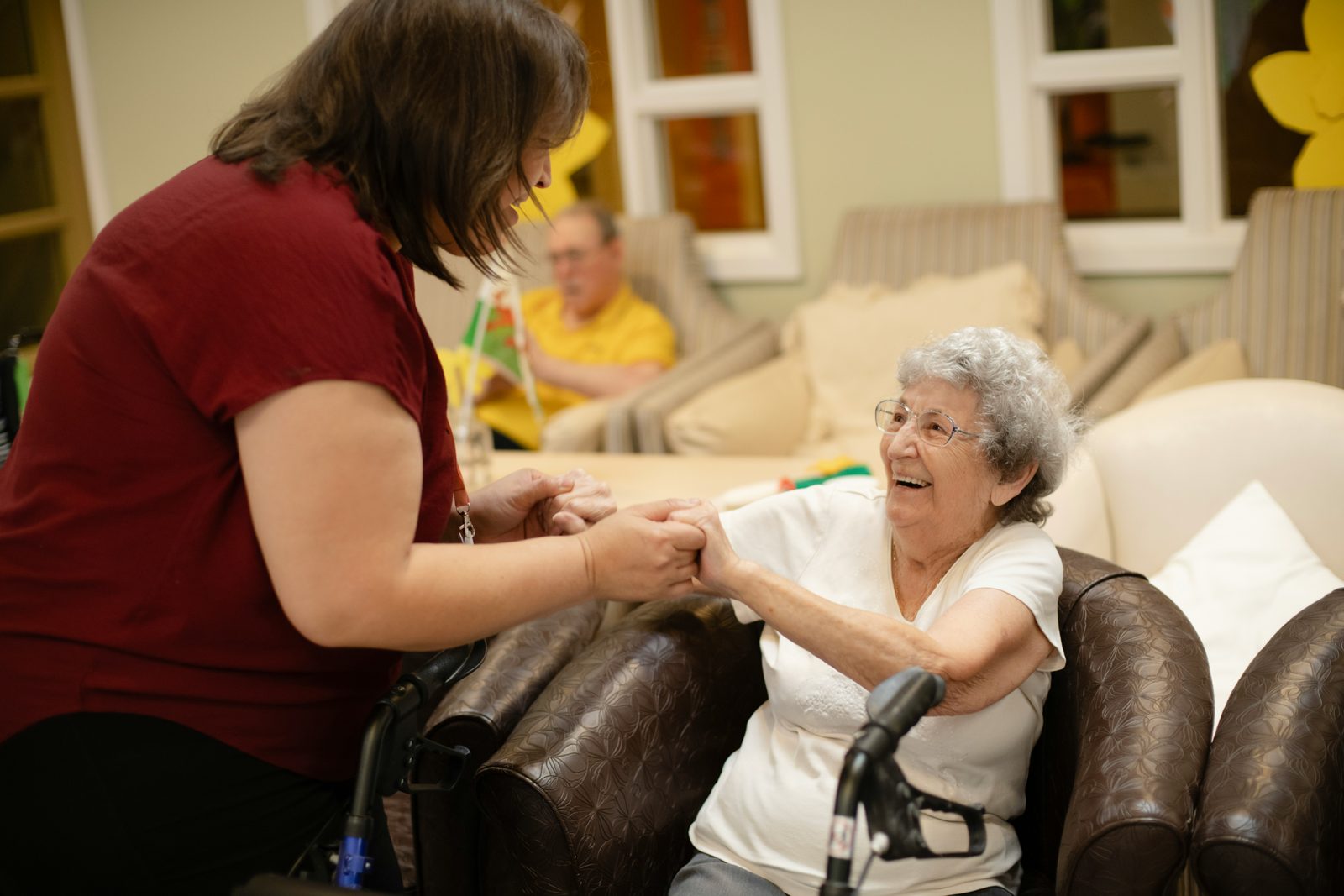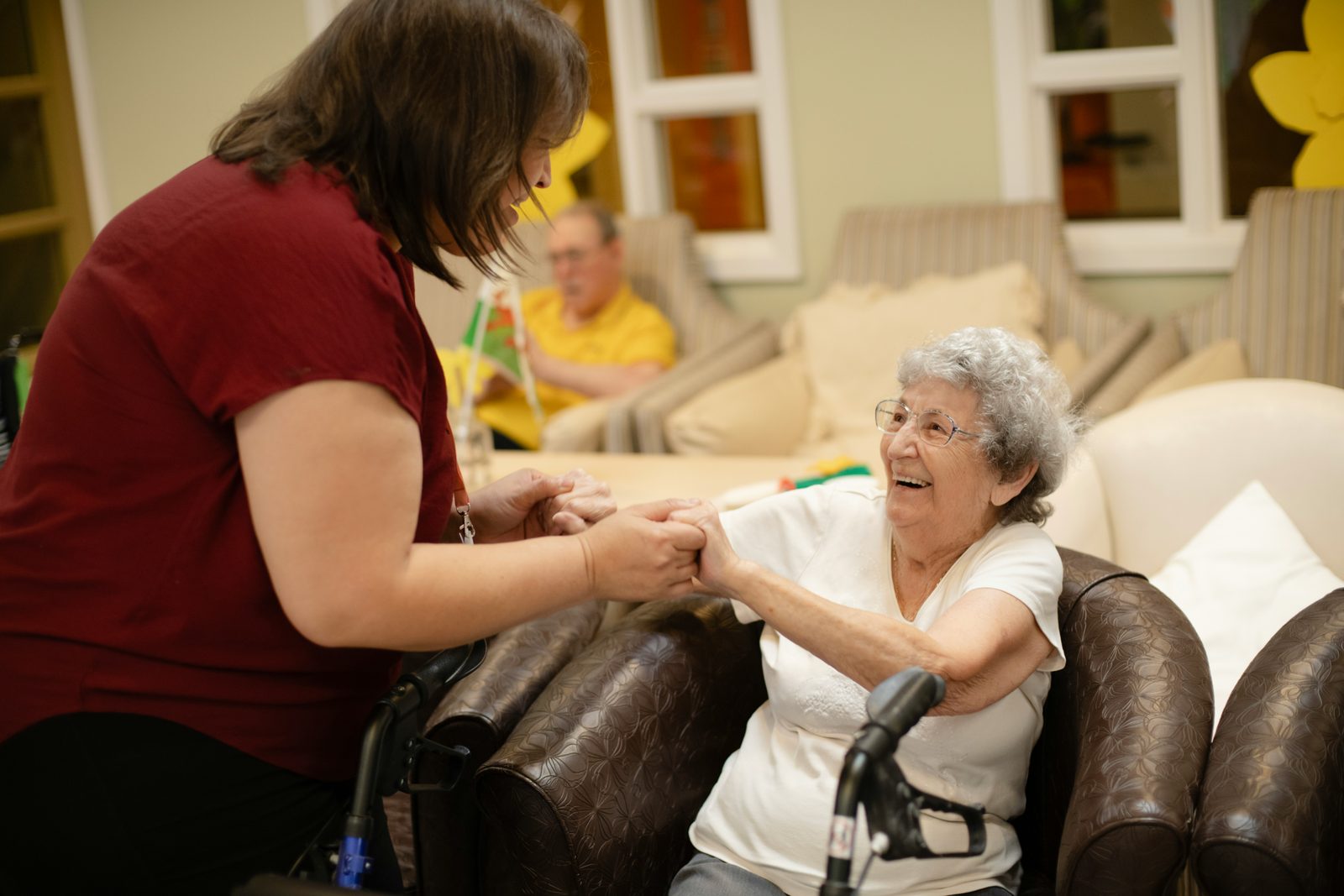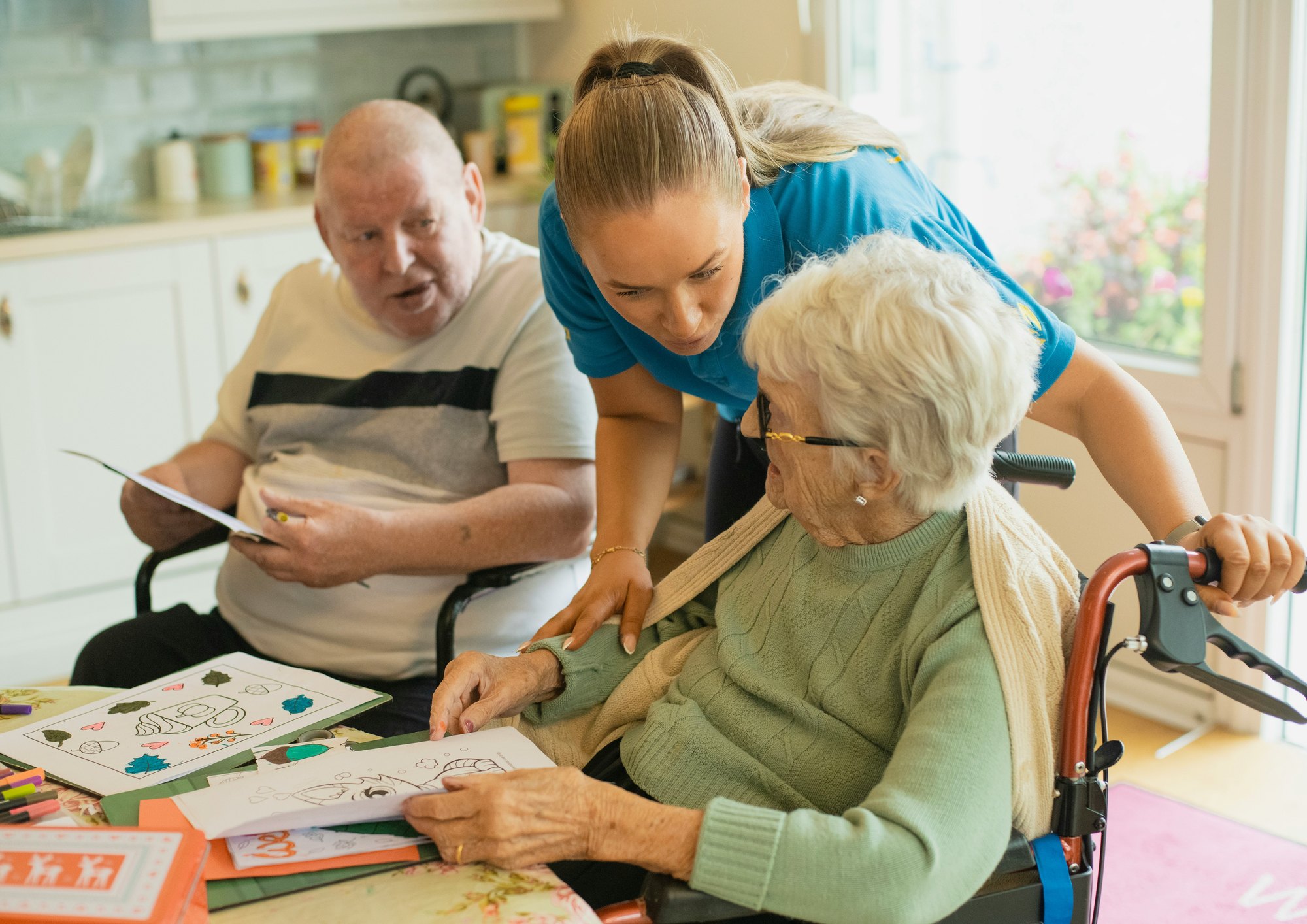
Aphasia messes with words. Not the brain behind them. Your mom still knows what she wants. She just can’t grab the word for it. Maybe she says sweater and means sandwich. Maybe she points at the fridge and nothing comes out at all.
Families in Castro Valley end up guessing. All day. It drains both sides. The one trying to get the word out. The one trying to figure out what she means. By bedtime, nobody’s really talked.
Where a Caregiver Helps
Nobody fixes aphasia. The caregiver just slows the whole day down so your mom isn’t stuck in constant frustration:
- Picture cards or simple cue sheets for common things
- Yes or no questions, not open ones
- Watching for pointing, a look, a hand wave
- Giving her the time to land on the word
- Keeping the day predictable so less has to get said
- Help with meals, bathing, and getting dressed without a lot of back and forth
- Flagging the family when confusion starts creeping up
The Anger Nobody Warned You About
When you can’t say what you want, you get mad. That isn’t bad behavior. That’s being trapped behind a word. A caregiver who’s done this knows not to correct. Not to finish the sentence. Not to rush. Sit with it. Try again. Give her two choices and let her nod.
Routines Carry the Day
Same breakfast every day means she doesn’t have to ask. TV on at 10 means she doesn’t have to say so. Dementia runs on sameness. Aphasia makes sameness even more of a lifeline. A caregiver builds the day around the stuff she already knows by heart.
What Families Keep Doing Wrong
Talking louder doesn’t work. Finishing her sentence doesn’t work. Asking what she said over and over definitely doesn’t work. What does work? Short sentences. One thing at a time. Patience your dad doesn’t have at 7 p.m. after a full day of it.
The Social Side
A lot of folks with aphasia start pulling back from people. Phone calls stop. Church stops. Coffee with friends stops. The not being able to keep up gets embarrassing, and silence feels safer than the fumbling. A caregiver gives your mom somebody to spend time with who isn’t expecting a conversation. They can look at old photos together. Watch a show. Sit on the porch. That company counts more than the family thinks.
Signs It’s Time
- Meals getting skipped because they can’t say they’re hungry
- Afternoon agitation getting worse
- Missed meds because reminders aren’t registering
- Your dad translating all day and running on empty
- Quiet settling in because words got too hard
If that sounds like your house, don’t wait on it.
If someone you love in Castro Valley is living with dementia and aphasia, call ComForCare of Castro Valley. We’ll come out, sit with the family, and put together something that fits where the words have gone.