What Vision Loss Looks Like at Home
Macular degeneration doesn't take everything. Side vision usually holds. It's the center that goes fuzzy. A face across the table blurs out. The stove dials get hard to read. The label on the pill bottle turns into a gray smudge. Most folks can still walk around the house fine. The problems show up when they try to do anything up close.
A lot of Castro Valley families notice it slowly. Mom stops reading the mail. Dad quits driving at night without saying why. Meals get simpler because cooking got scary.
Where a Caregiver Comes In
A caregiver isn't there to take over. They're there to make the day work when the eyes don't cooperate. That looks a little different at every house:
- Reading the mail, bills, and prescription labels out loud
- Sorting pills into an organizer so nothing gets doubled
- Prepping meals or standing by while your mom cooks
- Walking through the house with fresh eyes and flagging trip hazards
- Rides to eye appointments and injections
- Help with the phone, TV remote, or tablet when the buttons blur
- Company for a walk outside where uneven sidewalks get tricky
Small Changes That Help a Lot
Homes were built for people with sharp central vision. When that goes, little tweaks make a big difference. Brighter bulbs in the kitchen and bathroom. High-contrast tape on stair edges. A dark cutting board for light foods, a white one for dark foods. Big-button phones. A magnifier by the reading chair.
A caregiver can help set this stuff up and keep it working.
The Emotional Side Nobody Talks About
Losing central vision is a grief. Reading was a big part of your dad's life, and now it isn't. Your mom loved doing crossword puzzles and stopped last month. That loss weighs on people. Some get quiet. Some get frustrated. Some stop going out because they don't want to be seen struggling.
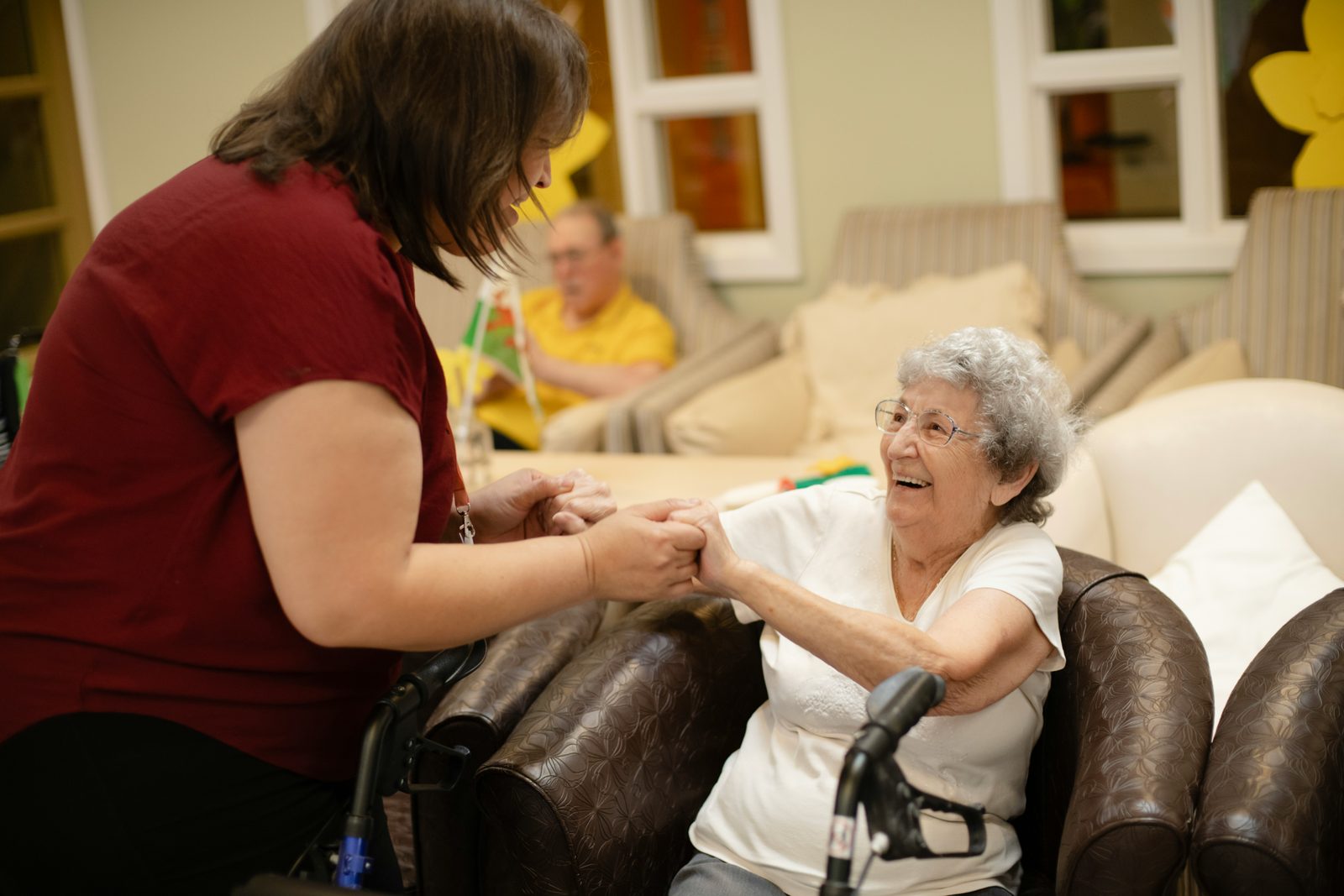
Having someone in the house a few times a week helps. Not just for the tasks. For the company. A steady person your loved one trusts changes how the day feels.
Safety Around the House
Falls are the big worry. Rugs get missed. A step gets misjudged. The dog gets underfoot, and nobody sees it. A caregiver keeps the paths clear, moves the ottoman back where it belongs, and walks next to your loved one on the harder trips like the stairs or the bathroom at night.
Cooking is the other one. Burners left on. Something on the stove that got forgotten. A caregiver in the kitchen for meals takes that worry off the family.
When to Bring Somebody In
You don't need to wait for a fall or a burned pan. The signs show up sooner:
- Mail piling up because the print is too small
- Missed doses or doubled pills
- Weight loss because cooking got too hard
- Skipped appointments
- Your parent not going out anymore
If any of that sounds like your family, it's time.
If someone you love in Castro Valley is living with macular degeneration and the day is getting harder, reach out to ComForCare of Castro Valley. We'll come sit down with your family and figure out what a good week could look like.