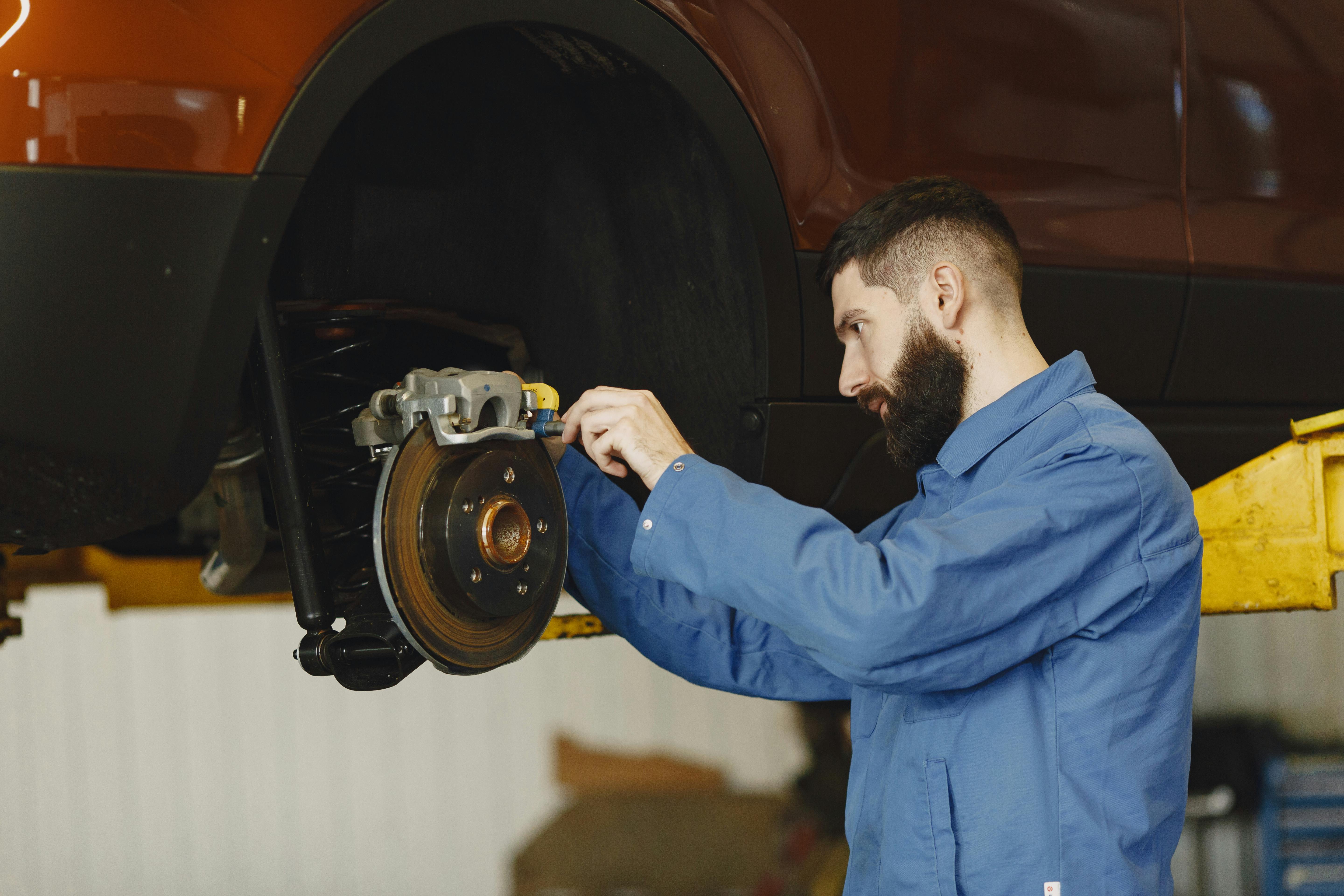
 Brake pads wear down one millimeter at a time, and most Piedmont drivers won't notice until the repair costs twice what it should have. The warning signs start small, a faint squeal on a Tuesday morning, a pedal that feels slightly different than last month. Those signals represent components crossing from serviceable to damaged, and every week of delay adds parts and labor to the final invoice. Oceanworks Auto Repair Shop in Berkeley serves Piedmont residents and catches these problems while the fix is still straightforward.
What That Squeal Is Counting Down
Brake pads contain a small metal wear indicator tab embedded in the friction material, and that tab is engineered to contact the rotor when approximately 2 to 3 millimeters of pad remain. That high-pitched squeal during light braking is a designed alert built into the pad itself. On vehicles with single-piston floating calipers, the inboard pad wears faster because the piston pushes it directly while the outboard pad depends on the caliper body sliding inward. The 2012-2019 Honda CR-V is one model where we see this inboard wear pattern consistently during routine inspections at our Berkeley shop.
Grinding Means the Friction Material Is Gone
Once pads wear past the indicator tab, the steel backing plate begins contacting the rotor surface with every stop. This metal-on-metal contact scores the rotor and can grind it below the manufacturer's minimum thickness specification, which is stamped or published for each rotor application. Resurfacing isn't viable at that point because there isn't enough material left to machine a clean surface. The repair expands from a pad replacement into a full rotor and pad job on that axle.
A Pulsating Pedal Points to Rotor Runout
If your brake pedal vibrates or pulses during highway deceleration, the rotors have developed lateral runout beyond their specified tolerance. Most manufacturers set this tolerance between .001 and .003 inches, measured with a dial indicator mounted to a fixed point near the rotor face. Lug nuts torqued unevenly during a tire change are a common cause, because the uneven clamping force distorts the rotor's mounting surface over repeated heat cycles. We measure runout on every brake inspection at Oceanworks because a warped rotor won't improve on its own.
Soft Pedals and Contaminated Fluid
A brake pedal that sinks lower than it used to, or feels spongy under firm pressure, points to moisture contamination in the brake fluid. DOT 3 fluid carries a federal minimum dry boiling point of 401 degrees Fahrenheit, but that number drops to 284 degrees when the fluid absorbs moisture through brake hoses and seals. DOT 4 starts higher at 446 degrees dry and falls to 311 degrees wet. When contaminated fluid boils under heavy braking, it creates compressible vapor pockets in the lines that rob you of pedal firmness exactly when you need it most.
Piedmont's Hills Wear Brakes Faster Than the Odometer Shows
Piedmont sits in the Oakland Hills, and its residential streets include grades steep enough to keep your brakes engaged through long descents into Berkeley and Oakland. This sustained thermal cycling heats rotors and pads past their optimal operating window in ways that flat-terrain commuting can't replicate. Drivers who descend those grades daily load their brake systems harder than mileage alone suggests, and the wear compounds quietly over months of hill driving.
Bring the Measurements Before the Symptoms Get Louder
Oceanworks Auto Repair Shop in Berkeley is a short drive from Piedmont, and we inspect brakes by measuring rotor thickness against the vehicle's published discard spec, checking pad depth at all four corners, and testing caliper slide pin movement. If your pedal feels different than it did six months ago, or you've been tuning out a noise that started soft, call us at (510) 345-0606 before the pads become rotors and the rotors become calipers. The symptoms you've adapted to are the ones that cost the most when they finally demand attention.
Brake pads wear down one millimeter at a time, and most Piedmont drivers won't notice until the repair costs twice what it should have. The warning signs start small, a faint squeal on a Tuesday morning, a pedal that feels slightly different than last month. Those signals represent components crossing from serviceable to damaged, and every week of delay adds parts and labor to the final invoice. Oceanworks Auto Repair Shop in Berkeley serves Piedmont residents and catches these problems while the fix is still straightforward.
What That Squeal Is Counting Down
Brake pads contain a small metal wear indicator tab embedded in the friction material, and that tab is engineered to contact the rotor when approximately 2 to 3 millimeters of pad remain. That high-pitched squeal during light braking is a designed alert built into the pad itself. On vehicles with single-piston floating calipers, the inboard pad wears faster because the piston pushes it directly while the outboard pad depends on the caliper body sliding inward. The 2012-2019 Honda CR-V is one model where we see this inboard wear pattern consistently during routine inspections at our Berkeley shop.
Grinding Means the Friction Material Is Gone
Once pads wear past the indicator tab, the steel backing plate begins contacting the rotor surface with every stop. This metal-on-metal contact scores the rotor and can grind it below the manufacturer's minimum thickness specification, which is stamped or published for each rotor application. Resurfacing isn't viable at that point because there isn't enough material left to machine a clean surface. The repair expands from a pad replacement into a full rotor and pad job on that axle.
A Pulsating Pedal Points to Rotor Runout
If your brake pedal vibrates or pulses during highway deceleration, the rotors have developed lateral runout beyond their specified tolerance. Most manufacturers set this tolerance between .001 and .003 inches, measured with a dial indicator mounted to a fixed point near the rotor face. Lug nuts torqued unevenly during a tire change are a common cause, because the uneven clamping force distorts the rotor's mounting surface over repeated heat cycles. We measure runout on every brake inspection at Oceanworks because a warped rotor won't improve on its own.
Soft Pedals and Contaminated Fluid
A brake pedal that sinks lower than it used to, or feels spongy under firm pressure, points to moisture contamination in the brake fluid. DOT 3 fluid carries a federal minimum dry boiling point of 401 degrees Fahrenheit, but that number drops to 284 degrees when the fluid absorbs moisture through brake hoses and seals. DOT 4 starts higher at 446 degrees dry and falls to 311 degrees wet. When contaminated fluid boils under heavy braking, it creates compressible vapor pockets in the lines that rob you of pedal firmness exactly when you need it most.
Piedmont's Hills Wear Brakes Faster Than the Odometer Shows
Piedmont sits in the Oakland Hills, and its residential streets include grades steep enough to keep your brakes engaged through long descents into Berkeley and Oakland. This sustained thermal cycling heats rotors and pads past their optimal operating window in ways that flat-terrain commuting can't replicate. Drivers who descend those grades daily load their brake systems harder than mileage alone suggests, and the wear compounds quietly over months of hill driving.
Bring the Measurements Before the Symptoms Get Louder
Oceanworks Auto Repair Shop in Berkeley is a short drive from Piedmont, and we inspect brakes by measuring rotor thickness against the vehicle's published discard spec, checking pad depth at all four corners, and testing caliper slide pin movement. If your pedal feels different than it did six months ago, or you've been tuning out a noise that started soft, call us at (510) 345-0606 before the pads become rotors and the rotors become calipers. The symptoms you've adapted to are the ones that cost the most when they finally demand attention.
Piedmont, CA - Signs Your Brakes Need Attention From an Auto Repair Shop
SYNOPSIS: Oceanworks Auto Repair Shop, located in Berkeley, CA, explains the brake warning signs that Piedmont drivers commonly overlook and describes what our technicians measure during a complete inspection.
Five Brake Warnings Piedmont Drivers Ignore
BY: ,
Brake pads wear down one millimeter at a time, and most Piedmont drivers won't notice until the repair costs twice what it should have. The warning signs start small, a faint squeal on a Tuesday morning, a pedal that feels slightly different than last month. Those signals represent components crossing from serviceable to damaged, and every week of delay adds parts and labor to the final invoice. Oceanworks Auto Repair Shop in Berkeley serves Piedmont residents and catches these problems while the fix is still straightforward.
What That Squeal Is Counting Down
Brake pads contain a small metal wear indicator tab embedded in the friction material, and that tab is engineered to contact the rotor when approximately 2 to 3 millimeters of pad remain. That high-pitched squeal during light braking is a designed alert built into the pad itself. On vehicles with single-piston floating calipers, the inboard pad wears faster because the piston pushes it directly while the outboard pad depends on the caliper body sliding inward. The 2012-2019 Honda CR-V is one model where we see this inboard wear pattern consistently during routine inspections at our Berkeley shop.
Grinding Means the Friction Material Is Gone
Once pads wear past the indicator tab, the steel backing plate begins contacting the rotor surface with every stop. This metal-on-metal contact scores the rotor and can grind it below the manufacturer's minimum thickness specification, which is stamped or published for each rotor application. Resurfacing isn't viable at that point because there isn't enough material left to machine a clean surface. The repair expands from a pad replacement into a full rotor and pad job on that axle.
A Pulsating Pedal Points to Rotor Runout
If your brake pedal vibrates or pulses during highway deceleration, the rotors have developed lateral runout beyond their specified tolerance. Most manufacturers set this tolerance between .001 and .003 inches, measured with a dial indicator mounted to a fixed point near the rotor face. Lug nuts torqued unevenly during a tire change are a common cause, because the uneven clamping force distorts the rotor's mounting surface over repeated heat cycles. We measure runout on every brake inspection at Oceanworks because a warped rotor won't improve on its own.
Soft Pedals and Contaminated Fluid
A brake pedal that sinks lower than it used to, or feels spongy under firm pressure, points to moisture contamination in the brake fluid. DOT 3 fluid carries a federal minimum dry boiling point of 401 degrees Fahrenheit, but that number drops to 284 degrees when the fluid absorbs moisture through brake hoses and seals. DOT 4 starts higher at 446 degrees dry and falls to 311 degrees wet. When contaminated fluid boils under heavy braking, it creates compressible vapor pockets in the lines that rob you of pedal firmness exactly when you need it most.
Piedmont's Hills Wear Brakes Faster Than the Odometer Shows
Piedmont sits in the Oakland Hills, and its residential streets include grades steep enough to keep your brakes engaged through long descents into Berkeley and Oakland. This sustained thermal cycling heats rotors and pads past their optimal operating window in ways that flat-terrain commuting can't replicate. Drivers who descend those grades daily load their brake systems harder than mileage alone suggests, and the wear compounds quietly over months of hill driving.
Bring the Measurements Before the Symptoms Get Louder
Oceanworks Auto Repair Shop in Berkeley is a short drive from Piedmont, and we inspect brakes by measuring rotor thickness against the vehicle's published discard spec, checking pad depth at all four corners, and testing caliper slide pin movement. If your pedal feels different than it did six months ago, or you've been tuning out a noise that started soft, call us at (510) 345-0606 before the pads become rotors and the rotors become calipers. The symptoms you've adapted to are the ones that cost the most when they finally demand attention.