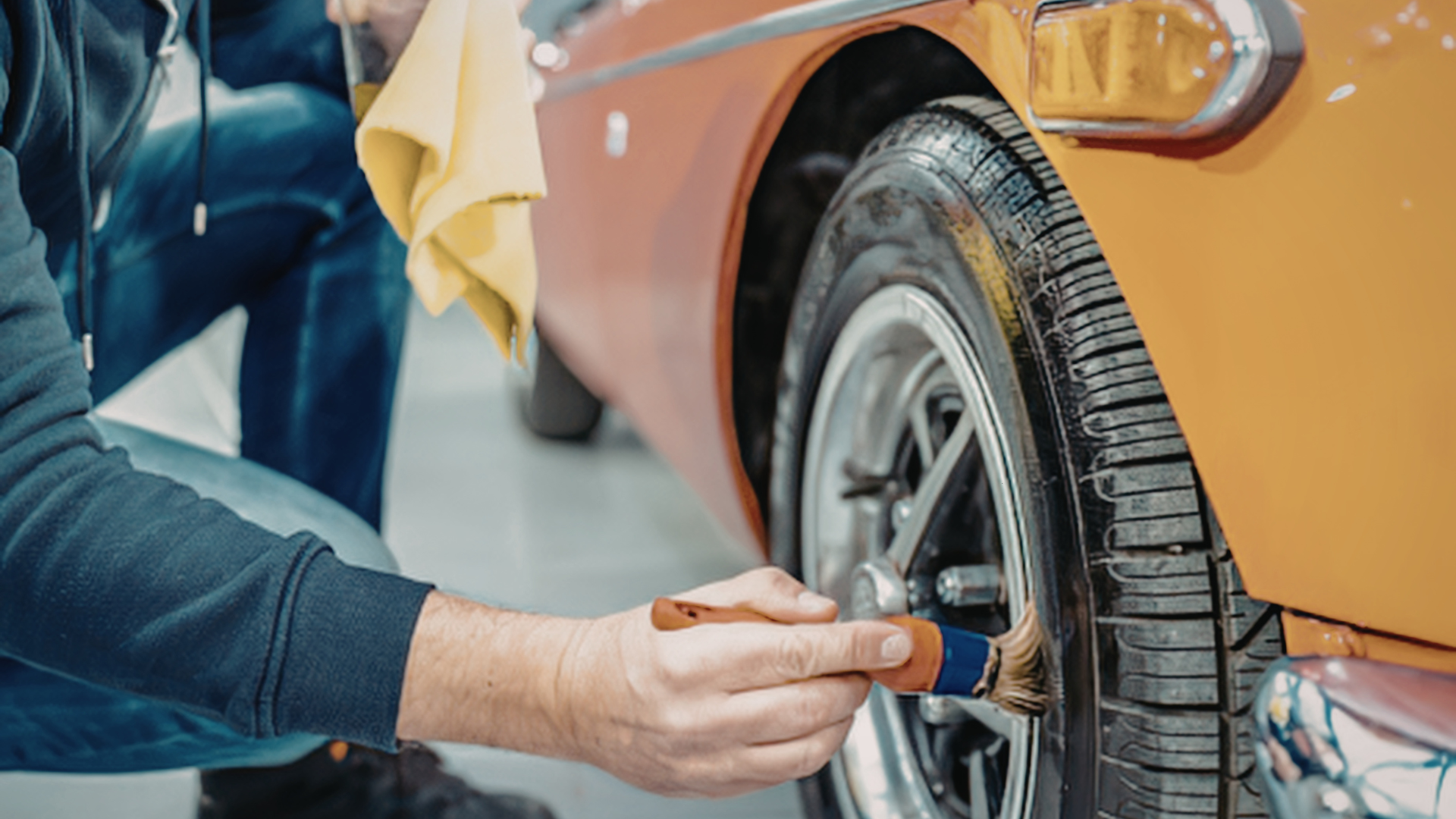
 Every Subaru in Piedmont rolls into our shop with a record on its tires that is more accurate than any owner's description of the symptom. The wear pattern tells us where the car is loaded, where the alignment has drifted, and which bushings have softened past their useful life. Oceanworks Auto Repair Shop, located in Berkeley, treats that record as the starting point for a Subaru inspection because the AWD system underneath punishes any imbalance the rest of the car would tolerate. Piedmont's elevation changes and tight neighborhood corners only sharpen the pattern.
Inner Edges On The Outback And Forester
Outback and Forester models from 2010 through 2019 commonly show inner-edge wear on the rear tires, and the cause usually lies in the rear bushings rather than in a misadjusted alignment. Soft rear lateral link and trailing arm bushings let rear camber and toe drift under cornering load, especially through grades like the ones around Piedmont. The alignment rack will catch the angles slipping out of spec under load, even when the static reading looks acceptable. Our team inspects every rear bushing under a pry-bar load before any alignment adjustment goes on the work order.
Outer Edges On The Impreza And WRX
Front outer-edge wear on Impreza and WRX models points to a different family of causes. Worn front control arm bushings or a positive toe condition drag the leading edge of the tire across the pavement on every steering input. The harder a driver turns into a corner, the faster the pattern deepens, and Piedmont's neighborhood layout produces plenty of those corners. Reading toe and camber on the rack, then watching the bushings under load, separates an alignment fix from a bushing replacement.
Cupping, Scalloping, And The Strut Behind Both
Cupping and diagonal scallop patterns across non-adjacent tires usually point to strut wear combined with a rotation that has fallen behind schedule. A worn strut lets the tire bounce over surface imperfections rather than staying planted, and the rubber loses material in distinct scoops. We used to credit most cupping cases to alignment alone; the strut bodies on long-mileage Outbacks and Foresters proved otherwise. Our lift inspection combines a manual bounce check with a visual on each strut body for any fluid seeping past the seal.
The AWD Tolerance Most Owners Never Hear About
Subaru asks for all four tires to stay within roughly a quarter inch of rolling circumference, which corresponds to about 2/32 inch of tread depth difference across the four corners. Tires outside that window force the center differential or transfer clutch to interpret the mismatch as continuous wheel slip. Older manual-transmission Subarus carry a viscous-coupling center differential, which overheats under that load and seizes. Newer CVT and automatic Subarus carry an electronically controlled multi-plate transfer clutch, which wears the friction plates faster than designed and can produce torque bind on tight low-speed turns.
When One Tire Goes, The Other Three Have An Opinion
Subaru recommends matched tires across all four positions, meaning the same brand, size, model, and a similar tread depth. Replacing only one or two tires on a high-mileage Subaru produces a circumference mismatch the AWD system reads as constant slip. Specialty tire shops can shave a new tire down to match the wear of the existing three, which costs less than buying four new tires and protects the drivetrain at the same time. Our team raises that option with Piedmont owners who arrive with one damaged tire and otherwise healthy rubber underneath.
Send Us The Subaru, We Will Send Back The Story
Piedmont Subaru drivers can call our team at (510) 345-0606 and book a full suspension and tire inspection at our Berkeley shop. We will read the rubber, the alignment angles, and every bushing together before any work gets scheduled.
Every Subaru in Piedmont rolls into our shop with a record on its tires that is more accurate than any owner's description of the symptom. The wear pattern tells us where the car is loaded, where the alignment has drifted, and which bushings have softened past their useful life. Oceanworks Auto Repair Shop, located in Berkeley, treats that record as the starting point for a Subaru inspection because the AWD system underneath punishes any imbalance the rest of the car would tolerate. Piedmont's elevation changes and tight neighborhood corners only sharpen the pattern.
Inner Edges On The Outback And Forester
Outback and Forester models from 2010 through 2019 commonly show inner-edge wear on the rear tires, and the cause usually lies in the rear bushings rather than in a misadjusted alignment. Soft rear lateral link and trailing arm bushings let rear camber and toe drift under cornering load, especially through grades like the ones around Piedmont. The alignment rack will catch the angles slipping out of spec under load, even when the static reading looks acceptable. Our team inspects every rear bushing under a pry-bar load before any alignment adjustment goes on the work order.
Outer Edges On The Impreza And WRX
Front outer-edge wear on Impreza and WRX models points to a different family of causes. Worn front control arm bushings or a positive toe condition drag the leading edge of the tire across the pavement on every steering input. The harder a driver turns into a corner, the faster the pattern deepens, and Piedmont's neighborhood layout produces plenty of those corners. Reading toe and camber on the rack, then watching the bushings under load, separates an alignment fix from a bushing replacement.
Cupping, Scalloping, And The Strut Behind Both
Cupping and diagonal scallop patterns across non-adjacent tires usually point to strut wear combined with a rotation that has fallen behind schedule. A worn strut lets the tire bounce over surface imperfections rather than staying planted, and the rubber loses material in distinct scoops. We used to credit most cupping cases to alignment alone; the strut bodies on long-mileage Outbacks and Foresters proved otherwise. Our lift inspection combines a manual bounce check with a visual on each strut body for any fluid seeping past the seal.
The AWD Tolerance Most Owners Never Hear About
Subaru asks for all four tires to stay within roughly a quarter inch of rolling circumference, which corresponds to about 2/32 inch of tread depth difference across the four corners. Tires outside that window force the center differential or transfer clutch to interpret the mismatch as continuous wheel slip. Older manual-transmission Subarus carry a viscous-coupling center differential, which overheats under that load and seizes. Newer CVT and automatic Subarus carry an electronically controlled multi-plate transfer clutch, which wears the friction plates faster than designed and can produce torque bind on tight low-speed turns.
When One Tire Goes, The Other Three Have An Opinion
Subaru recommends matched tires across all four positions, meaning the same brand, size, model, and a similar tread depth. Replacing only one or two tires on a high-mileage Subaru produces a circumference mismatch the AWD system reads as constant slip. Specialty tire shops can shave a new tire down to match the wear of the existing three, which costs less than buying four new tires and protects the drivetrain at the same time. Our team raises that option with Piedmont owners who arrive with one damaged tire and otherwise healthy rubber underneath.
Send Us The Subaru, We Will Send Back The Story
Piedmont Subaru drivers can call our team at (510) 345-0606 and book a full suspension and tire inspection at our Berkeley shop. We will read the rubber, the alignment angles, and every bushing together before any work gets scheduled.
Piedmont, CA - Why Is Your Subaru Repair Shop Checking Uneven Tire Wear?
SYNOPSIS: Oceanworks Auto Repair explains how tire wear reveals suspension and AWD issues, helping Piedmont Subaru owners identify problems early. Pay attention to the inner and outer edges.
Wear Pattern Is The Cheapest Suspension Inspection
BY: ,
Every Subaru in Piedmont rolls into our shop with a record on its tires that is more accurate than any owner's description of the symptom. The wear pattern tells us where the car is loaded, where the alignment has drifted, and which bushings have softened past their useful life. Oceanworks Auto Repair Shop, located in Berkeley, treats that record as the starting point for a Subaru inspection because the AWD system underneath punishes any imbalance the rest of the car would tolerate. Piedmont's elevation changes and tight neighborhood corners only sharpen the pattern.
Inner Edges On The Outback And Forester
Outback and Forester models from 2010 through 2019 commonly show inner-edge wear on the rear tires, and the cause usually lies in the rear bushings rather than in a misadjusted alignment. Soft rear lateral link and trailing arm bushings let rear camber and toe drift under cornering load, especially through grades like the ones around Piedmont. The alignment rack will catch the angles slipping out of spec under load, even when the static reading looks acceptable. Our team inspects every rear bushing under a pry-bar load before any alignment adjustment goes on the work order.
Outer Edges On The Impreza And WRX
Front outer-edge wear on Impreza and WRX models points to a different family of causes. Worn front control arm bushings or a positive toe condition drag the leading edge of the tire across the pavement on every steering input. The harder a driver turns into a corner, the faster the pattern deepens, and Piedmont's neighborhood layout produces plenty of those corners. Reading toe and camber on the rack, then watching the bushings under load, separates an alignment fix from a bushing replacement.
Cupping, Scalloping, And The Strut Behind Both
Cupping and diagonal scallop patterns across non-adjacent tires usually point to strut wear combined with a rotation that has fallen behind schedule. A worn strut lets the tire bounce over surface imperfections rather than staying planted, and the rubber loses material in distinct scoops. We used to credit most cupping cases to alignment alone; the strut bodies on long-mileage Outbacks and Foresters proved otherwise. Our lift inspection combines a manual bounce check with a visual on each strut body for any fluid seeping past the seal.
The AWD Tolerance Most Owners Never Hear About
Subaru asks for all four tires to stay within roughly a quarter inch of rolling circumference, which corresponds to about 2/32 inch of tread depth difference across the four corners. Tires outside that window force the center differential or transfer clutch to interpret the mismatch as continuous wheel slip. Older manual-transmission Subarus carry a viscous-coupling center differential, which overheats under that load and seizes. Newer CVT and automatic Subarus carry an electronically controlled multi-plate transfer clutch, which wears the friction plates faster than designed and can produce torque bind on tight low-speed turns.
When One Tire Goes, The Other Three Have An Opinion
Subaru recommends matched tires across all four positions, meaning the same brand, size, model, and a similar tread depth. Replacing only one or two tires on a high-mileage Subaru produces a circumference mismatch the AWD system reads as constant slip. Specialty tire shops can shave a new tire down to match the wear of the existing three, which costs less than buying four new tires and protects the drivetrain at the same time. Our team raises that option with Piedmont owners who arrive with one damaged tire and otherwise healthy rubber underneath.
Send Us The Subaru, We Will Send Back The Story
Piedmont Subaru drivers can call our team at (510) 345-0606 and book a full suspension and tire inspection at our Berkeley shop. We will read the rubber, the alignment angles, and every bushing together before any work gets scheduled.