 If you’re driving a Mercedes-Benz in Berkeley, you expect more than just performance; you expect a vehicle built with engineering precision and technological sophistication. What many owners don’t realize is that the same precision required to build a Mercedes is required to repair it, and most auto shops simply aren’t equipped to deliver that level of service. From the moment a warning light appears or a shift feels delayed, your car is telling you it needs expert care, not generic part-swapping. At Oceanworks, located in Berkeley, we provide Mercedes-specific diagnostics, coding, and system analysis that matches what your vehicle was designed to expect. That’s how we solve problems that dealership service centers and quick-lube mechanics repeatedly miss.
722.9 Transmission Issues Cannot Be Reset Into Compliance
The 7-speed 722.9 transmission, found in numerous Mercedes-Benz models between 2006 and 2014, commonly develops conductor plate failures, delayed shifting, or limp mode symptoms once fluid breaks down or solenoid voltage begins to degrade. Most shops clear the codes and reset the adaptations without verifying clutch fill times or solenoid duty cycles, which leads to repeat failure and unresolved shifting behavior. At Oceanworks, we use MB Star Diagnosis to read every live value and confirm real-time internal pressure readings before taking any corrective steps. We also measure torque converter lockup timing and replace fluid with the correct Shell 134FE specification to ensure software and hardware alignment. Without this full-system audit, no repair on a 722.9 transmission can be trusted to last.
Electronic Steering Lock Failures Require Coding, Not Just Parts
Many 2008 through 2013 Mercedes-Benz E-Class and C-Class models suffer from ELV and EIS system failures that result in a no-start condition where the key is functional, but the dash remains completely dark. These failures are not battery-related; instead, they come from voltage corruption in the steering lock module or a locked EIS signal that refuses to handshake with the CAN bus. Our team performs LIN voltage continuity checks, tests the EIS-to-ECU logic path, and programs replacement parts using Mercedes-Benz’s Xentry interface with SCN coding. Swapping the module without matching the security protocols will not solve the issue and often makes the condition worse. We repair the issue by solving it electronically, not just replacing parts and hoping they sync.
Oil Leak Patterns Can Destroy More Than Seals
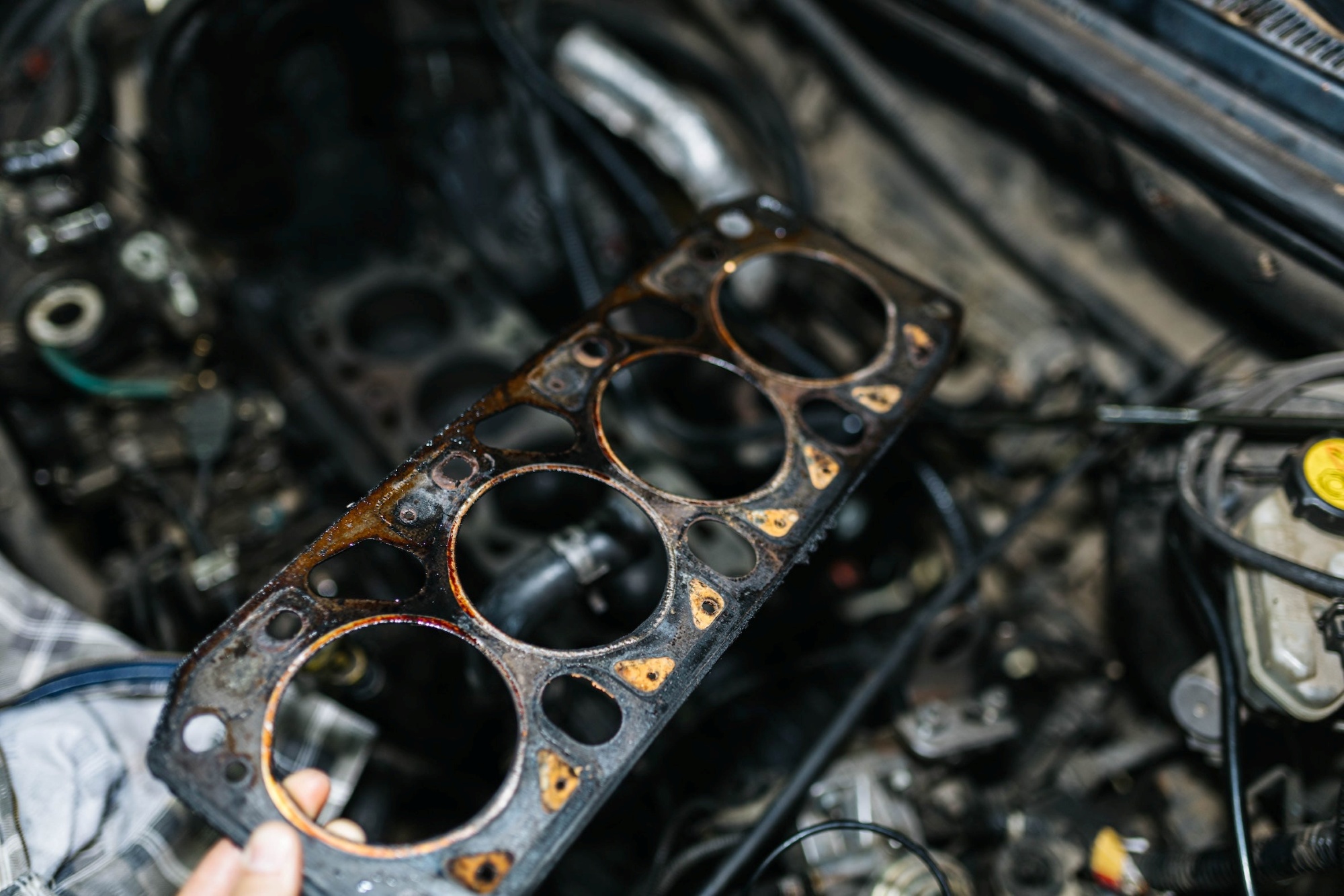
The M272 and M273 engines, commonly found in 2007 through 2011 E-Class and CLS models, are known for leaks around the timing cover, cam plugs, and oil cooler gaskets that worsen under thermal cycling. While these leaks may seem minor initially, they frequently contaminate nearby components such as oxygen sensors, drive belts, and alternator housings, creating multiple failure points in unrelated systems. At Oceanworks, we use dye tracing under pressure to detect precise leak paths, then reseal affected areas using improved gaskets that eliminate Mercedes’ original sealing geometry flaws. It’s not enough to clean the oil; we prevent it from returning. Correcting the leak without correcting the root design flaw leads to short-lived repairs.
AIRMATIC Systems Must Be Diagnosed As A Whole
Air suspension systems in 2013 to 2019 E-Class and GLS models tend to sag overnight or fail intermittently, symptoms most commonly blamed on airbag leaks when the real culprit is often a faulty valve block or overworked compressor. These systems operate under high pressure and require synchronized function across reservoir tanks, relay control modules, and solenoid blocks that regulate air delivery to each strut. At Oceanworks, we scan for compressor cycle frequency, check pressure drop-off rates, and test solenoid open-close timing under vehicle load to determine which components are truly at fault. Replacing a bag alone is not enough if the system controller or valve block fails the integrity test. We repair these systems as a unit, not as a series of guesses.
Modern Check Engine Lights Hide Deeper Pattern Failures
The M264 engine used in 2019 through 2022 C300 and GLC300 vehicles often throws codes for misfire, knock sensor inconsistency, or boost deviation, but the real cause is often buried deeper in mechanical degradation. These failures often stem from carbon buildup on intake valves, weak wastegate actuation, or injector spray disruption, none of which can be confirmed through code readers alone. We scope sensor response curves using digital oscilloscopes, monitor real-time turbo pressure graphs, and verify combustion timing via waveform correlation before replacing a single part. A light on the dash should trigger investigation, not a reset. Our approach ensures the light stays off for the right reason.
Safety Systems Depend on Calibration, Not Guesswork
On models like the 2020 GLE and the 2023 EQB, active driver assistance systems rely on radar, stereo camera arrays, and yaw rate sensors that must be calibrated precisely whenever a windshield, bumper, or alignment adjustment occurs. If these systems are even one degree off calibration, lane keep assist and adaptive cruise control can behave unpredictably, placing the driver at serious risk. We perform both static and dynamic ADAS recalibrations using OEM targets and exact measurement protocols that match Mercedes’ factory specs. We do not “eyeball” safety systems; we restore their integrity to the millimeter. Precision is not optional when software is steering your vehicle.
Trust Only What Has Been Verified
If your shop is clearing lights without checking waveform behavior, adaptation logic, or system voltage, you are not getting a real Mercedes-Benz repair. At Oceanworks in Berkeley, we test before we reset, we scope before we replace, and we solve what most others never diagnose correctly. If your Benz is hesitating, sagging, misfiring, or draining batteries, do not wait for it to get worse. Call us at (510) 345-0606 and schedule the service that respects your vehicle’s engineering.
If you’re driving a Mercedes-Benz in Berkeley, you expect more than just performance; you expect a vehicle built with engineering precision and technological sophistication. What many owners don’t realize is that the same precision required to build a Mercedes is required to repair it, and most auto shops simply aren’t equipped to deliver that level of service. From the moment a warning light appears or a shift feels delayed, your car is telling you it needs expert care, not generic part-swapping. At Oceanworks, located in Berkeley, we provide Mercedes-specific diagnostics, coding, and system analysis that matches what your vehicle was designed to expect. That’s how we solve problems that dealership service centers and quick-lube mechanics repeatedly miss.
722.9 Transmission Issues Cannot Be Reset Into Compliance
The 7-speed 722.9 transmission, found in numerous Mercedes-Benz models between 2006 and 2014, commonly develops conductor plate failures, delayed shifting, or limp mode symptoms once fluid breaks down or solenoid voltage begins to degrade. Most shops clear the codes and reset the adaptations without verifying clutch fill times or solenoid duty cycles, which leads to repeat failure and unresolved shifting behavior. At Oceanworks, we use MB Star Diagnosis to read every live value and confirm real-time internal pressure readings before taking any corrective steps. We also measure torque converter lockup timing and replace fluid with the correct Shell 134FE specification to ensure software and hardware alignment. Without this full-system audit, no repair on a 722.9 transmission can be trusted to last.
Electronic Steering Lock Failures Require Coding, Not Just Parts
Many 2008 through 2013 Mercedes-Benz E-Class and C-Class models suffer from ELV and EIS system failures that result in a no-start condition where the key is functional, but the dash remains completely dark. These failures are not battery-related; instead, they come from voltage corruption in the steering lock module or a locked EIS signal that refuses to handshake with the CAN bus. Our team performs LIN voltage continuity checks, tests the EIS-to-ECU logic path, and programs replacement parts using Mercedes-Benz’s Xentry interface with SCN coding. Swapping the module without matching the security protocols will not solve the issue and often makes the condition worse. We repair the issue by solving it electronically, not just replacing parts and hoping they sync.
Oil Leak Patterns Can Destroy More Than Seals
The M272 and M273 engines, commonly found in 2007 through 2011 E-Class and CLS models, are known for leaks around the timing cover, cam plugs, and oil cooler gaskets that worsen under thermal cycling. While these leaks may seem minor initially, they frequently contaminate nearby components such as oxygen sensors, drive belts, and alternator housings, creating multiple failure points in unrelated systems. At Oceanworks, we use dye tracing under pressure to detect precise leak paths, then reseal affected areas using improved gaskets that eliminate Mercedes’ original sealing geometry flaws. It’s not enough to clean the oil; we prevent it from returning. Correcting the leak without correcting the root design flaw leads to short-lived repairs.
AIRMATIC Systems Must Be Diagnosed As A Whole
Air suspension systems in 2013 to 2019 E-Class and GLS models tend to sag overnight or fail intermittently, symptoms most commonly blamed on airbag leaks when the real culprit is often a faulty valve block or overworked compressor. These systems operate under high pressure and require synchronized function across reservoir tanks, relay control modules, and solenoid blocks that regulate air delivery to each strut. At Oceanworks, we scan for compressor cycle frequency, check pressure drop-off rates, and test solenoid open-close timing under vehicle load to determine which components are truly at fault. Replacing a bag alone is not enough if the system controller or valve block fails the integrity test. We repair these systems as a unit, not as a series of guesses.
Modern Check Engine Lights Hide Deeper Pattern Failures
The M264 engine used in 2019 through 2022 C300 and GLC300 vehicles often throws codes for misfire, knock sensor inconsistency, or boost deviation, but the real cause is often buried deeper in mechanical degradation. These failures often stem from carbon buildup on intake valves, weak wastegate actuation, or injector spray disruption, none of which can be confirmed through code readers alone. We scope sensor response curves using digital oscilloscopes, monitor real-time turbo pressure graphs, and verify combustion timing via waveform correlation before replacing a single part. A light on the dash should trigger investigation, not a reset. Our approach ensures the light stays off for the right reason.
Safety Systems Depend on Calibration, Not Guesswork
On models like the 2020 GLE and the 2023 EQB, active driver assistance systems rely on radar, stereo camera arrays, and yaw rate sensors that must be calibrated precisely whenever a windshield, bumper, or alignment adjustment occurs. If these systems are even one degree off calibration, lane keep assist and adaptive cruise control can behave unpredictably, placing the driver at serious risk. We perform both static and dynamic ADAS recalibrations using OEM targets and exact measurement protocols that match Mercedes’ factory specs. We do not “eyeball” safety systems; we restore their integrity to the millimeter. Precision is not optional when software is steering your vehicle.
Trust Only What Has Been Verified
If your shop is clearing lights without checking waveform behavior, adaptation logic, or system voltage, you are not getting a real Mercedes-Benz repair. At Oceanworks in Berkeley, we test before we reset, we scope before we replace, and we solve what most others never diagnose correctly. If your Benz is hesitating, sagging, misfiring, or draining batteries, do not wait for it to get worse. Call us at (510) 345-0606 and schedule the service that respects your vehicle’s engineering.
Berkeley, CA - Searching for an Auto Repair Shop for Mercedes-Benz Services?
SYNOPSIS: Oceanworks in Berkeley, CA, offers expert Mercedes-Benz repair—from W211 transmission issues to ADAS calibration. Skip the guesswork—call (510) 345-0606 for precise diagnostics and trusted service.
Mercedes-Benz Demands More Than Standard Service
BY: ,
If you’re driving a Mercedes-Benz in Berkeley, you expect more than just performance; you expect a vehicle built with engineering precision and technological sophistication. What many owners don’t realize is that the same precision required to build a Mercedes is required to repair it, and most auto shops simply aren’t equipped to deliver that level of service. From the moment a warning light appears or a shift feels delayed, your car is telling you it needs expert care, not generic part-swapping. At Oceanworks, located in Berkeley, we provide Mercedes-specific diagnostics, coding, and system analysis that matches what your vehicle was designed to expect. That’s how we solve problems that dealership service centers and quick-lube mechanics repeatedly miss.
722.9 Transmission Issues Cannot Be Reset Into Compliance
The 7-speed 722.9 transmission, found in numerous Mercedes-Benz models between 2006 and 2014, commonly develops conductor plate failures, delayed shifting, or limp mode symptoms once fluid breaks down or solenoid voltage begins to degrade. Most shops clear the codes and reset the adaptations without verifying clutch fill times or solenoid duty cycles, which leads to repeat failure and unresolved shifting behavior. At Oceanworks, we use MB Star Diagnosis to read every live value and confirm real-time internal pressure readings before taking any corrective steps. We also measure torque converter lockup timing and replace fluid with the correct Shell 134FE specification to ensure software and hardware alignment. Without this full-system audit, no repair on a 722.9 transmission can be trusted to last.
Electronic Steering Lock Failures Require Coding, Not Just Parts
Many 2008 through 2013 Mercedes-Benz E-Class and C-Class models suffer from ELV and EIS system failures that result in a no-start condition where the key is functional, but the dash remains completely dark. These failures are not battery-related; instead, they come from voltage corruption in the steering lock module or a locked EIS signal that refuses to handshake with the CAN bus. Our team performs LIN voltage continuity checks, tests the EIS-to-ECU logic path, and programs replacement parts using Mercedes-Benz’s Xentry interface with SCN coding. Swapping the module without matching the security protocols will not solve the issue and often makes the condition worse. We repair the issue by solving it electronically, not just replacing parts and hoping they sync.
Oil Leak Patterns Can Destroy More Than Seals
The M272 and M273 engines, commonly found in 2007 through 2011 E-Class and CLS models, are known for leaks around the timing cover, cam plugs, and oil cooler gaskets that worsen under thermal cycling. While these leaks may seem minor initially, they frequently contaminate nearby components such as oxygen sensors, drive belts, and alternator housings, creating multiple failure points in unrelated systems. At Oceanworks, we use dye tracing under pressure to detect precise leak paths, then reseal affected areas using improved gaskets that eliminate Mercedes’ original sealing geometry flaws. It’s not enough to clean the oil; we prevent it from returning. Correcting the leak without correcting the root design flaw leads to short-lived repairs.
AIRMATIC Systems Must Be Diagnosed As A Whole
Air suspension systems in 2013 to 2019 E-Class and GLS models tend to sag overnight or fail intermittently, symptoms most commonly blamed on airbag leaks when the real culprit is often a faulty valve block or overworked compressor. These systems operate under high pressure and require synchronized function across reservoir tanks, relay control modules, and solenoid blocks that regulate air delivery to each strut. At Oceanworks, we scan for compressor cycle frequency, check pressure drop-off rates, and test solenoid open-close timing under vehicle load to determine which components are truly at fault. Replacing a bag alone is not enough if the system controller or valve block fails the integrity test. We repair these systems as a unit, not as a series of guesses.
Modern Check Engine Lights Hide Deeper Pattern Failures
The M264 engine used in 2019 through 2022 C300 and GLC300 vehicles often throws codes for misfire, knock sensor inconsistency, or boost deviation, but the real cause is often buried deeper in mechanical degradation. These failures often stem from carbon buildup on intake valves, weak wastegate actuation, or injector spray disruption, none of which can be confirmed through code readers alone. We scope sensor response curves using digital oscilloscopes, monitor real-time turbo pressure graphs, and verify combustion timing via waveform correlation before replacing a single part. A light on the dash should trigger investigation, not a reset. Our approach ensures the light stays off for the right reason.
Safety Systems Depend on Calibration, Not Guesswork
On models like the 2020 GLE and the 2023 EQB, active driver assistance systems rely on radar, stereo camera arrays, and yaw rate sensors that must be calibrated precisely whenever a windshield, bumper, or alignment adjustment occurs. If these systems are even one degree off calibration, lane keep assist and adaptive cruise control can behave unpredictably, placing the driver at serious risk. We perform both static and dynamic ADAS recalibrations using OEM targets and exact measurement protocols that match Mercedes’ factory specs. We do not “eyeball” safety systems; we restore their integrity to the millimeter. Precision is not optional when software is steering your vehicle.
Trust Only What Has Been Verified
If your shop is clearing lights without checking waveform behavior, adaptation logic, or system voltage, you are not getting a real Mercedes-Benz repair. At Oceanworks in Berkeley, we test before we reset, we scope before we replace, and we solve what most others never diagnose correctly. If your Benz is hesitating, sagging, misfiring, or draining batteries, do not wait for it to get worse. Call us at (510) 345-0606 and schedule the service that respects your vehicle’s engineering.