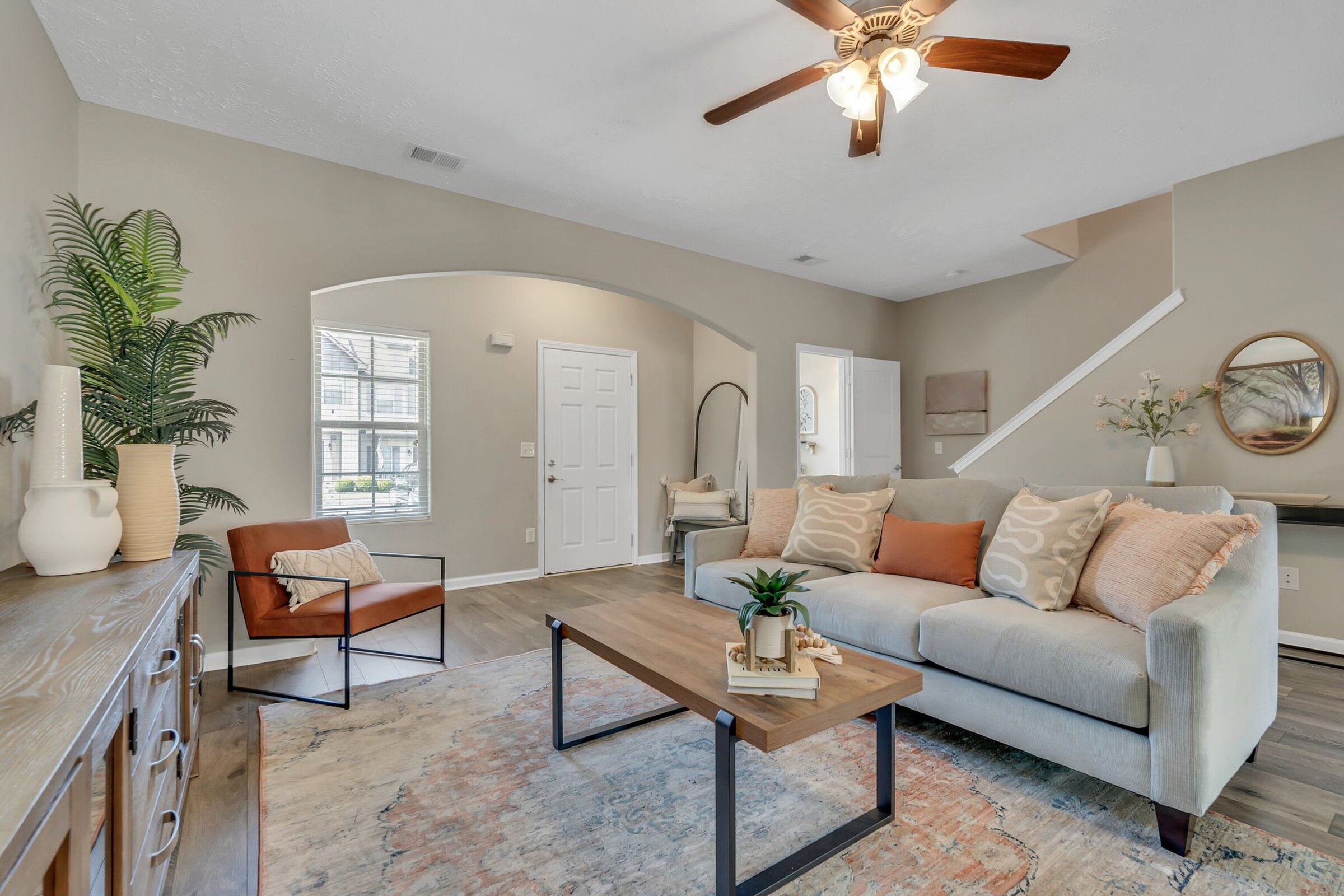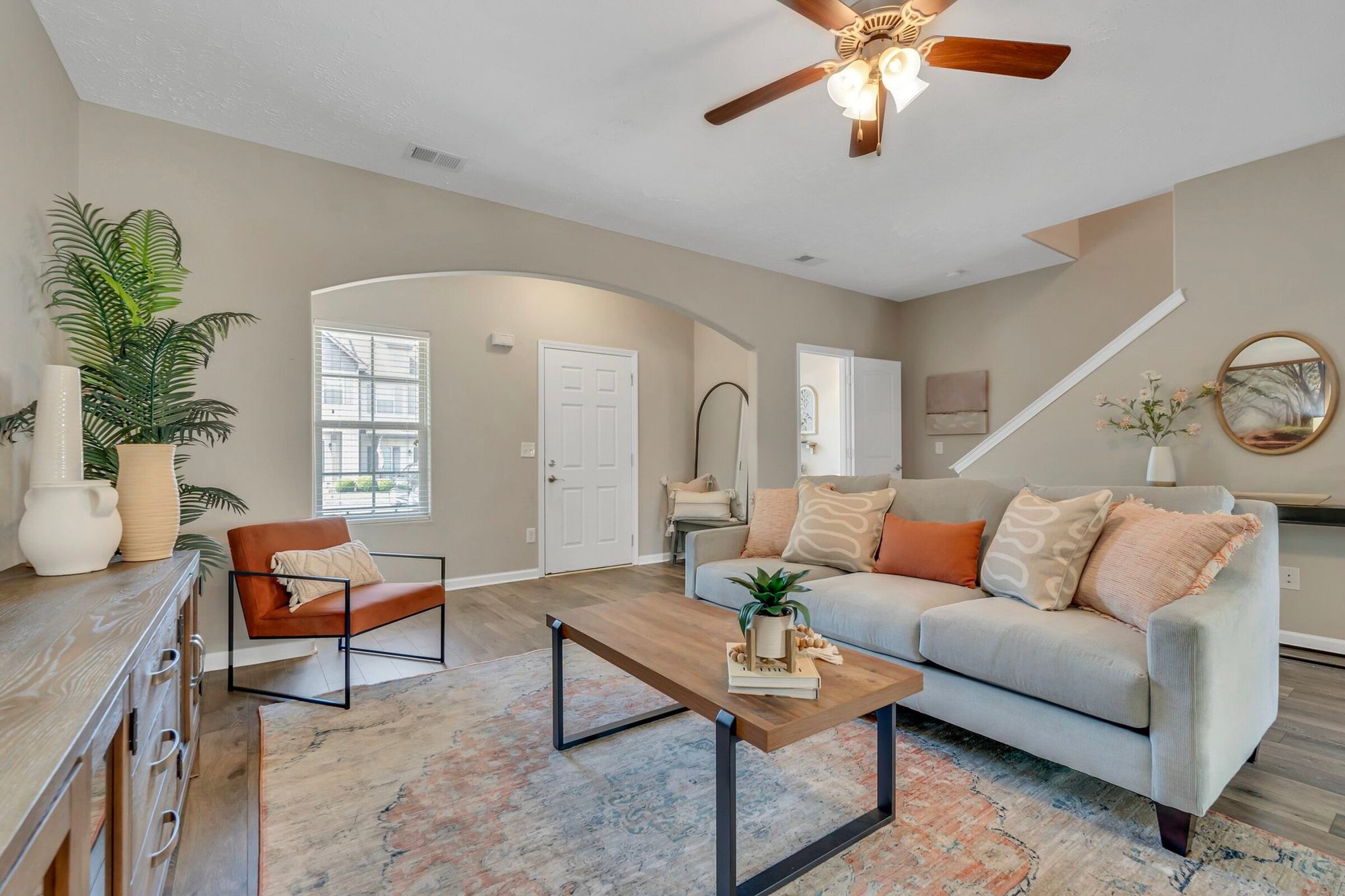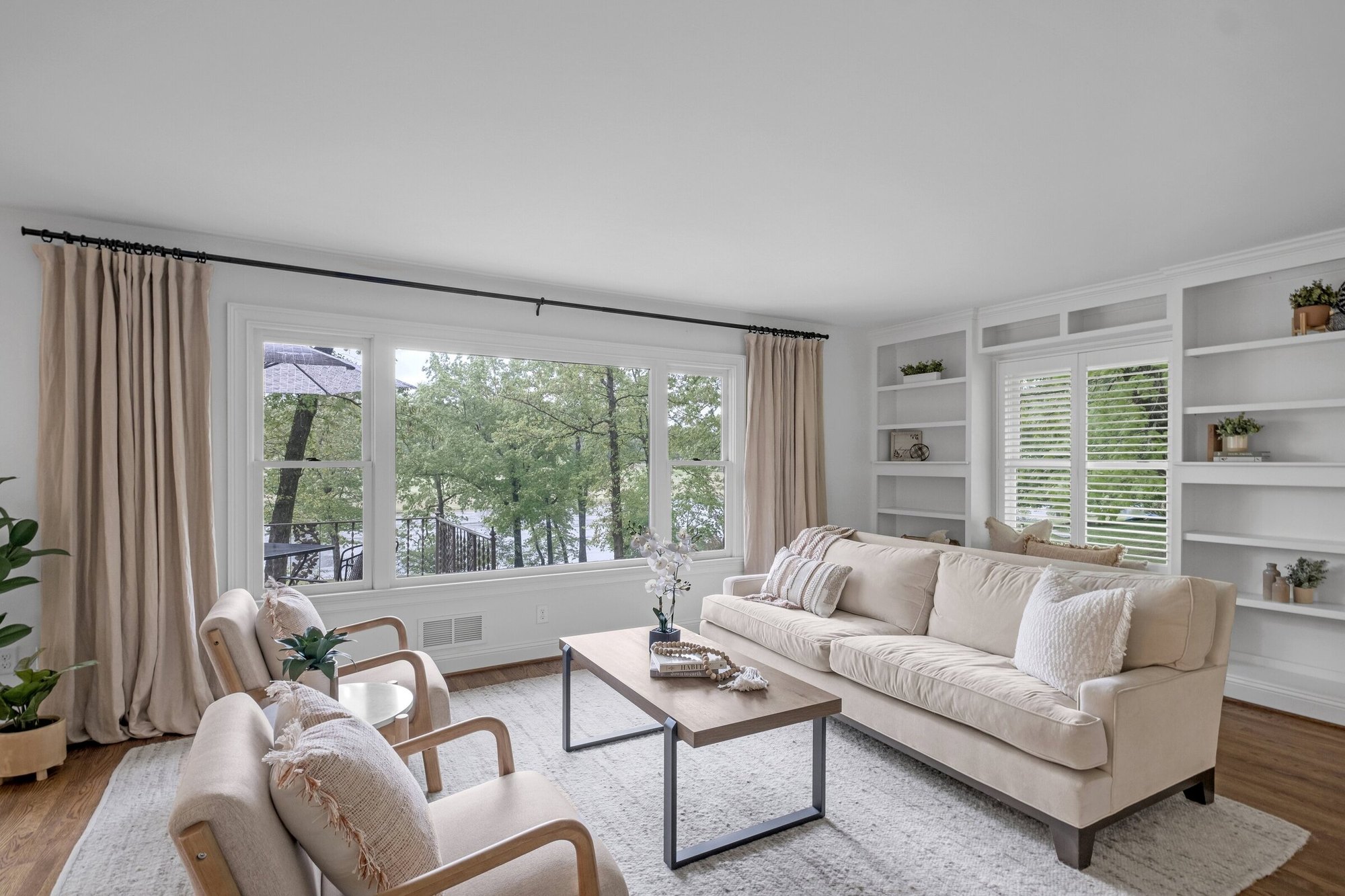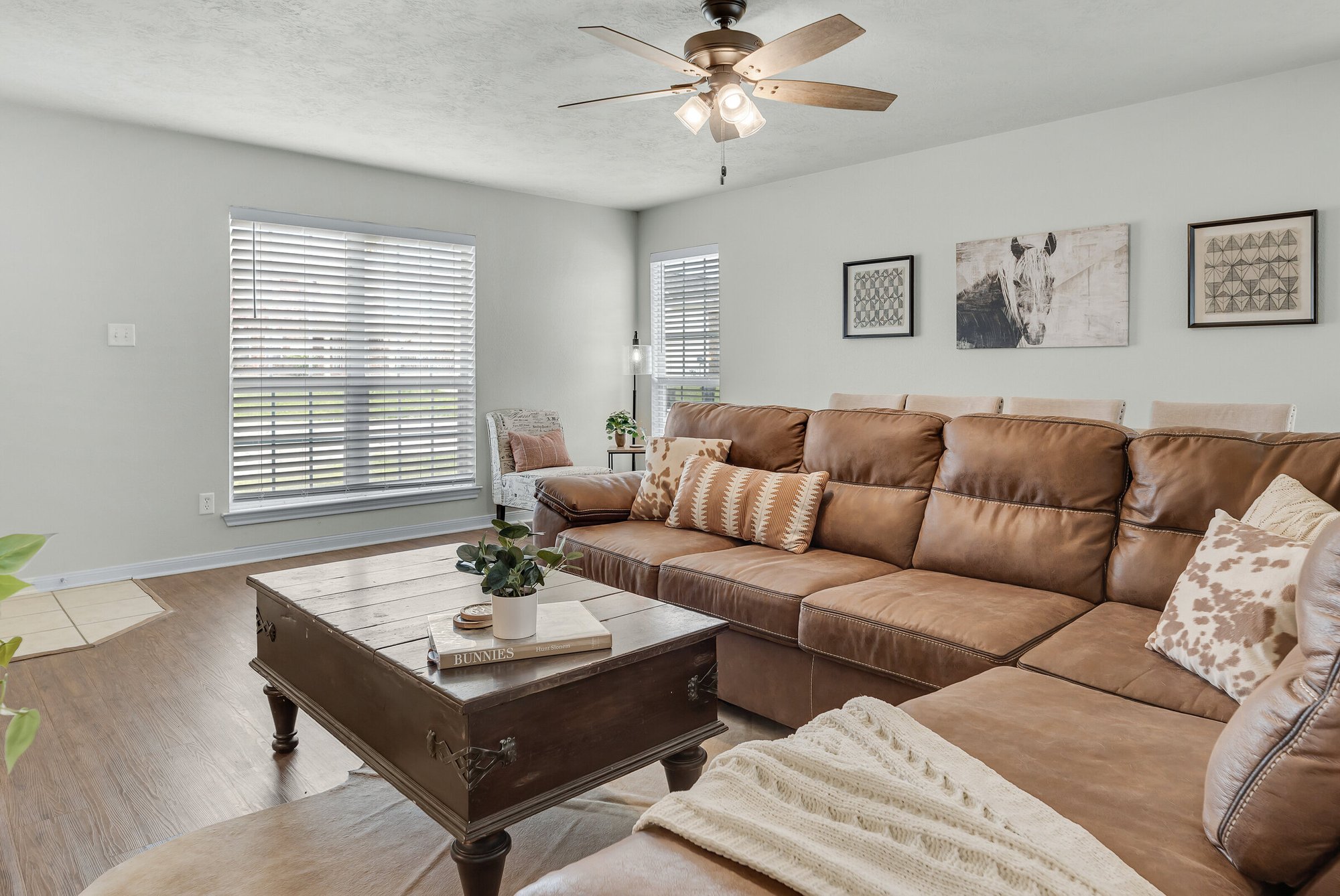
Every chair in your living room has a reason for being there. A buyer arrives without any of those reasons. The sofa may face the television because that's how your family uses the room. A basket may sit beside the doorway since it's been useful there for years. From the doorway none of that reads as history, and what it reads as instead is how much floor the room has and how hard it looks to cross. The buyer who drove out on a Saturday is already measuring for their own furniture. At 27 Stage, we walk that room before the photographer does and tell you which pieces are helping.
Start With What the Doorway Shows
Stand outside the living room before you change anything, then look through the doorway and name the largest object in view. Notice whether the room opens in front of you or whether furniture divides the entrance right away. Take a photograph from that spot, because a camera flattens a room the way a listing image will. If the first thing you see is the back of a sofa or the side of a cabinet, a buyer has to work to find the room. Start by moving that piece, and leave everything that already sits clear of the view. Then run the check again from any second doorway, because a room with two openings has to make sense from both.
Separate Bad Placement From Bad Scale
A blocked walkway doesn't automatically mean the sofa has to go. Sometimes a chair sits at the wrong angle, or a basket narrows the path. Move those pieces and walk the route again. Sellers measure a sofa against the room, and the wall is the measurement that settles it. A ninety-inch sofa looks correct on a twelve-foot wall and oversized on a ten-foot wall, in two rooms with the same square footage. Try yours on the longest wall you have before you rule it out. Most living rooms turn out to be a placement problem, which costs you an afternoon instead of a purchase.
Bring the Seating Into the Room
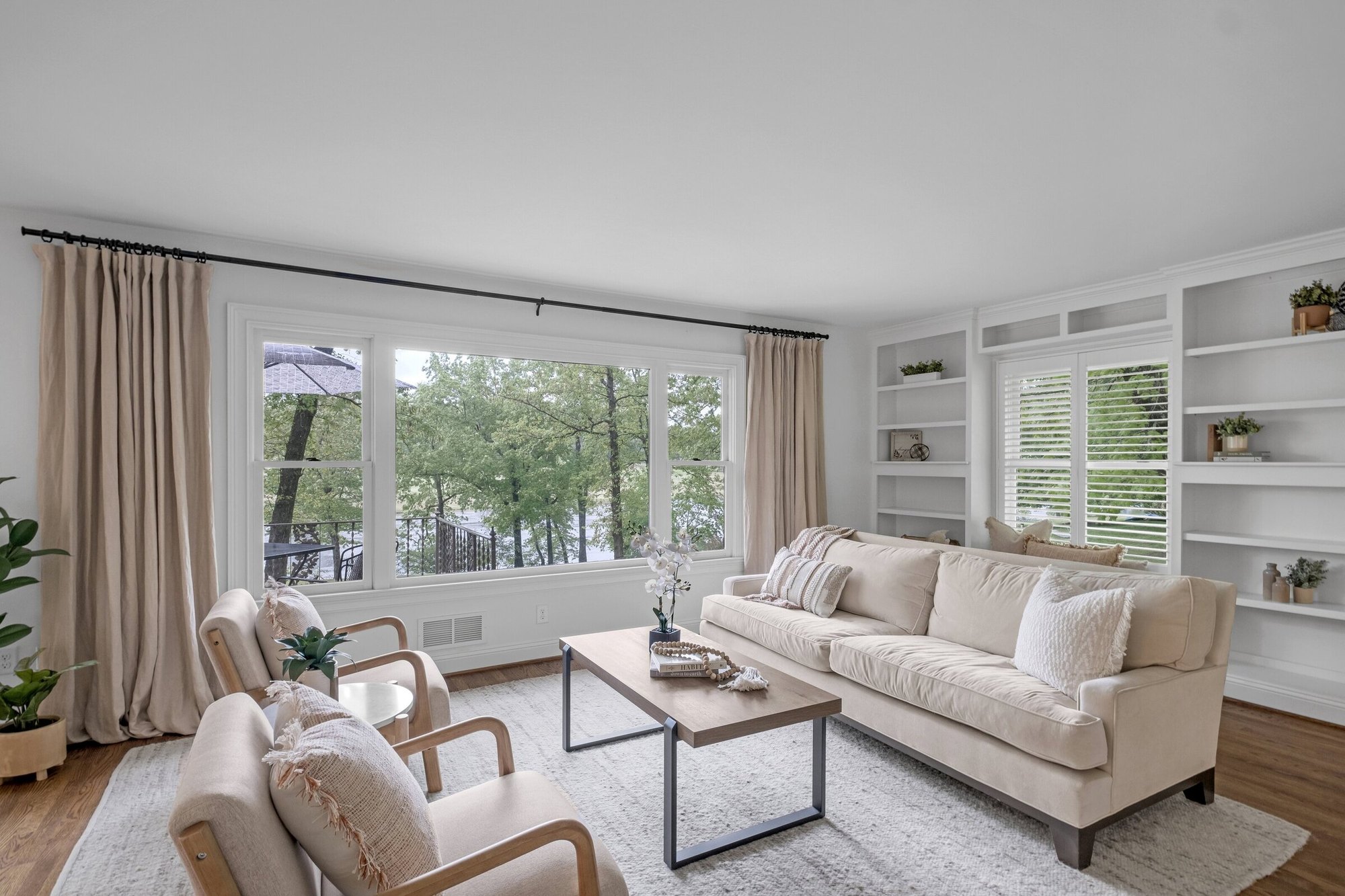
Pull the seating inward until two people could talk across it without raising their voices. Pushing every piece to the perimeter leaves an empty middle and crowded edges. Put the front legs of each seat on the rug when the rug is large enough. When the rug stops short of the seating, the pieces look unrelated to each other. Buyers should be able to find the seating and not have to follow the furniture around the walls. After the listing, the room can go back to facing the television. Nothing in this section costs money, and most rooms pass it on what is already there.
Use Lamps Where the Room Falls Dark
One ceiling fixture rarely reaches every seat with the same light. Table lamps bring light down to the height where people sit and keep the far corners visible. Turn them on during the afternoon and look again from the entrance. Corners that disappear from the doorway make the room look shorter than it is. Your lamps don't have to match, but the bulbs should, so put soft white in all of them and keep the daylight bulbs out. Consistent lamp color makes a room look finished instead of assembled.
Know When Your Furniture Isn't Enough
Some living rooms improve completely with the furniture already inside them. Others come up one piece short, and it is almost always the sofa. Buying a replacement is a guess you make once and then live with for years. Here at 27 Stage, we keep our own inventory of sofas, rugs, lamps and artwork, and we pick against the size and layout of your room. We deliver it, set it in the room, and style the space before the photographer arrives. You keep whatever helps and we fill the gaps. Everything stays through your listing and comes back out after closing.
Walk Your Living Room With Us
You've arranged this room around years of daily use, and you can't unsee that from inside it. Call us at (629) 277-8243 before the listing photos go on the calendar. The first visit runs about an hour and we go room by room. You'll get a straight answer on whether this one needs repositioning or a different piece. Most sellers go from that call to a photo-ready house in about two to three weeks.