Professionals in St. Petersburg who decide to move into technology usually begin with a broad search for a computer science master's degree. The search terms are wrong for most of them, though the instinct behind the search is sound. A traditional computer science curriculum covers compilers, operating systems, algorithms, and theory of computation. A marketing analyst who wants to build predictive models, or a hospital administrator who wants to work with clinical data, rarely needs any of it.
Vedere University does not offer a computer science degree. The Tampa school builds specialized master's tracks for people who do not fit the traditional programmer mold, which gives a home to students who find a general computer science degree too broad for what they actually want to do. Below are the questions career changers ask most.
What does "computing-adjacent" mean in practice?
Three of Vedere's five master's programs sit in this territory: the MSc in Applied Data Science and Machine Learning, the MSc in Applied Data Science and Generative AI, and the MSc in Digital Currency and Applied Blockchain Technology. Each teaches programming and technical implementation, and each organizes that instruction around applied problems rather than computer science theory. Students write Python. They build and evaluate models. They do it in the service of a business or clinical question.
Is a career changer really the intended student?
Yes, explicitly. Vedere names career changers as one of four target groups for the Applied Data Science and Machine Learning program, alongside recent graduates, analysts and engineers, and research-minded professionals.
What about applicants with no programming background?
The curriculum starts at the foundation. Stage 1 covers basic Python programming, introductory statistical analysis, and data visualization. Stage 2 moves into advanced programming, statistical analysis, and analytics for decision-making. Stage 3 covers machine learning techniques, generative AI, and application in industry contexts, closing with a capstone project. The Applied Data Science and Machine Learning track includes four Math for Data Science courses and two dedicated Machine Learning courses, building the mathematical footing a self-taught path usually skips.
Admission to the two Applied Data Science tracks does require a quantitative background, evidenced either academically or through work history. A finance analyst, an engineer, a nurse who has worked with clinical metrics, or a logistics planner generally has this even without a technical degree.
How is the material taught?
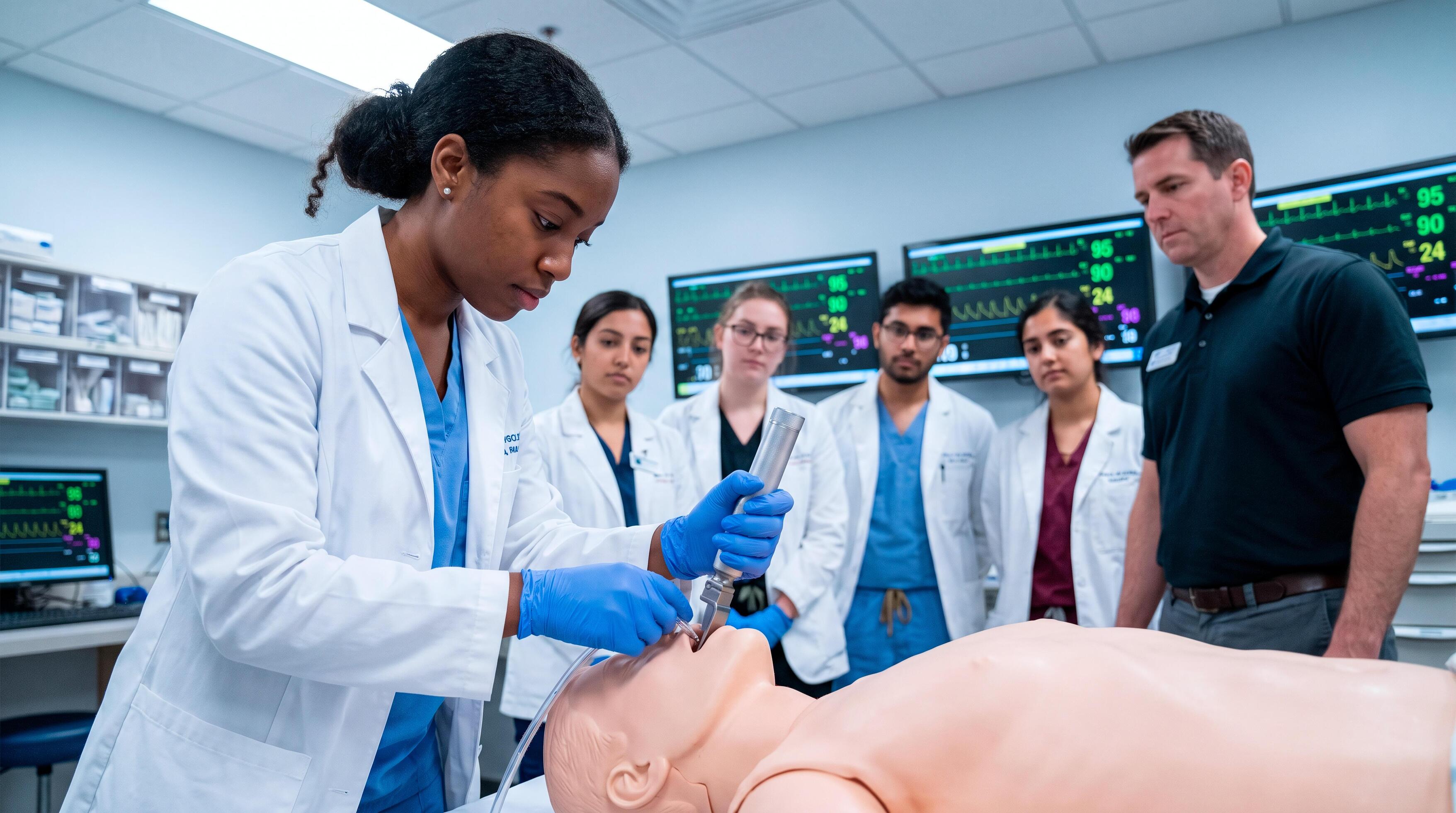
Through Problem-Based Learning across all programs. Vedere adopted PBL because it develops the high-level competencies and transferable skills employers and public-sector organizations keep requesting. Students confront structured problems and work toward solutions rather than moving through lectures and reproducing answers. For a career changer, the payoff is a portfolio of applied work at graduation, which matters more in a job search than a transcript when the transcript is in a different field.
What roles open up?
Vedere lists eight career targets for the Applied Data Science and Machine Learning degree: data scientist, machine learning engineer, ML operations engineer, business analyst, data analyst, research scientist, data science consultant, and quantitative analyst. Several of these are reachable by someone bringing domain knowledge from a prior career, since a business analyst with a decade of industry context and new technical skills is a different candidate than a fresh graduate.
A career services team supports the transition, working with students on how to position a nontechnical background rather than apologize for it.
Which program fits which person?
Machine learning and predictive modeling point toward the Applied Data Science and Machine Learning track. Large language models and generative systems point toward Applied Data Science and Generative AI. Distributed ledger technology and cryptocurrency point toward Digital Currency and Applied Blockchain Technology.
St. Petersburg professionals weighing these three options can send a resumé to admissions@vedereuniversity.com and ask for a program-by-program comparison against their actual background. The conversation is far more useful with the resumé in hand.