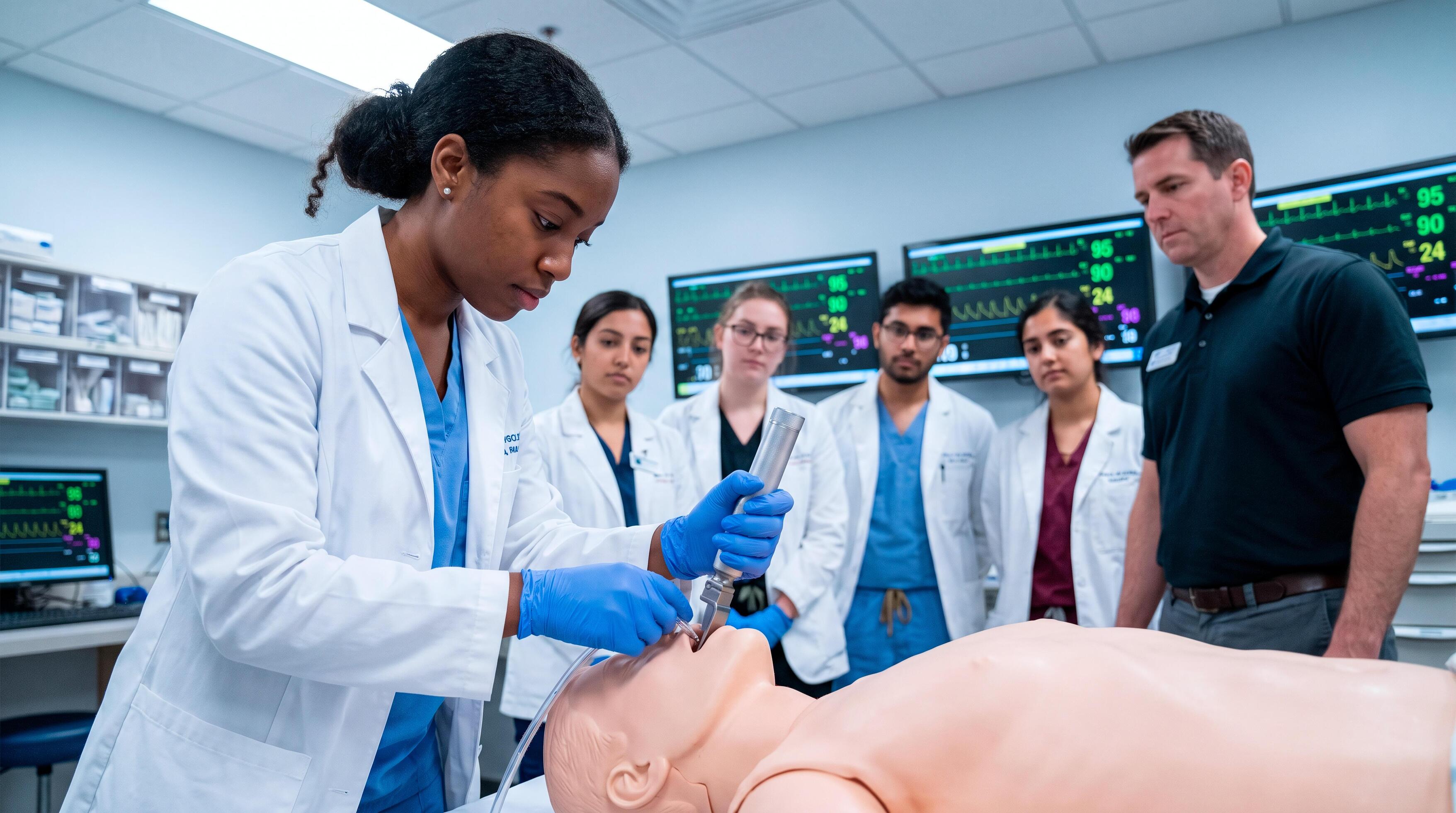
The short answer is yes. A nurse manager, billing supervisor, or clinic administrator in Tampa can earn a master's in healthcare management without stepping away from a paycheck. Vedere University runs its Master of Science in Healthcare Management entirely online and built it for people who already work inside the system. The longer answer matters more, because "online" describes delivery, not quality. The questions below are the ones a careful applicant should ask before enrolling anywhere.
Does the curriculum cover real management work, or just theory?
Vedere structured the degree around four content pillars: healthcare fundamentals, business essentials, technology, and leadership. Each pillar maps to a part of the job a healthcare manager actually does. Fundamentals keep a leader current on regulations, research, and care-delivery trends. Business essentials supply the financial and operational tools to run teams and functions. Technology coursework builds the judgment to assess and deploy systems instead of inheriting them. Leadership develops the communication and change-management skills the role demands. The program draws on the business and leadership model behind Access Health Care Physicians, Vedere's partner practice, which grew across Florida over the past two decades.
How is the program organized?
Students complete 36 credits across 12 required courses. Everyone starts with The Business of Medicine, then moves through Compliance, Quality, Utilization Management, Operations in Healthcare, Information Technology in Healthcare, Leadership in Healthcare, and others, before finishing with a Capstone Project. After the opening course, learners take the remaining courses in whatever order suits their schedule. The capstone pulls the pieces together by applying coursework to a single, sustained problem.
Who is the degree built for?
Admission expects an undergraduate degree from an accredited institution, with a preferred GPA of 3.0 or higher, and at least five years of demonstrable work experience. The experience requirement signals the intended audience: mid-career professionals ready for senior responsibility, not students fresh out of an undergraduate program. Applicants submit personal statements, a résumé, letters of recommendation, and official transcripts. International applicants may need a TOEFL or IELTS result.
What can a graduate do afterward?
By the end, students can read a healthcare delivery system and account for the financial, regulatory, and legislative forces acting on it, all within an ethical and legal frame.
What does it cost, and how long does it take?
The full program runs $24,984, or $694 per credit across the 36 credits. Because the format is online and largely self-paced after the first course, the timeline bends around a working schedule rather than the reverse.
Why the timing works
Healthcare faces real pressure right now: an aging population, rising costs, workforce shortages, and fragmented systems. The sector needs managers who can improve quality and deliver care fairly within that complexity, and the degree was built to produce them. It is part of why the four pillars lean as hard on leadership and business as on clinical fundamentals.
Why this fits Tampa professionals
Vedere University is based in Tampa and serves students across Florida and beyond. For a local professional, the proximity is more about shared context than commuting. Faculty understand the Florida care environment these graduates will manage, from an aging patient population to the staffing pressures regional systems face. The online format simply removes the relocation question from the decision.
So, can a Tampa professional earn a healthcare management master's online? Yes, and the more useful question is whether the structure, cost, and experience requirements line up with where a career stands today. To compare timelines and check the experience threshold against a current résumé, you can request the full Healthcare Management syllabus from Vedere University's admissions team.