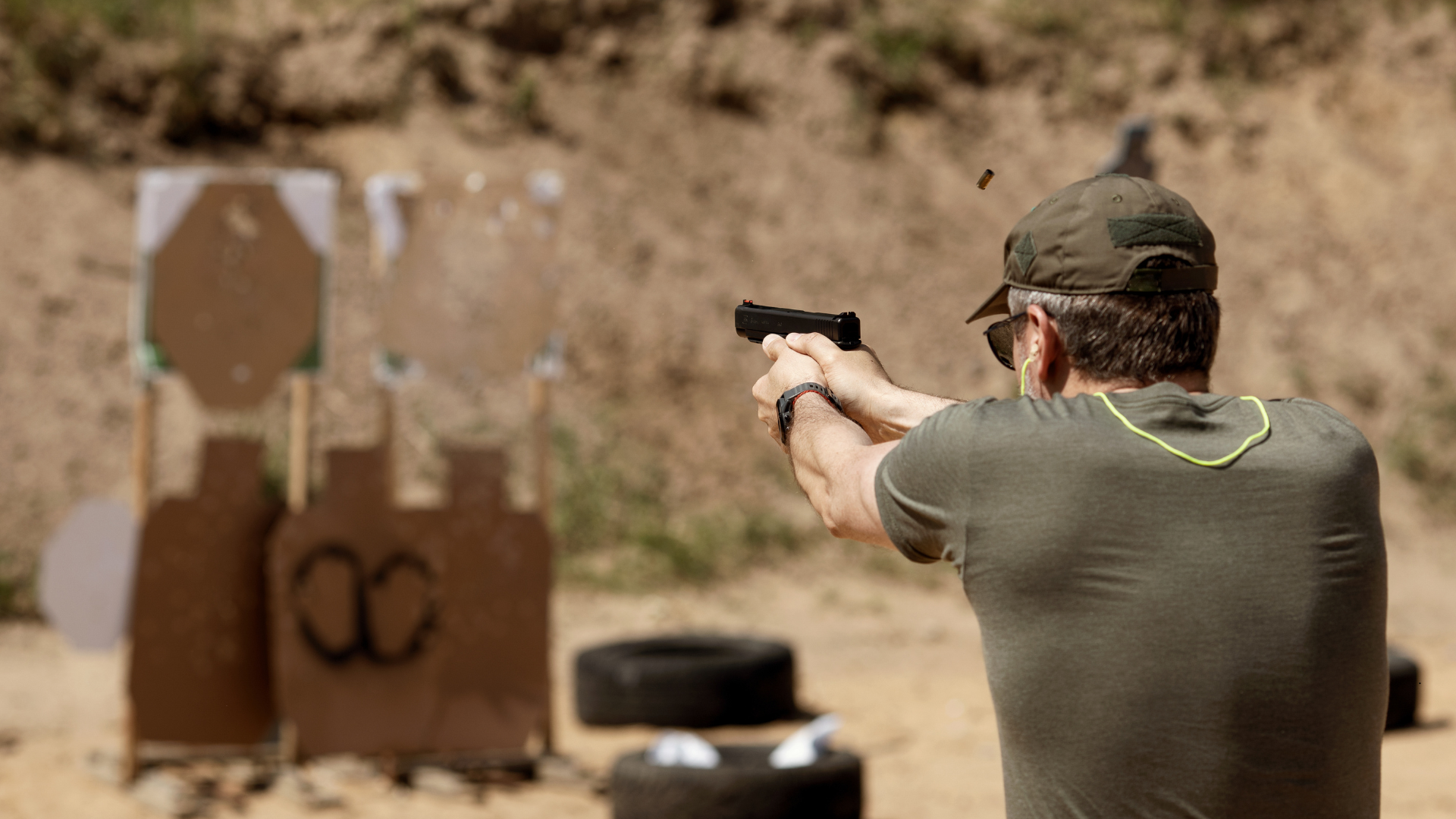
 The best shooters we know spend far more time dry firing than they ever spend at the range, and that ratio isn't coincidental. Live fire teaches you what's working and what isn't, but dry fire is where the actual improvement happens. The controlled environment, unlimited repetitions, and immediate feedback loop that dry practice provides simply can't be replicated when you're managing ammunition costs, range time limits, and the noise and pressure of a firing line.
Most shooters in Phoenix discover dry fire accidentally when ammunition prices spike or their schedule can't accommodate regular range visits. They start practicing at home out of necessity and then notice something unexpected: their live fire sessions improve dramatically despite fewer actual rounds being fired. That discovery points toward a training principle that competitive shooters have understood for decades and recreational shooters are only beginning to embrace.
What Your Nervous System Actually Learns
Your brain builds motor skills through repetition, and the neural pathways that control grip pressure, sight alignment, and trigger control don't care whether the gun goes bang at the end. Each dry fire repetition reinforces the same muscle memory you'd build with live ammunition, minus the flinch anticipation that degrades so many shooters' fundamentals. After a few hundred dry repetitions, your body starts executing the movements automatically rather than requiring conscious attention to each component, and that automaticity is exactly what you need when stress removes your ability to think through individual steps.
Isolating Problems You Can't See At The Range
Live fire happens fast, and the recoil obscures what your trigger finger and grip were doing at the moment of discharge. Dry fire slows everything down and lets you watch exactly what moves, what tenses, and what shifts as you press the trigger. Many shooters discover they're pushing the muzzle down in anticipation of recoil, a habit completely invisible during live fire but glaringly obvious when the gun doesn't move and you can see your sights dip. That diagnostic capability alone makes dry fire invaluable for anyone serious about improvement.
Draw Stroke Refinement Requires Massive Repetition
A smooth, efficient draw from concealment involves dozens of micro-movements that need to become unconscious before they're reliable under pressure. Clearing your garment, establishing your grip, releasing retention, presenting toward the target, and acquiring your sights; each component needs hundreds or thousands of repetitions before the sequence flows without thought. Running those repetitions at a live fire range would cost a fortune in lane fees and ammunition. Running them in your living room costs nothing but time and attention.
Trigger Control Is The Foundation Of Everything Else
Pressing the trigger straight back without disturbing your sight picture is conceptually simple and practically difficult for most shooters to master. The movement involves fractions of an inch and milligrams of pressure, and the slightest lateral deviation translates to inches of error at defensive distances. Dry fire lets you isolate this one skill completely, watching your front sight as you press through and reset, feeling exactly where your finger placement creates unwanted movement. You can run fifty trigger presses in five minutes of dry practice, an intensity that's impractical and expensive at the range.
Structuring Your Practice For Real Results
Effective dry fire isn't just clicking the trigger repeatedly while watching television. You need a cleared firearm, verified twice, in a space where you've removed all ammunition from the room entirely. You need a specific target area, ideally something small that demands precise aim. You need deliberate focus on one skill at a time, whether that's draw speed, trigger press, target transitions, or reloads. And you need to start slowly, building perfect form before adding any speed. Fast and sloppy practice builds fast and sloppy habits.
Laser Training Systems Add Instant Feedback
Our simulator experiences at C2 Tactical offer laser-based training that bridges the gap between dry fire and live fire by showing you exactly where your shots would have landed. The feedback accelerates learning compared to dry practice without any confirmation system. Customers who combine regular dry fire at home with periodic simulator sessions and focused live fire range time progress faster.
Start Building Your Skills Today
Whether you're working on fundamentals or refining advanced techniques, dry fire should be part of your training routine. Call (480) 588-8802 and talk with our team at C2 Tactical of Phoenix about structured training programs that combine dry practice with range time and simulator work. We help shooters across Phoenix build complete training approaches that produce real improvement rather than random range sessions that repeat the same mistakes.
The best shooters we know spend far more time dry firing than they ever spend at the range, and that ratio isn't coincidental. Live fire teaches you what's working and what isn't, but dry fire is where the actual improvement happens. The controlled environment, unlimited repetitions, and immediate feedback loop that dry practice provides simply can't be replicated when you're managing ammunition costs, range time limits, and the noise and pressure of a firing line.
Most shooters in Phoenix discover dry fire accidentally when ammunition prices spike or their schedule can't accommodate regular range visits. They start practicing at home out of necessity and then notice something unexpected: their live fire sessions improve dramatically despite fewer actual rounds being fired. That discovery points toward a training principle that competitive shooters have understood for decades and recreational shooters are only beginning to embrace.
What Your Nervous System Actually Learns
Your brain builds motor skills through repetition, and the neural pathways that control grip pressure, sight alignment, and trigger control don't care whether the gun goes bang at the end. Each dry fire repetition reinforces the same muscle memory you'd build with live ammunition, minus the flinch anticipation that degrades so many shooters' fundamentals. After a few hundred dry repetitions, your body starts executing the movements automatically rather than requiring conscious attention to each component, and that automaticity is exactly what you need when stress removes your ability to think through individual steps.
Isolating Problems You Can't See At The Range
Live fire happens fast, and the recoil obscures what your trigger finger and grip were doing at the moment of discharge. Dry fire slows everything down and lets you watch exactly what moves, what tenses, and what shifts as you press the trigger. Many shooters discover they're pushing the muzzle down in anticipation of recoil, a habit completely invisible during live fire but glaringly obvious when the gun doesn't move and you can see your sights dip. That diagnostic capability alone makes dry fire invaluable for anyone serious about improvement.
Draw Stroke Refinement Requires Massive Repetition
A smooth, efficient draw from concealment involves dozens of micro-movements that need to become unconscious before they're reliable under pressure. Clearing your garment, establishing your grip, releasing retention, presenting toward the target, and acquiring your sights; each component needs hundreds or thousands of repetitions before the sequence flows without thought. Running those repetitions at a live fire range would cost a fortune in lane fees and ammunition. Running them in your living room costs nothing but time and attention.
Trigger Control Is The Foundation Of Everything Else
Pressing the trigger straight back without disturbing your sight picture is conceptually simple and practically difficult for most shooters to master. The movement involves fractions of an inch and milligrams of pressure, and the slightest lateral deviation translates to inches of error at defensive distances. Dry fire lets you isolate this one skill completely, watching your front sight as you press through and reset, feeling exactly where your finger placement creates unwanted movement. You can run fifty trigger presses in five minutes of dry practice, an intensity that's impractical and expensive at the range.
Structuring Your Practice For Real Results
Effective dry fire isn't just clicking the trigger repeatedly while watching television. You need a cleared firearm, verified twice, in a space where you've removed all ammunition from the room entirely. You need a specific target area, ideally something small that demands precise aim. You need deliberate focus on one skill at a time, whether that's draw speed, trigger press, target transitions, or reloads. And you need to start slowly, building perfect form before adding any speed. Fast and sloppy practice builds fast and sloppy habits.
Laser Training Systems Add Instant Feedback
Our simulator experiences at C2 Tactical offer laser-based training that bridges the gap between dry fire and live fire by showing you exactly where your shots would have landed. The feedback accelerates learning compared to dry practice without any confirmation system. Customers who combine regular dry fire at home with periodic simulator sessions and focused live fire range time progress faster.
Start Building Your Skills Today
Whether you're working on fundamentals or refining advanced techniques, dry fire should be part of your training routine. Call (480) 588-8802 and talk with our team at C2 Tactical of Phoenix about structured training programs that combine dry practice with range time and simulator work. We help shooters across Phoenix build complete training approaches that produce real improvement rather than random range sessions that repeat the same mistakes.
Phoenix, AZ - Why Dry Fire Firearm Training Improves Live Fire Performance
SYNOPSIS: C2 Tactical of Phoenix explains how structured dry fire training boosts live fire performance, showing Phoenix shooters why practice without ammo leads to faster skill improvement.
Dry Fire Builds Skills That Live Fire Reveals
BY: Vincent Vasquez, C2 Tactical of Phoenix, AZ
The best shooters we know spend far more time dry firing than they ever spend at the range, and that ratio isn't coincidental. Live fire teaches you what's working and what isn't, but dry fire is where the actual improvement happens. The controlled environment, unlimited repetitions, and immediate feedback loop that dry practice provides simply can't be replicated when you're managing ammunition costs, range time limits, and the noise and pressure of a firing line.
Most shooters in Phoenix discover dry fire accidentally when ammunition prices spike or their schedule can't accommodate regular range visits. They start practicing at home out of necessity and then notice something unexpected: their live fire sessions improve dramatically despite fewer actual rounds being fired. That discovery points toward a training principle that competitive shooters have understood for decades and recreational shooters are only beginning to embrace.
What Your Nervous System Actually Learns
Your brain builds motor skills through repetition, and the neural pathways that control grip pressure, sight alignment, and trigger control don't care whether the gun goes bang at the end. Each dry fire repetition reinforces the same muscle memory you'd build with live ammunition, minus the flinch anticipation that degrades so many shooters' fundamentals. After a few hundred dry repetitions, your body starts executing the movements automatically rather than requiring conscious attention to each component, and that automaticity is exactly what you need when stress removes your ability to think through individual steps.
Isolating Problems You Can't See At The Range
Live fire happens fast, and the recoil obscures what your trigger finger and grip were doing at the moment of discharge. Dry fire slows everything down and lets you watch exactly what moves, what tenses, and what shifts as you press the trigger. Many shooters discover they're pushing the muzzle down in anticipation of recoil, a habit completely invisible during live fire but glaringly obvious when the gun doesn't move and you can see your sights dip. That diagnostic capability alone makes dry fire invaluable for anyone serious about improvement.
Draw Stroke Refinement Requires Massive Repetition
A smooth, efficient draw from concealment involves dozens of micro-movements that need to become unconscious before they're reliable under pressure. Clearing your garment, establishing your grip, releasing retention, presenting toward the target, and acquiring your sights; each component needs hundreds or thousands of repetitions before the sequence flows without thought. Running those repetitions at a live fire range would cost a fortune in lane fees and ammunition. Running them in your living room costs nothing but time and attention.
Trigger Control Is The Foundation Of Everything Else
Pressing the trigger straight back without disturbing your sight picture is conceptually simple and practically difficult for most shooters to master. The movement involves fractions of an inch and milligrams of pressure, and the slightest lateral deviation translates to inches of error at defensive distances. Dry fire lets you isolate this one skill completely, watching your front sight as you press through and reset, feeling exactly where your finger placement creates unwanted movement. You can run fifty trigger presses in five minutes of dry practice, an intensity that's impractical and expensive at the range.
Structuring Your Practice For Real Results
Effective dry fire isn't just clicking the trigger repeatedly while watching television. You need a cleared firearm, verified twice, in a space where you've removed all ammunition from the room entirely. You need a specific target area, ideally something small that demands precise aim. You need deliberate focus on one skill at a time, whether that's draw speed, trigger press, target transitions, or reloads. And you need to start slowly, building perfect form before adding any speed. Fast and sloppy practice builds fast and sloppy habits.
Laser Training Systems Add Instant Feedback
Our simulator experiences at C2 Tactical offer laser-based training that bridges the gap between dry fire and live fire by showing you exactly where your shots would have landed. The feedback accelerates learning compared to dry practice without any confirmation system. Customers who combine regular dry fire at home with periodic simulator sessions and focused live fire range time progress faster.
Start Building Your Skills Today
Whether you're working on fundamentals or refining advanced techniques, dry fire should be part of your training routine. Call (480) 588-8802 and talk with our team at C2 Tactical of Phoenix about structured training programs that combine dry practice with range time and simulator work. We help shooters across Phoenix build complete training approaches that produce real improvement rather than random range sessions that repeat the same mistakes.