 A lot of shooters in Phoenix focus on upgrades, new accessories, or training hours, but many overlook something much simpler: keeping the firearm clean enough to do its job. We see the results of skipped cleaning all the time at C2 Tactical of Phoenix, and most problems trace back to carbon buildup, dried lubricant, or a part that never got wiped down. Proper maintenance isn’t complicated, but it makes a noticeable difference in how a firearm feels, fires, and lasts over time.
Why Cleaning Matters More Than Most People Think
Every time you fire a round, residue builds up inside the gun. Powder fouling, metal shavings, and carbon start to collect in places that affect movement, consistency, and reliability. A clean firearm cycles more smoothly and communicates its condition to you through feel alone. We tell Phoenix shooters that a well-maintained gun should not surprise them. Good cleaning habits prevent those surprises before they happen.
Cleaning Kits Give You the Right Tools for the Job
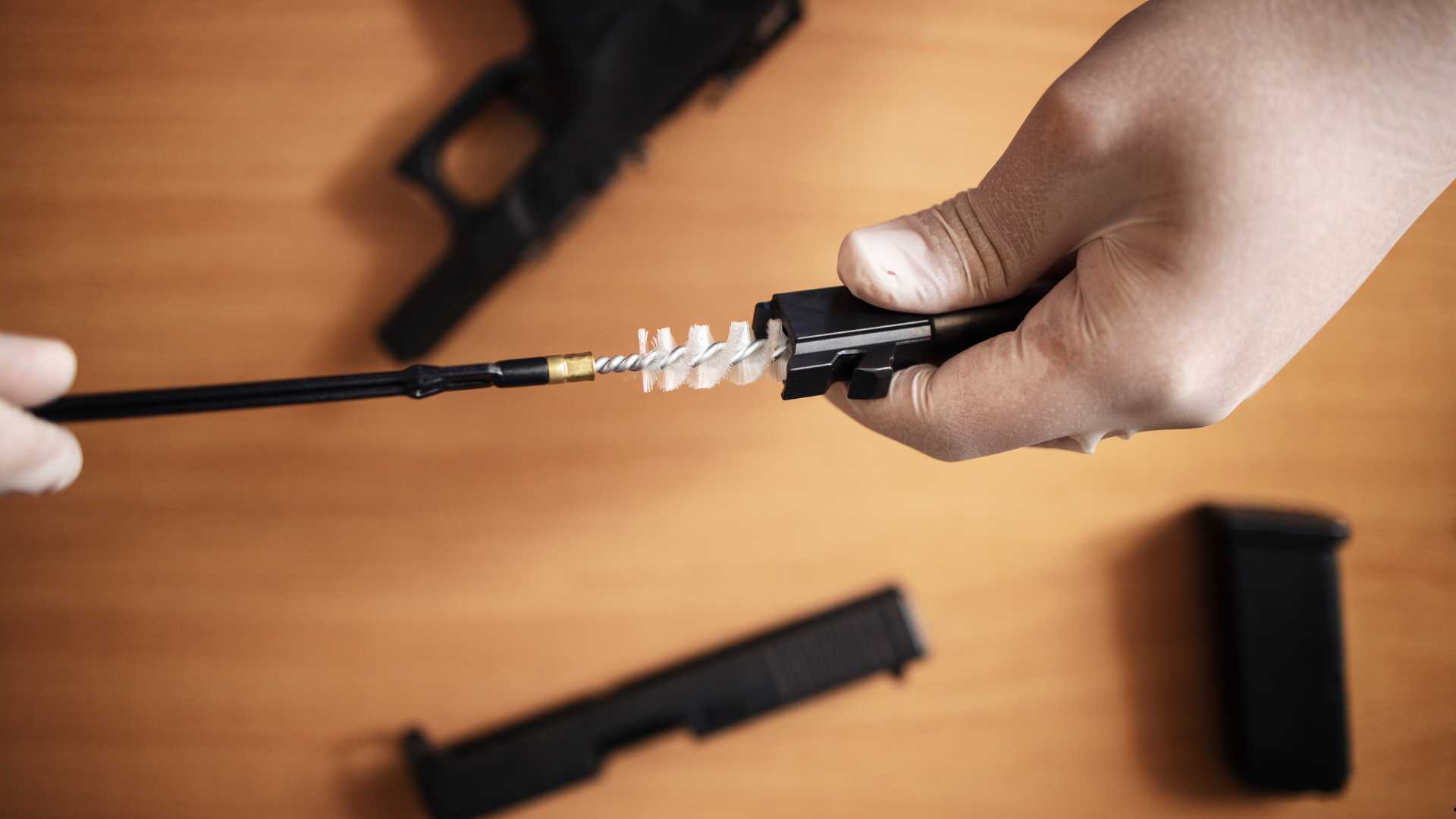
A basic kit contains brushes, patches, rods, and picks designed for the areas you can’t reach by hand. Those tools help you remove debris from the barrel, the chamber, and the slide rails where buildup causes performance issues. We walk shooters through each step so they understand how to work with the firearm’s natural design, not against it. Good kits last a long time and help you develop a simple routine you can repeat after every range trip.
Solvents Break Down the Grime You Can’t See
Most buildup inside a firearm doesn’t look dramatic, but it changes how parts interact. Solvents loosen the carbon and powder residue that dry brushes can’t remove on their own. When shooters in Phoenix ask why their slide feels sluggish or why their bolt looks worn, the answer usually starts here. A few minutes of solvent work saves you frustration and keeps the firearm operating as intended.
Lubricants Keep Moving Parts Running Smoothly
Lubricants create a thin layer that reduces friction between metal surfaces. Without lubrication, the firearm begins to feel rougher, louder, and less predictable. We explain lubrication the same way we explain recoil management: small changes make major differences. A well-lubricated slide or bolt feels clean and controlled, which helps shooters focus on technique instead of mechanical drag. It also prevents unnecessary wear on components that should last for thousands of rounds.
How Often Should You Clean Your Firearm?
We tell shooters in Phoenix to clean their firearms after each session if possible, or at least before storing them for an extended period. Regular cleaning helps you notice changes in springs, firing pins, and wear points before they turn into real issues. You get to know your firearm better, and that knowledge builds confidence and familiarity that show up in your shooting.
What We See When Firearms Aren’t Maintained
Failure to feed, failure to eject, gritty triggers, weak slide return, and inconsistent accuracy are the most common signs of neglected maintenance. Almost every one of these problems has a simple fix, and cleaning solves most of them. We prefer teaching shooters how to stay ahead of issues instead of walking them through preventable malfunctions on the range.
If You Want a Clear, Simple Cleaning Routine
If you live in Phoenix and want help choosing a cleaning kit or lubricant that makes sense for your firearm, call (480) 588-8802. The team at C2 Tactical of Phoenix will walk you through the exact tools and steps you need so your firearm stays reliable every time you bring it to the range.
A lot of shooters in Phoenix focus on upgrades, new accessories, or training hours, but many overlook something much simpler: keeping the firearm clean enough to do its job. We see the results of skipped cleaning all the time at C2 Tactical of Phoenix, and most problems trace back to carbon buildup, dried lubricant, or a part that never got wiped down. Proper maintenance isn’t complicated, but it makes a noticeable difference in how a firearm feels, fires, and lasts over time.
Why Cleaning Matters More Than Most People Think
Every time you fire a round, residue builds up inside the gun. Powder fouling, metal shavings, and carbon start to collect in places that affect movement, consistency, and reliability. A clean firearm cycles more smoothly and communicates its condition to you through feel alone. We tell Phoenix shooters that a well-maintained gun should not surprise them. Good cleaning habits prevent those surprises before they happen.
Cleaning Kits Give You the Right Tools for the Job
A basic kit contains brushes, patches, rods, and picks designed for the areas you can’t reach by hand. Those tools help you remove debris from the barrel, the chamber, and the slide rails where buildup causes performance issues. We walk shooters through each step so they understand how to work with the firearm’s natural design, not against it. Good kits last a long time and help you develop a simple routine you can repeat after every range trip.
Solvents Break Down the Grime You Can’t See
Most buildup inside a firearm doesn’t look dramatic, but it changes how parts interact. Solvents loosen the carbon and powder residue that dry brushes can’t remove on their own. When shooters in Phoenix ask why their slide feels sluggish or why their bolt looks worn, the answer usually starts here. A few minutes of solvent work saves you frustration and keeps the firearm operating as intended.
Lubricants Keep Moving Parts Running Smoothly
Lubricants create a thin layer that reduces friction between metal surfaces. Without lubrication, the firearm begins to feel rougher, louder, and less predictable. We explain lubrication the same way we explain recoil management: small changes make major differences. A well-lubricated slide or bolt feels clean and controlled, which helps shooters focus on technique instead of mechanical drag. It also prevents unnecessary wear on components that should last for thousands of rounds.
How Often Should You Clean Your Firearm?
We tell shooters in Phoenix to clean their firearms after each session if possible, or at least before storing them for an extended period. Regular cleaning helps you notice changes in springs, firing pins, and wear points before they turn into real issues. You get to know your firearm better, and that knowledge builds confidence and familiarity that show up in your shooting.
What We See When Firearms Aren’t Maintained
Failure to feed, failure to eject, gritty triggers, weak slide return, and inconsistent accuracy are the most common signs of neglected maintenance. Almost every one of these problems has a simple fix, and cleaning solves most of them. We prefer teaching shooters how to stay ahead of issues instead of walking them through preventable malfunctions on the range.
If You Want a Clear, Simple Cleaning Routine
If you live in Phoenix and want help choosing a cleaning kit or lubricant that makes sense for your firearm, call (480) 588-8802. The team at C2 Tactical of Phoenix will walk you through the exact tools and steps you need so your firearm stays reliable every time you bring it to the range.
Phoenix, AZ - The Role of Cleaning Kits and Lubricants in Firearm Performance
SYNOPSIS: C2 Tactical of Phoenix explains how cleaning kits and lubricants support reliable firearm performance and why regular maintenance helps Phoenix shooters avoid avoidable issues on the range.
Why Clean Guns Run Better, Longer in Phoenix
BY: Vincent Vasquez, C2 Tactical of Phoenix, AZ
A lot of shooters in Phoenix focus on upgrades, new accessories, or training hours, but many overlook something much simpler: keeping the firearm clean enough to do its job. We see the results of skipped cleaning all the time at C2 Tactical of Phoenix, and most problems trace back to carbon buildup, dried lubricant, or a part that never got wiped down. Proper maintenance isn’t complicated, but it makes a noticeable difference in how a firearm feels, fires, and lasts over time.
Why Cleaning Matters More Than Most People Think
Every time you fire a round, residue builds up inside the gun. Powder fouling, metal shavings, and carbon start to collect in places that affect movement, consistency, and reliability. A clean firearm cycles more smoothly and communicates its condition to you through feel alone. We tell Phoenix shooters that a well-maintained gun should not surprise them. Good cleaning habits prevent those surprises before they happen.
Cleaning Kits Give You the Right Tools for the Job
A basic kit contains brushes, patches, rods, and picks designed for the areas you can’t reach by hand. Those tools help you remove debris from the barrel, the chamber, and the slide rails where buildup causes performance issues. We walk shooters through each step so they understand how to work with the firearm’s natural design, not against it. Good kits last a long time and help you develop a simple routine you can repeat after every range trip.
Solvents Break Down the Grime You Can’t See
Most buildup inside a firearm doesn’t look dramatic, but it changes how parts interact. Solvents loosen the carbon and powder residue that dry brushes can’t remove on their own. When shooters in Phoenix ask why their slide feels sluggish or why their bolt looks worn, the answer usually starts here. A few minutes of solvent work saves you frustration and keeps the firearm operating as intended.
Lubricants Keep Moving Parts Running Smoothly
Lubricants create a thin layer that reduces friction between metal surfaces. Without lubrication, the firearm begins to feel rougher, louder, and less predictable. We explain lubrication the same way we explain recoil management: small changes make major differences. A well-lubricated slide or bolt feels clean and controlled, which helps shooters focus on technique instead of mechanical drag. It also prevents unnecessary wear on components that should last for thousands of rounds.
How Often Should You Clean Your Firearm?
We tell shooters in Phoenix to clean their firearms after each session if possible, or at least before storing them for an extended period. Regular cleaning helps you notice changes in springs, firing pins, and wear points before they turn into real issues. You get to know your firearm better, and that knowledge builds confidence and familiarity that show up in your shooting.
What We See When Firearms Aren’t Maintained
Failure to feed, failure to eject, gritty triggers, weak slide return, and inconsistent accuracy are the most common signs of neglected maintenance. Almost every one of these problems has a simple fix, and cleaning solves most of them. We prefer teaching shooters how to stay ahead of issues instead of walking them through preventable malfunctions on the range.
If You Want a Clear, Simple Cleaning Routine
If you live in Phoenix and want help choosing a cleaning kit or lubricant that makes sense for your firearm, call (480) 588-8802. The team at C2 Tactical of Phoenix will walk you through the exact tools and steps you need so your firearm stays reliable every time you bring it to the range.