“Dizzy” means something different to everybody. When we ask patients in Mesa to describe it, we hear all sorts of things. One guy says the room spins when he lies back in the dentist’s chair. Somebody else just feels foggy and unsure on her feet, especially at dusk when she’s walking the dog around Dobson Ranch. They’re all real. They just aren’t always the same problem.
Three Kinds of Dizzy
It helps to sort out which one you’ve got, because the fix is different for each, and some people have more than one at the same time.
- The first kind is spinning. The room or your head whirls, usually for under a minute, often when you roll over or look up. That’s the classic sign of BPPV, loose crystals in the inner ear.
- The second kind is a swaying, rocking feeling that gets worse in busy places with lots of movement. This often hangs on after an inner ear virus or a concussion.
- The third kind is shaky legs. Nothing’s spinning, but you’ve started keeping a hand on the counter, and you take the ramp instead of the curb. Here it’s usually your legs, your balance, or the feeling in your feet that’s slipping.
One kind of dizziness is a whole different story, and you shouldn’t drive yourself to us for it. Sudden dizziness plus a droopy face, mumbled words, an arm that won’t work, or a headache that knocks you flat means 911, right now.
What We Check
We start with questions. Does it last seconds or hours? Does rolling over set it off? Your answers rule out half the possibilities. Then you’ll follow our finger with your eyes, because your eyes twitch in telltale ways when the inner ear is off. We may lay you back with your head turned to one side to look for BPPV. Last, we test standing balance with your eyes open and closed, and on a soft pad.
How PT Gets You Steady
BPPV is the good news case. You lie down, we turn your head through a short series of positions, and the crystals tumble back into place. Some people sit up and the spinning is just gone, while others need a second round.
The swaying kind takes some practice. You’ll keep your eyes on a sticky note on the wall while turning your head side to side, a little faster each week. Then, on purpose, you do whatever makes you dizzy, just a few reps. It sounds weird, we know. But that’s how the brain relearns, and feeling a little queasy afterward means it’s working.
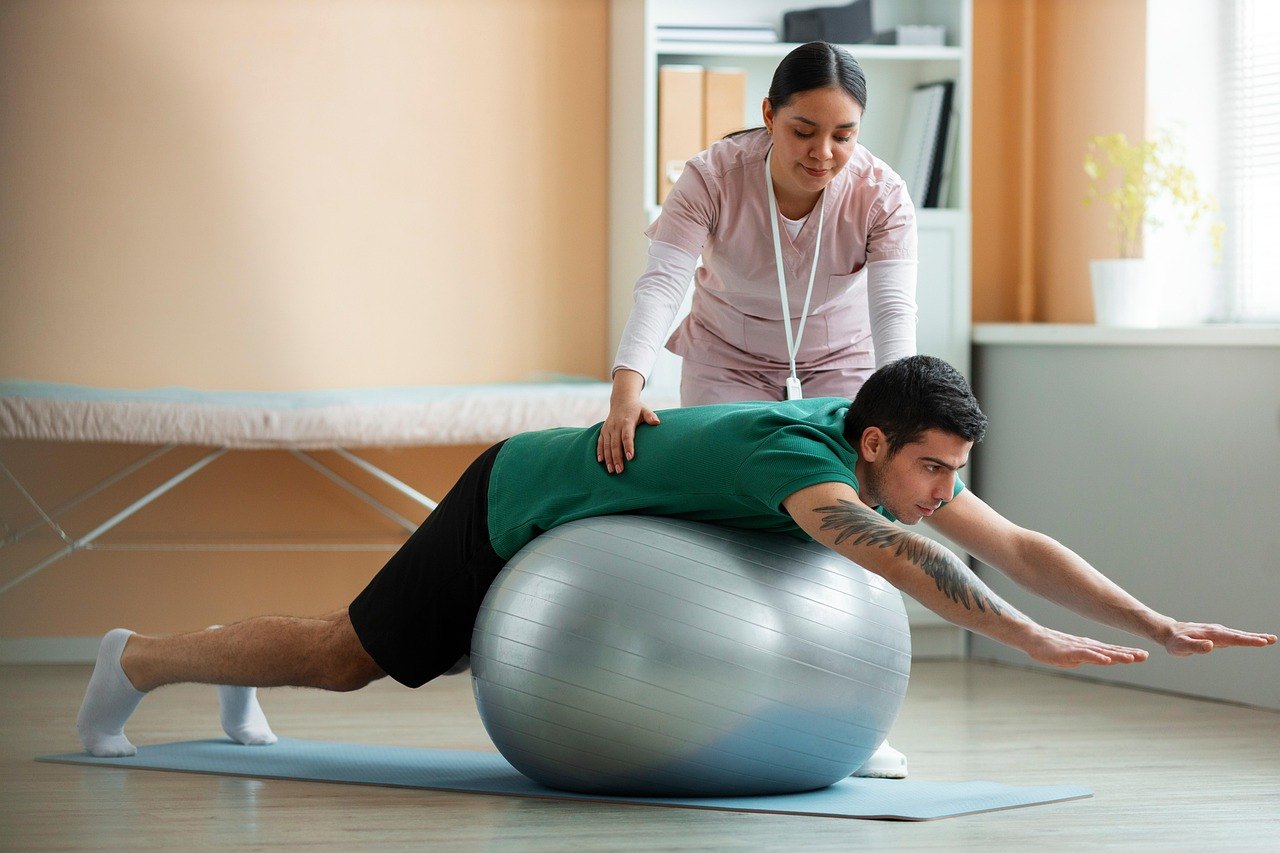
Shaky legs get leg work. Sit-to-stands, side steps, and heel raises at the counter come first. Later you’ll pivot quickly, step over a pool noodle on the floor, and walk the hall while looking left and right. And yes, we’ll ask about the throw rug in your hallway.
Give it three or four weeks and most people tell us they feel a lot more sure of themselves. If dizziness has been making you nervous to leave the house, call Modern Medicine of Mesa, AZ, and let us help you figure out which kind you have.