
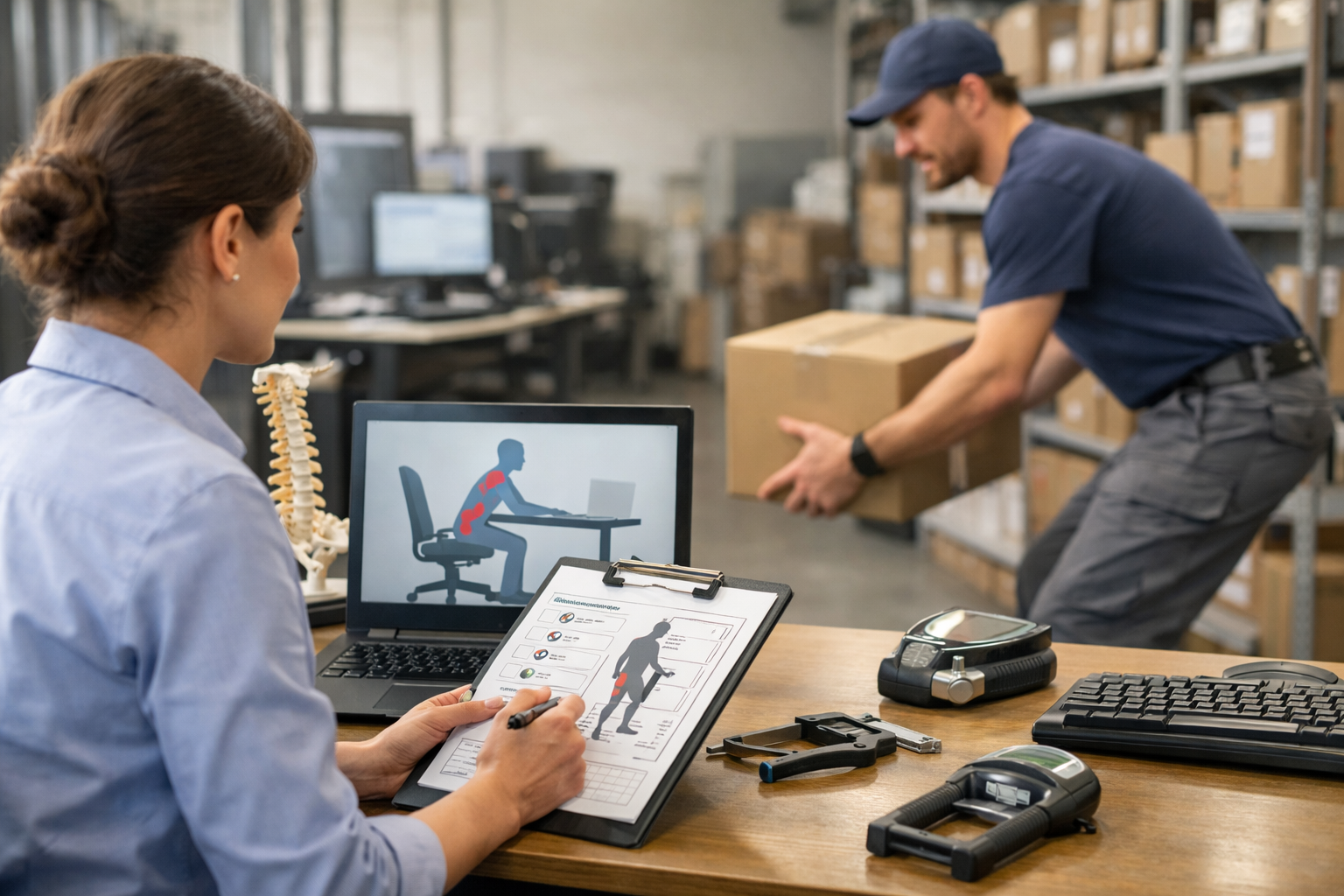
Is employee discomfort reporting and ergonomic risk assessment an active initiative of your workplace health and safety program? If not, you may be missing out on valuable near miss and early intervention efforts to prevent Workers’ Compensation claims.
Businesses in Fremont, California, are getting help from ergonomic consulting company Ergobility to help change the mindset to help the Environmental Health and Safety leg of the company to battle the early signs of discomfort and focus more on ergonomic risk mitigation efforts that help them prioritize their efforts to reduce injury potential and support employee mental and physical wellness.
The ergonomic consultant will combine employee feedback with surveys and interviews so that organizations can best understand the factors influencing work-related musculoskeletal disorders (MSDs).
Ergobility provides professional ergonomic consulting in Fremont and throughout the San Francisco Bay Area, helping organizations identify workplace risk factors, evaluate workstation design and integration, and develop practical solutions for high technology offices, biotechnology laboratories, healthcare facilities, and manufacturing environments.
Musculoskeletal discomfort develops over time from repeated exposure to ergonomic risk factors, and the employee might show early signs of soreness, fatigue, or stiffness before symptoms become intolerable and interfere with concentration as well as work activities.
Ergonomic specialists will look at ways to help more than a single worker at a time. Multiple employees that report wrist discomfort may indicate an opportunity to improve device use, work surface height, device distance from edge of desk, habits, and other isolation of movement to the wrist. Effective programs combine employee feedback with task observations, quantitative measurements, professional observation and coaching.
A solid early reporting program should encourage employees to report discomfort without fear of blame or retaliation. Clear reporting procedures, timely follow-up, and appropriate confidentiality help establish trust and improve the quality of information collected.
Quantifying ergonomic risk is somewhat helpful and can be done either with an ergonomic specialist or through a software system. The safety group, ergonomic group, HR etc., can then triage who to assist and even ways to assist. Ways may include email, onsite evaluations, virtual evaluations, and group training.
These methods provide useful information, but their scores are not good predictors of employee risk and injury. Ergobility helps organizations identify these differences through individual and group ergonomic assessments, laboratory ergonomics evaluations, workstation analysis, employee training, and remote-work assessments.
An effective program combines early discomfort reporting, proactive ergonomic assessments, and timely corrective actions. Employers can track progress through metrics provided by the ergonomic professional or through software, employee feedback, and injury trends.
Looking for ergonomic consulting in Fremont, California? Contact Ergobility to learn how professional ergonomic risk assessments and employee injury prevention methods can help your organization identify hazards. Visit Ergobility to explore how to better your ergonomics assessments, training, and workplace injury prevention program.