 Rather than over utilizing standing desks as a panacea, organizations and individuals should employ a broad range of ergonomic tools and strategies. These can include adjustable office task chairs, movement and stretch breaks, and personalized assessments which are tailored to each individual's needs.
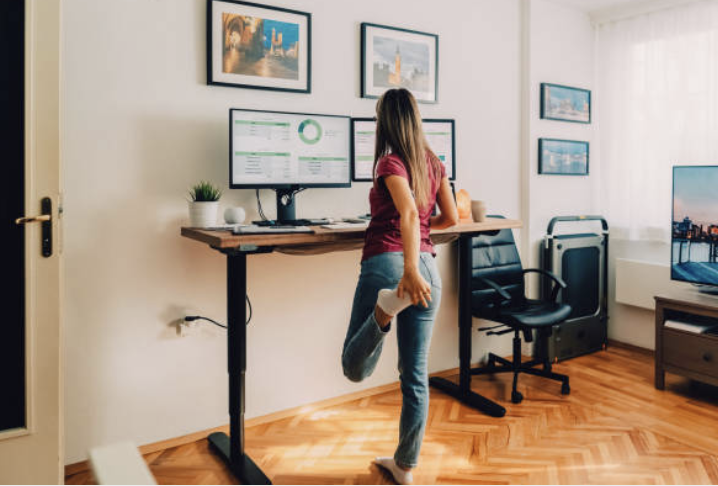
The standing desk helps in many ways but not all standing desks are built the same and not everyone has a need for one. Sometimes, prolonged standing is more deleterious to one's health than sitting. Blood can pool to the lower extremities and it is still considered sedentary. The issue is that it gives folks false hope that it is helping their metabolism when in fact it isn't.
The over utilization of standing desks as an ergonomic tool reflects a broader tendency to seek a simple and universal solution to complex problems. Insights from research in ergonomics highlight the necessity of individual ergonomic assessments to which various types of equipment are provided based on the individual's needs assessed by a certified ergonomic consultant such as one from Ergobility.
If you are in need of individual ergonomic assessments for your workplace rather than spending a ton of money on height adjustable desks that may or may not be an ergonomic need, reach out to Ergobility to find out how an ergonomic consultant can actually save your business money, efficiency, and employee comfort.
Rather than over utilizing standing desks as a panacea, organizations and individuals should employ a broad range of ergonomic tools and strategies. These can include adjustable office task chairs, movement and stretch breaks, and personalized assessments which are tailored to each individual's needs.
The standing desk helps in many ways but not all standing desks are built the same and not everyone has a need for one. Sometimes, prolonged standing is more deleterious to one's health than sitting. Blood can pool to the lower extremities and it is still considered sedentary. The issue is that it gives folks false hope that it is helping their metabolism when in fact it isn't.
The over utilization of standing desks as an ergonomic tool reflects a broader tendency to seek a simple and universal solution to complex problems. Insights from research in ergonomics highlight the necessity of individual ergonomic assessments to which various types of equipment are provided based on the individual's needs assessed by a certified ergonomic consultant such as one from Ergobility.
If you are in need of individual ergonomic assessments for your workplace rather than spending a ton of money on height adjustable desks that may or may not be an ergonomic need, reach out to Ergobility to find out how an ergonomic consultant can actually save your business money, efficiency, and employee comfort.
Oakland, CA - Top Ergonomists Consult in Ergonomics and Ergonomic Evaluations
SYNOPSIS: Standing desks are recommended too often as a blanket solution and should be recommended by an ergonomic professional that can define the type and need for it. Ergonomic consultants are needed.
The Over-Utilization of Standing Desks as an Ergonomic
BY: Allen Yagjian, Ergobility LLC
Ergonomic methods and tools enhance comfort and efficiency most often by facilitating more natural interactions between the users and what they work on (primarily off of a computer in today's age). One tool, the standing desk, has gained popularity to battle out the sedentary nature of computer work. However, this trend toward overlooks the benefit of proper fit of workstation including the setup and the need to both sit actively and seek movement throughout a workday in front of the computer.
The field of ergonomic tool design demonstrates that effective interventions require adaptability to different contexts, objects, and user needs. These often rely on an nuanced understanding of task demands. Similarly the standing desk is limited and the assumption that standing desks alone can universally improve ergonomic outcomes is now a problem it itself.
Ergonomic solutions should be tailored to the specific needs of each individual user rather than relying on a single blanket intervention for all. The over-utilization of standing desks may reflect a desire for simple solutions to complex problems rather than a person specific approach that considers the variability of human bodies, tasks, and environments. It is similar to providing an ergonomic group training rather than serving each individual with an ergonomic workstation assessment.
Rather than over utilizing standing desks as a panacea, organizations and individuals should employ a broad range of ergonomic tools and strategies. These can include adjustable office task chairs, movement and stretch breaks, and personalized assessments which are tailored to each individual's needs.
The standing desk helps in many ways but not all standing desks are built the same and not everyone has a need for one. Sometimes, prolonged standing is more deleterious to one's health than sitting. Blood can pool to the lower extremities and it is still considered sedentary. The issue is that it gives folks false hope that it is helping their metabolism when in fact it isn't.
The over utilization of standing desks as an ergonomic tool reflects a broader tendency to seek a simple and universal solution to complex problems. Insights from research in ergonomics highlight the necessity of individual ergonomic assessments to which various types of equipment are provided based on the individual's needs assessed by a certified ergonomic consultant such as one from Ergobility.
If you are in need of individual ergonomic assessments for your workplace rather than spending a ton of money on height adjustable desks that may or may not be an ergonomic need, reach out to Ergobility to find out how an ergonomic consultant can actually save your business money, efficiency, and employee comfort.
Rather than over utilizing standing desks as a panacea, organizations and individuals should employ a broad range of ergonomic tools and strategies. These can include adjustable office task chairs, movement and stretch breaks, and personalized assessments which are tailored to each individual's needs.
The standing desk helps in many ways but not all standing desks are built the same and not everyone has a need for one. Sometimes, prolonged standing is more deleterious to one's health than sitting. Blood can pool to the lower extremities and it is still considered sedentary. The issue is that it gives folks false hope that it is helping their metabolism when in fact it isn't.
The over utilization of standing desks as an ergonomic tool reflects a broader tendency to seek a simple and universal solution to complex problems. Insights from research in ergonomics highlight the necessity of individual ergonomic assessments to which various types of equipment are provided based on the individual's needs assessed by a certified ergonomic consultant such as one from Ergobility.
If you are in need of individual ergonomic assessments for your workplace rather than spending a ton of money on height adjustable desks that may or may not be an ergonomic need, reach out to Ergobility to find out how an ergonomic consultant can actually save your business money, efficiency, and employee comfort.