 We recommend making management aware by meeting with them and providing information about what data would be collected and how it will be reviewed and analyzed. Sometimes, current surveillance data on investigations, injuries, risks, etc. are resources that can be passed onto the ergonomic consulting expert, ergonomic evaluator, or ergonomic specialists. They will be the ones who know what data to collect and use to apply to their analysis for the workstation assessments to come up with an overall risk score which should determine a clear picture of the paths to take forward.
The key to effective ergonomic programs is the identification of the potential worksite issues. There are many tools in the ergonomists' toolbox that can be applied depending on the situation and industry. The ergonomist will be one that is organized and will keep track of the data collected and present it in a way that should help the management level understand well! If you need to hire an ergonomic specialist, Ergobility has top level certified professional ergonomists (CPE) that can help.
We recommend making management aware by meeting with them and providing information about what data would be collected and how it will be reviewed and analyzed. Sometimes, current surveillance data on investigations, injuries, risks, etc. are resources that can be passed onto the ergonomic consulting expert, ergonomic evaluator, or ergonomic specialists. They will be the ones who know what data to collect and use to apply to their analysis for the workstation assessments to come up with an overall risk score which should determine a clear picture of the paths to take forward.
The key to effective ergonomic programs is the identification of the potential worksite issues. There are many tools in the ergonomists' toolbox that can be applied depending on the situation and industry. The ergonomist will be one that is organized and will keep track of the data collected and present it in a way that should help the management level understand well! If you need to hire an ergonomic specialist, Ergobility has top level certified professional ergonomists (CPE) that can help.
Fremont, CA - Ergonomics Evaluator Specialist Performs Workstation Assessments
SYNOPSIS: This explains an example of how ergonomics can play a role in improving the process. It takes into consideration personal and physical factors that help employees perform at a higher rate of accuracy.
Ergonomics can help a plant achieve higher quality.
BY: Allen Yagjian, Ergobility LLC
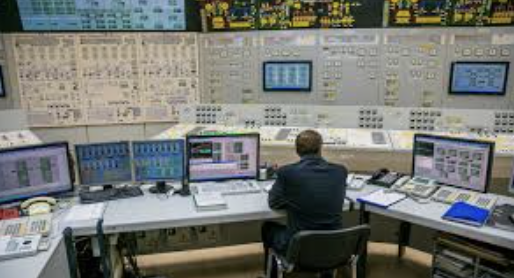
A graveyard shift employee is on his fifth consecutive night shift, when he comes across an alarm on the visual display of the distributed control system (DCS). He was not aware that the alarm was something of relevance as this alarm had been silenced by the previous shift. So the operator continued to follow suit. The problem was that the alarm meant that after 4 hours the power to the DCS system was going to fail. Once that happened, the system would not be able to be controlled and a temperature increase would result causing a major fire.
So how in the world would ergonomics have prevented something like this you might ask? Well designing a system process through the application of knowledge of human beings and how they think, size up, and interface a computer control is a part of ergonomics. There are three elements in the human factors process which include: equipment, facility, and environment; management systems; and lastely the people.
Clearly, human factors and ergonomics have been considered in the design of process plants for years. However, human capabilities and limitations have to be revamped or reconsidered during the life of the process. A process should always seek validation and improvement. We also know that no program to improve a process succeeds without management buy in. And management will not support something they don't understand. With this thought in mind it can't be stressed enough how important it is to have management understand the science of human factors and ergonomics, how it benefits the process plant, and how to implement the improvements.
We recommend making management aware by meeting with them and providing information about what data would be collected and how it will be reviewed and analyzed. Sometimes, current surveillance data on investigations, injuries, risks, etc. are resources that can be passed onto the ergonomic consulting expert, ergonomic evaluator, or ergonomic specialists. They will be the ones who know what data to collect and use to apply to their analysis for the workstation assessments to come up with an overall risk score which should determine a clear picture of the paths to take forward.
The key to effective ergonomic programs is the identification of the potential worksite issues. There are many tools in the ergonomists' toolbox that can be applied depending on the situation and industry. The ergonomist will be one that is organized and will keep track of the data collected and present it in a way that should help the management level understand well! If you need to hire an ergonomic specialist, Ergobility has top level certified professional ergonomists (CPE) that can help.
We recommend making management aware by meeting with them and providing information about what data would be collected and how it will be reviewed and analyzed. Sometimes, current surveillance data on investigations, injuries, risks, etc. are resources that can be passed onto the ergonomic consulting expert, ergonomic evaluator, or ergonomic specialists. They will be the ones who know what data to collect and use to apply to their analysis for the workstation assessments to come up with an overall risk score which should determine a clear picture of the paths to take forward.
The key to effective ergonomic programs is the identification of the potential worksite issues. There are many tools in the ergonomists' toolbox that can be applied depending on the situation and industry. The ergonomist will be one that is organized and will keep track of the data collected and present it in a way that should help the management level understand well! If you need to hire an ergonomic specialist, Ergobility has top level certified professional ergonomists (CPE) that can help.