 Motivation can be seen as the desires to attain a goal or multiple goals. Humans have needs, some higher priority than others. Job satisfaction has been shown to be closely related to motivation and is said to be determined when a person's physical and physiological needs are met. Work conditions influence job satisfaction so pay, office environment, and coworkers can have an effect. So can stress which is a phenomenon that occurs at all levels of an organization. It can carry severe consequences and tax the worker's physical and mental health. Well-being should involve reduction of stress. Reducing emotions through actions and discussion, taking vacation time, learning new things, and acceptance of situations.
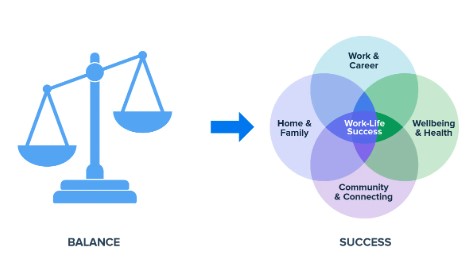
Communication is important between workers and the work environment has no exceptions to this. We establish motivation, exchange important information, and express our feelings amongst each other. Appraisals at work done more often tend to have better results. Having peer appraisals as well as manager ones is a good thing. Worklife balance is another factor and a concern. Leanly staffed companies in a tight labor market may have overloaded employees. Meanwhile, technology plugs them into work around the clock. Please ask an ergonomics specialist more about these factors and more by contacting Ergobility.
Motivation can be seen as the desires to attain a goal or multiple goals. Humans have needs, some higher priority than others. Job satisfaction has been shown to be closely related to motivation and is said to be determined when a person's physical and physiological needs are met. Work conditions influence job satisfaction so pay, office environment, and coworkers can have an effect. So can stress which is a phenomenon that occurs at all levels of an organization. It can carry severe consequences and tax the worker's physical and mental health. Well-being should involve reduction of stress. Reducing emotions through actions and discussion, taking vacation time, learning new things, and acceptance of situations.
Communication is important between workers and the work environment has no exceptions to this. We establish motivation, exchange important information, and express our feelings amongst each other. Appraisals at work done more often tend to have better results. Having peer appraisals as well as manager ones is a good thing. Worklife balance is another factor and a concern. Leanly staffed companies in a tight labor market may have overloaded employees. Meanwhile, technology plugs them into work around the clock. Please ask an ergonomics specialist more about these factors and more by contacting Ergobility.
Emeryville, CA - Top Rated Local Ergonomic Trainer Offer Best Ergonomic Training
SYNOPSIS: This article discusses how organizational behavior and elements affect the overall effectiveness of an ergonomics program. We dive into factors such as motivation, job stress, and communication.
Ergonomics working well with the entire workforce.
BY: Allen Yagjian, Ergobility LLC
Organizational behavior helps ergonomists understand and deal with interpersonal and organizational challenges in the workplace. Many corporations keep their employees satisfied and motivated by simply recognizing that improving worker satisfaction will improve the bottom-line. This is because employee morale has a direct correlation with productivity. The employees will in turn treat customers better, work more hours, and even work more efficiently. Also, happier employees don't leave the organization so it would reduce retraining which would cost money and time, as well as rehiring. The expense of a valuable employee can range from half to several times a year's pay.
To understand an corporate organization we need to consider all of the networks and related parts and how they all work together to function as one. Usually there are six elements that interact to make up a company including strategy, structure, policies, systems, and culture. All of these are influencing the experience of the worker and becomes a very complex structure that dictates human interaction within the organization. One behavior model that is common explains that a person's held assumptions set the perceptions of a given event which dictate their conclusions. These then lead to a reaction in feelings and behaviors.
Motivation can be seen as the desires to attain a goal or multiple goals. Humans have needs, some higher priority than others. Job satisfaction has been shown to be closely related to motivation and is said to be determined when a person's physical and physiological needs are met. Work conditions influence job satisfaction so pay, office environment, and coworkers can have an effect. So can stress which is a phenomenon that occurs at all levels of an organization. It can carry severe consequences and tax the worker's physical and mental health. Well-being should involve reduction of stress. Reducing emotions through actions and discussion, taking vacation time, learning new things, and acceptance of situations.
Communication is important between workers and the work environment has no exceptions to this. We establish motivation, exchange important information, and express our feelings amongst each other. Appraisals at work done more often tend to have better results. Having peer appraisals as well as manager ones is a good thing. Worklife balance is another factor and a concern. Leanly staffed companies in a tight labor market may have overloaded employees. Meanwhile, technology plugs them into work around the clock. Please ask an ergonomics specialist more about these factors and more by contacting Ergobility.
Motivation can be seen as the desires to attain a goal or multiple goals. Humans have needs, some higher priority than others. Job satisfaction has been shown to be closely related to motivation and is said to be determined when a person's physical and physiological needs are met. Work conditions influence job satisfaction so pay, office environment, and coworkers can have an effect. So can stress which is a phenomenon that occurs at all levels of an organization. It can carry severe consequences and tax the worker's physical and mental health. Well-being should involve reduction of stress. Reducing emotions through actions and discussion, taking vacation time, learning new things, and acceptance of situations.
Communication is important between workers and the work environment has no exceptions to this. We establish motivation, exchange important information, and express our feelings amongst each other. Appraisals at work done more often tend to have better results. Having peer appraisals as well as manager ones is a good thing. Worklife balance is another factor and a concern. Leanly staffed companies in a tight labor market may have overloaded employees. Meanwhile, technology plugs them into work around the clock. Please ask an ergonomics specialist more about these factors and more by contacting Ergobility.