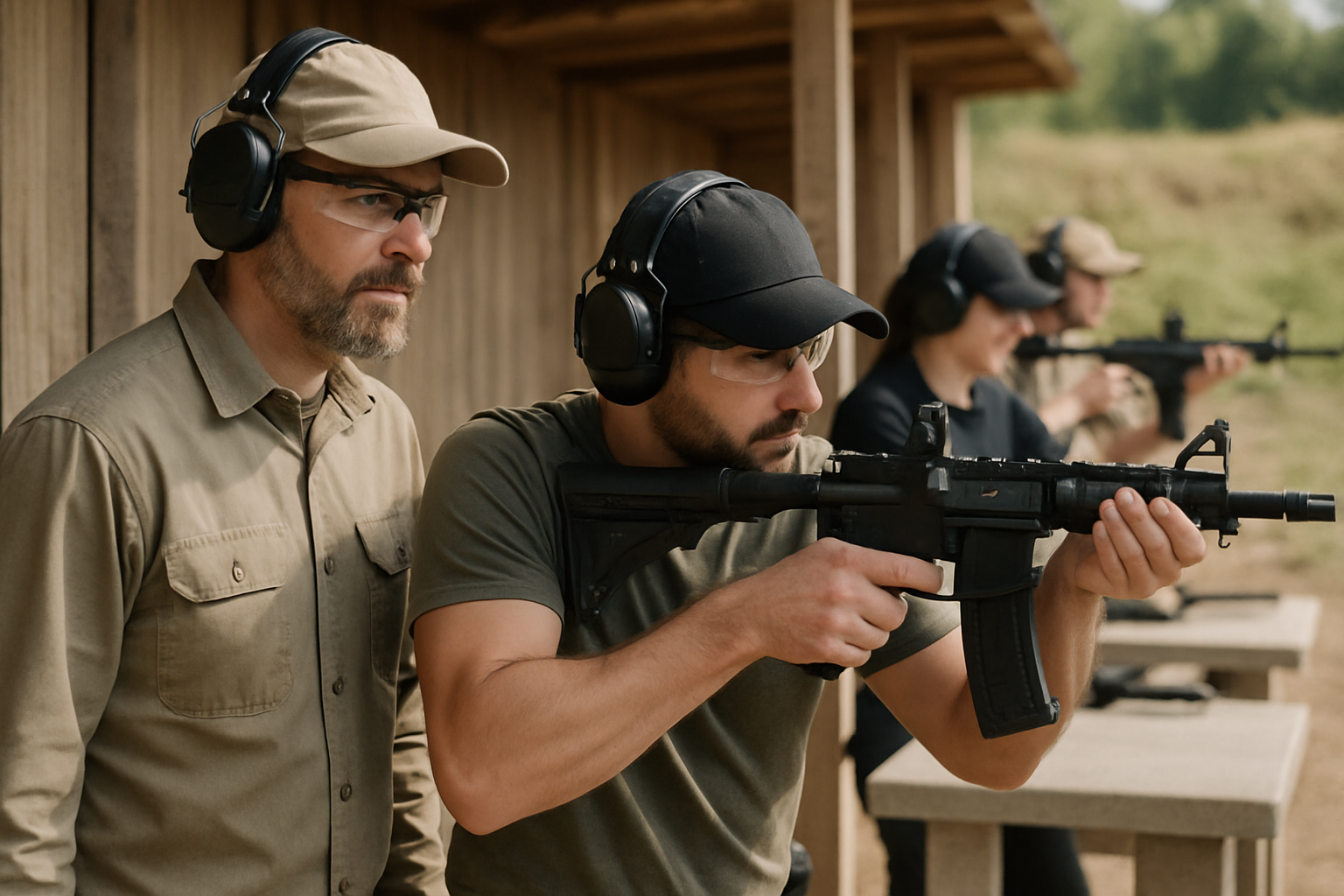
The problem with many shooting ranges is not all of them provide an adequate real-world application of firearms. While they may teach core firearm safety, how firearms operate, responsibility education, and repetition-based drills, they may lack the dynamic aspect of firearm usage.
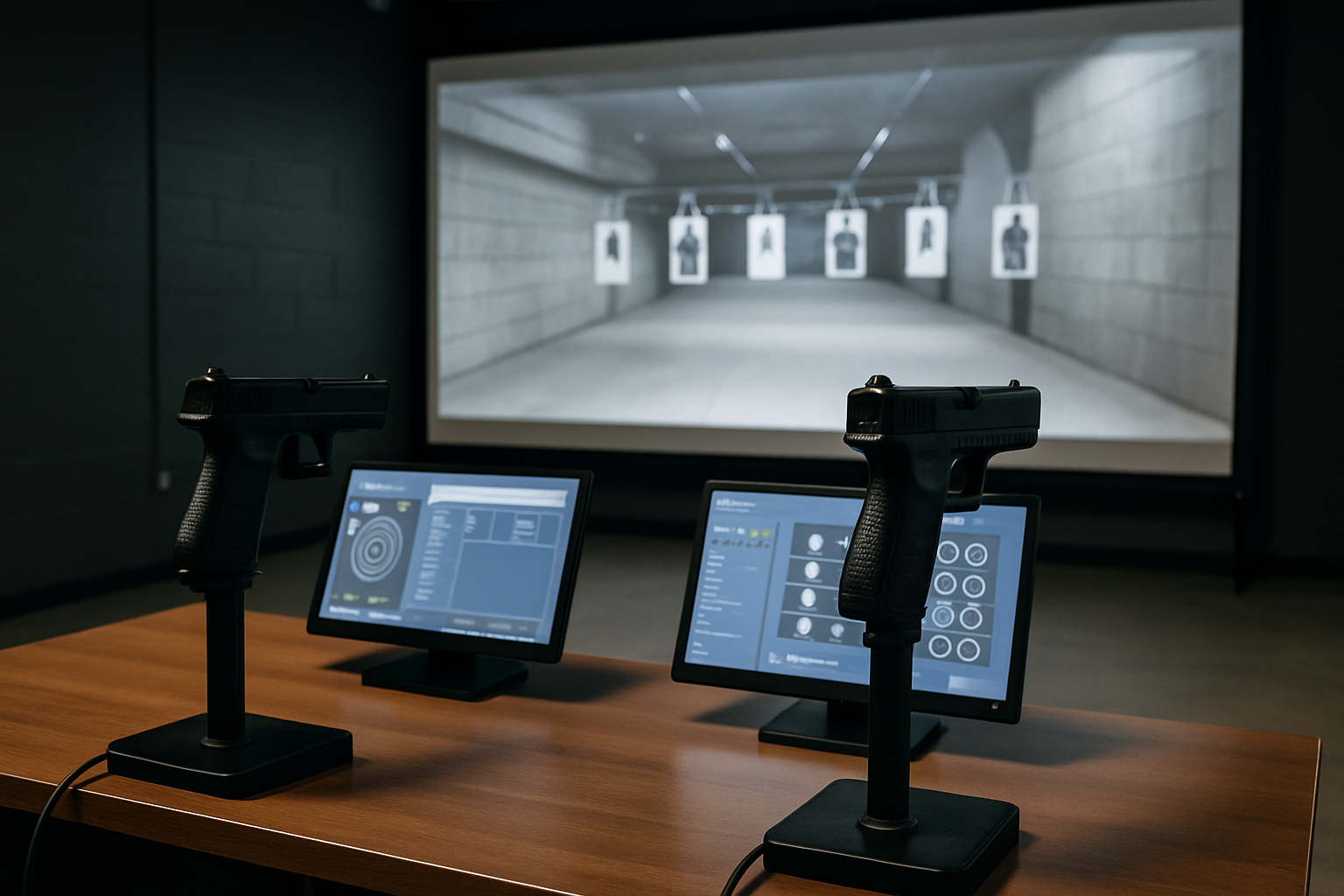
Shooting ranges offering live fire simulation, on the other hand, can provide a level of firearms interaction needed for students to practice real-world defense.
Here’s how live fire simulations can help prepare learners in a practical, more hands-on type of way:
Enhanced Firearm Accuracy
Static firearm training teaches accuracy, but not in the way live ammunition training does. Unlike static training, shooters in live fire simulations don’t just stand stationary and shoot at non-animated objects. Instead, trainers engage in structured drills and perform specific required tasks.
These simulations are also more advanced than their static training counterparts, often involving low-lighting conditions, various obstacles, and/or both threat and non-threat targets to trick trainers.
In these complex, fast-paced situations, students quickly learn to develop improved firearm accuracy through proper recoil management, correct form, and improved focus under pressure.
Quicker Reaction Time Under Pressure
Fast reaction time matters, but it matters even more when under a high-pressure, high-stress situation. Having a slow reaction time, on the other hand, can impair one’s ability to properly assess a situation, make an appropriate decision, and physically react in time.
Live fire simulations, when regularly engaged in, can help with better vision-to-movement timing, the ability to make quick decisions when under stress, and respond automatically without the need for conscious thinking. This can help one to respond quickly in real-life scenarios as well.
Muscle Memory Development
Just like riding a bike or driving a car, using a firearm can also develop its own muscle memory. These automatic motor patterns can be developed through heavy repetition, thus allowing reactions to become quicker, more consistent, and even more automatic each time.
Live fire simulations can help with firearm muscle memory development by consistently forcing students to engage in the same firearm fundamentals (e.g., grip formation, body positioning, etc.), adding controlled stress to the situation, and through live feedback.
The quicker a student gains firearm muscle memory, the smoother they will perform with guns, even in the real world. Obtaining muscle memory when it comes to firearms can also help with stress resilience, better reaction efficiency, and the reduction of technical error.
Exposure of Weak Spots
While traditional courses and static training can prepare you with the core basics of firearm handling and safety, live fire simulation is what can truly expose your weak spots regarding firearm management.
Through live fire simulations, you may immediately catch your struggle points. Other times, it might be the instructor who notices your mistakes or shortcomings, providing you with corrective advice. While learning your need for areas of improvement can be intimidating, this is where you learn and are given the opportunity to improve.
Do you want to try live fire simulation? We’re just a phone call away. Contact C2 Tactical today for more information on our shooting simulation training.