 Here's a conversation we have at least twice a week with customers from Chandler: "I've been shooting USPSA for two years, so I figure I'm pretty well prepared for a defensive situation, right?" And the honest answer is... sort of. You've built some excellent skills. You've also probably built some habits that could get you killed. That's not a knock on competition shooting. It's just reality, and understanding the gap helps you train smarter.
The flip side shows up just as often. Someone takes a weekend tactical course, learns to pie corners and use cover, and assumes they're now a capable shooter. Meanwhile, they're still struggling to put rounds where they want them under any kind of time pressure. Good judgment with mediocre execution isn't the winning combination they think it is.
Practical Shooting Builds Speed You Can Measure
USPSA, IDPA, Steel Challenge... these formats do something incredibly valuable: they put a clock on your performance and force you to deliver. There's no faking it when the timer beeps. You either hit the targets quickly and accurately, or you don't, and everyone, including yourself, knows exactly how you did. That pressure builds skills that transfer. Smooth draws, efficient reloads, consistent trigger control at speed. Competitors who train seriously develop mechanical proficiency that most casual shooters never approach. The repetition matters. The accountability matters. The ego check of watching someone half your age smoke your time matters too.
What Competition Doesn't Teach You
Here's where it gets interesting. Watch a good USPSA shooter run a stage, and you'll see aggressive movement into positions, reloads happening wherever they happen to run dry, and complete focus on known target locations. All of that makes perfect sense for scoring well. None of it makes sense against a threat that shoots back. Competition stages don't hide threats around corners. They don't punish you for exposing yourself during a reload. They don't include no-shoot targets that look like your neighbor or your kid's friend. The skills are real, but the context is artificial, and your nervous system doesn't automatically adjust when the stakes change.
Tactical Training Fills The Decision Gap
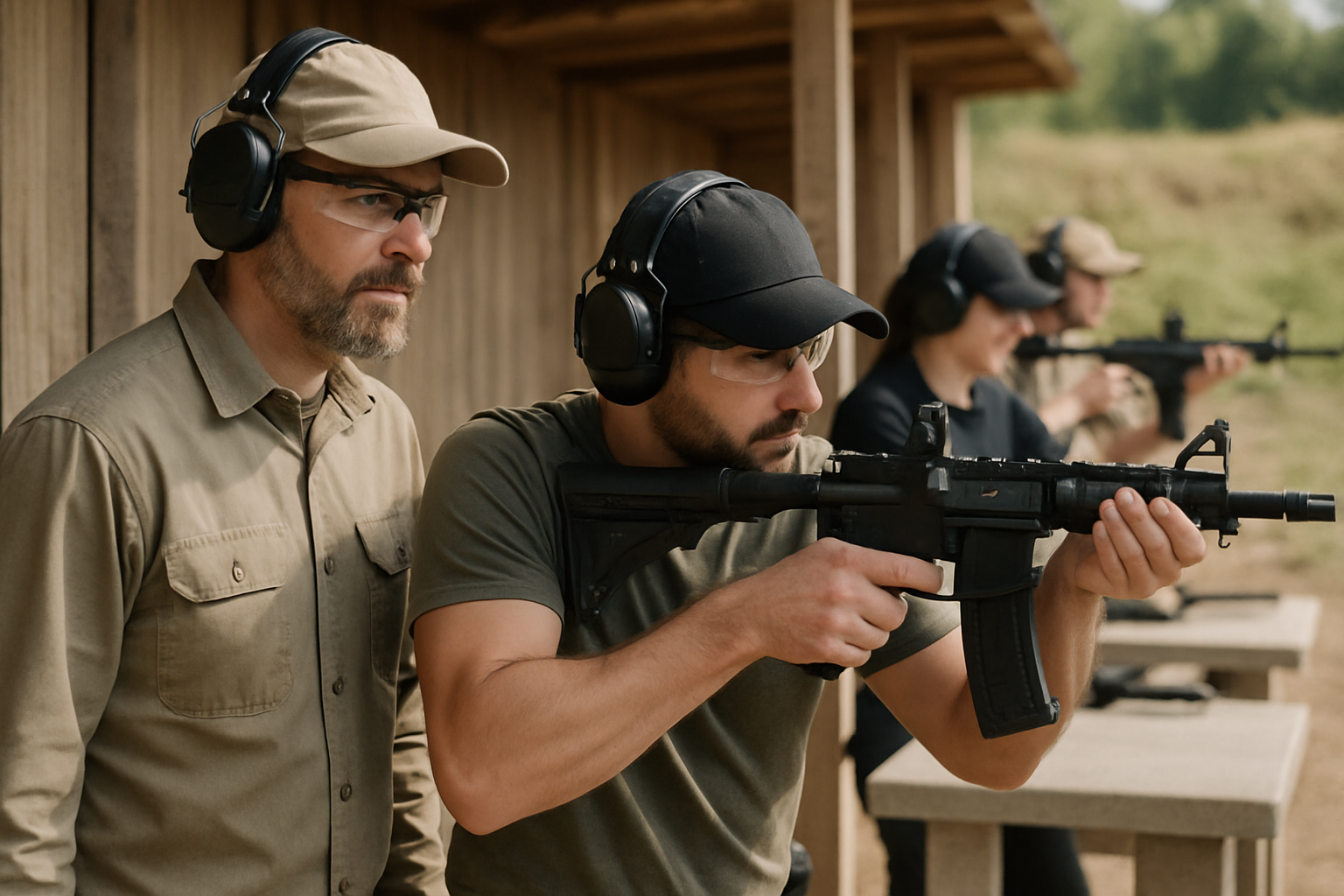
Good tactical instruction forces you to think before you shoot. You're learning to identify threats, use cover that actually conceals you from return fire, and make choices under ambiguity. "Shoot" and "don't shoot" start happening in the same drill because real encounters don't come with targets clearly marked as hostile. The scenarios feel messier and less satisfying than competition because real life is messier and less satisfying than competition. That discomfort is the point.
Where Tactical Courses Fall Short
Most tactical training packs a lot of concepts into a limited time. You're learning movement theory, verbal commands, legal considerations, scenario breakdowns, and force-on-force exercises. All valuable, all important, and all eating into repetitions. A shooter can leave a weekend course understanding exactly how to clear a room while still throwing shots low-left under pressure because they haven't put in the raw trigger time to fix that fundamental issue. Concepts without execution capability creates false confidence.
The Smart Play Is Both
Shooters who compete regularly and supplement with tactical coursework end up in a strong position. They've got the mechanical skills from competition and the judgment framework from tactical training. The competition shooter who adds defensive concepts starts recognizing which of their stage habits need conscious override. The tactical student who adds competition starts building speed and accuracy under pressure that scenario drills alone won't develop. Neither discipline is complete on its own, and pretending otherwise leaves gaps.
Figure Out What You're Actually Training For
We run both practical and tactical programs because different customers need different things at different points. Call (480) 588-8802 and talk with our team at C2 Tactical of Tempe about what you're building toward. We help shooters from Chandler figure out where the gaps are and which training fills them, instead of guessing and hoping it all comes together when it counts.
Here's a conversation we have at least twice a week with customers from Chandler: "I've been shooting USPSA for two years, so I figure I'm pretty well prepared for a defensive situation, right?" And the honest answer is... sort of. You've built some excellent skills. You've also probably built some habits that could get you killed. That's not a knock on competition shooting. It's just reality, and understanding the gap helps you train smarter.
The flip side shows up just as often. Someone takes a weekend tactical course, learns to pie corners and use cover, and assumes they're now a capable shooter. Meanwhile, they're still struggling to put rounds where they want them under any kind of time pressure. Good judgment with mediocre execution isn't the winning combination they think it is.
Practical Shooting Builds Speed You Can Measure
USPSA, IDPA, Steel Challenge... these formats do something incredibly valuable: they put a clock on your performance and force you to deliver. There's no faking it when the timer beeps. You either hit the targets quickly and accurately, or you don't, and everyone, including yourself, knows exactly how you did. That pressure builds skills that transfer. Smooth draws, efficient reloads, consistent trigger control at speed. Competitors who train seriously develop mechanical proficiency that most casual shooters never approach. The repetition matters. The accountability matters. The ego check of watching someone half your age smoke your time matters too.
What Competition Doesn't Teach You
Here's where it gets interesting. Watch a good USPSA shooter run a stage, and you'll see aggressive movement into positions, reloads happening wherever they happen to run dry, and complete focus on known target locations. All of that makes perfect sense for scoring well. None of it makes sense against a threat that shoots back. Competition stages don't hide threats around corners. They don't punish you for exposing yourself during a reload. They don't include no-shoot targets that look like your neighbor or your kid's friend. The skills are real, but the context is artificial, and your nervous system doesn't automatically adjust when the stakes change.
Tactical Training Fills The Decision Gap
Good tactical instruction forces you to think before you shoot. You're learning to identify threats, use cover that actually conceals you from return fire, and make choices under ambiguity. "Shoot" and "don't shoot" start happening in the same drill because real encounters don't come with targets clearly marked as hostile. The scenarios feel messier and less satisfying than competition because real life is messier and less satisfying than competition. That discomfort is the point.
Where Tactical Courses Fall Short
Most tactical training packs a lot of concepts into a limited time. You're learning movement theory, verbal commands, legal considerations, scenario breakdowns, and force-on-force exercises. All valuable, all important, and all eating into repetitions. A shooter can leave a weekend course understanding exactly how to clear a room while still throwing shots low-left under pressure because they haven't put in the raw trigger time to fix that fundamental issue. Concepts without execution capability creates false confidence.
The Smart Play Is Both
Shooters who compete regularly and supplement with tactical coursework end up in a strong position. They've got the mechanical skills from competition and the judgment framework from tactical training. The competition shooter who adds defensive concepts starts recognizing which of their stage habits need conscious override. The tactical student who adds competition starts building speed and accuracy under pressure that scenario drills alone won't develop. Neither discipline is complete on its own, and pretending otherwise leaves gaps.
Figure Out What You're Actually Training For
We run both practical and tactical programs because different customers need different things at different points. Call (480) 588-8802 and talk with our team at C2 Tactical of Tempe about what you're building toward. We help shooters from Chandler figure out where the gaps are and which training fills them, instead of guessing and hoping it all comes together when it counts.
Chandler, AZ - Comparing Differences Between Practical vs. Tactical Shooting
SYNOPSIS: C2 Tactical of Tempe explains the differences between practical and tactical shooting, helping Chandler customers train with purpose instead of guessing what truly fits their goals.
What Competition Teaches And What It Doesn't
BY: Vincent Vasquez, C2 Tactical of Tempe, AZ
Here's a conversation we have at least twice a week with customers from Chandler: "I've been shooting USPSA for two years, so I figure I'm pretty well prepared for a defensive situation, right?" And the honest answer is... sort of. You've built some excellent skills. You've also probably built some habits that could get you killed. That's not a knock on competition shooting. It's just reality, and understanding the gap helps you train smarter.
The flip side shows up just as often. Someone takes a weekend tactical course, learns to pie corners and use cover, and assumes they're now a capable shooter. Meanwhile, they're still struggling to put rounds where they want them under any kind of time pressure. Good judgment with mediocre execution isn't the winning combination they think it is.
Practical Shooting Builds Speed You Can Measure
USPSA, IDPA, Steel Challenge... these formats do something incredibly valuable: they put a clock on your performance and force you to deliver. There's no faking it when the timer beeps. You either hit the targets quickly and accurately, or you don't, and everyone, including yourself, knows exactly how you did. That pressure builds skills that transfer. Smooth draws, efficient reloads, consistent trigger control at speed. Competitors who train seriously develop mechanical proficiency that most casual shooters never approach. The repetition matters. The accountability matters. The ego check of watching someone half your age smoke your time matters too.
What Competition Doesn't Teach You
Here's where it gets interesting. Watch a good USPSA shooter run a stage, and you'll see aggressive movement into positions, reloads happening wherever they happen to run dry, and complete focus on known target locations. All of that makes perfect sense for scoring well. None of it makes sense against a threat that shoots back. Competition stages don't hide threats around corners. They don't punish you for exposing yourself during a reload. They don't include no-shoot targets that look like your neighbor or your kid's friend. The skills are real, but the context is artificial, and your nervous system doesn't automatically adjust when the stakes change.
Tactical Training Fills The Decision Gap
Good tactical instruction forces you to think before you shoot. You're learning to identify threats, use cover that actually conceals you from return fire, and make choices under ambiguity. "Shoot" and "don't shoot" start happening in the same drill because real encounters don't come with targets clearly marked as hostile. The scenarios feel messier and less satisfying than competition because real life is messier and less satisfying than competition. That discomfort is the point.
Where Tactical Courses Fall Short
Most tactical training packs a lot of concepts into a limited time. You're learning movement theory, verbal commands, legal considerations, scenario breakdowns, and force-on-force exercises. All valuable, all important, and all eating into repetitions. A shooter can leave a weekend course understanding exactly how to clear a room while still throwing shots low-left under pressure because they haven't put in the raw trigger time to fix that fundamental issue. Concepts without execution capability creates false confidence.
The Smart Play Is Both
Shooters who compete regularly and supplement with tactical coursework end up in a strong position. They've got the mechanical skills from competition and the judgment framework from tactical training. The competition shooter who adds defensive concepts starts recognizing which of their stage habits need conscious override. The tactical student who adds competition starts building speed and accuracy under pressure that scenario drills alone won't develop. Neither discipline is complete on its own, and pretending otherwise leaves gaps.
Figure Out What You're Actually Training For
We run both practical and tactical programs because different customers need different things at different points. Call (480) 588-8802 and talk with our team at C2 Tactical of Tempe about what you're building toward. We help shooters from Chandler figure out where the gaps are and which training fills them, instead of guessing and hoping it all comes together when it counts.