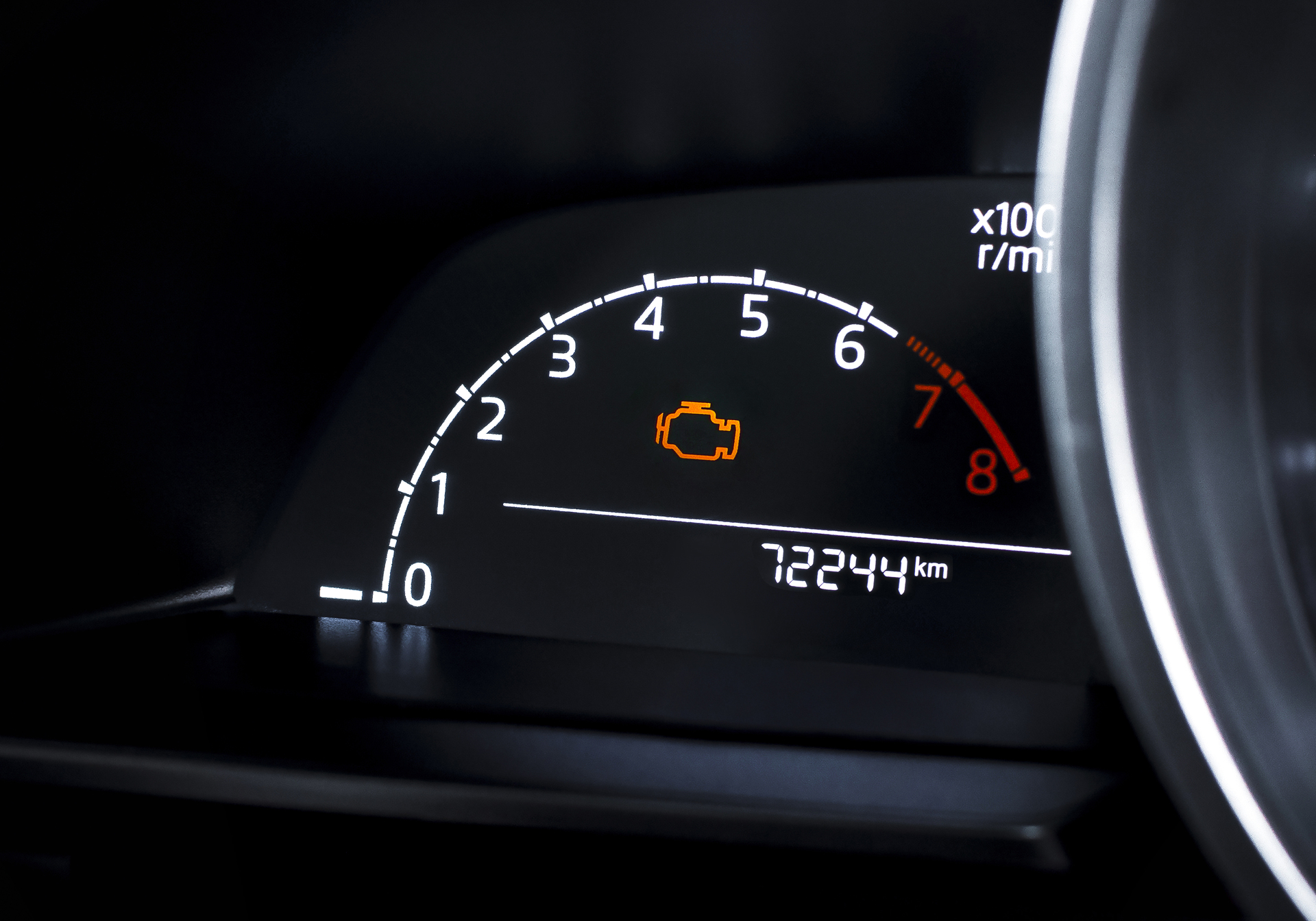
 Toyota vehicles earn a strong reputation for long-term reliability, and we see why every day. Camrys, Corollas, RAV4s, Highlanders, Tacomas, and Priuses stay on the road for years when owners keep up with service. Even so, reliability does not mean a warning light should be ignored. When a check engine light turns on, your Toyota’s onboard diagnostics system has seen something outside normal operating range. Sometimes the cause is minor, like a loose gas cap. Other times, the light points to a fuel, ignition, emissions, or sensor problem that will grow more expensive with every mile.
One reason this warning becomes costly is simple: delay changes the size of the repair. A loose or poorly sealed fuel cap may trigger the malfunction indicator lamp in a Toyota, and Toyota manuals note the light may go out after several driving trips once the cap is secured. Still, if the cap is not the cause, more serious faults remain in play. Oxygen sensor issues, mass airflow sensor problems, ignition coil failures, worn spark plugs, and catalytic converter trouble all show up under the same dashboard warning. The light is a starting point, not a final answer.
The biggest money pit usually starts with misdiagnosis. Many drivers hear a code number and assume one part must be replaced. Real diagnosis goes deeper. As Driven Auto Care’s own check engine light content explains, the code is more like a headline than a full explanation. It points toward a system or circuit, not always the failed component itself. If someone replaces a sensor without checking live data, fuel trims, wiring, or freeze-frame information, the original problem may persist. Now the owner has paid for a part and still has the warning light.
A flashing check engine light raises the stakes even more. A steady light often means you should schedule service soon. A flashing light is different and may signal an active misfire or another serious problem. When misfires persist, unburned fuel enters the exhaust, where it can overheat and damage the catalytic converter. What starts as a coil, plug, or fuel control issue may turn into a much larger repair involving emissions parts and drivability problems. In plain English, waiting may turn a manageable repair into a painful bill.
Toyota owners also get caught by the brand’s reliability in another way. Because many Toyotas keep running even with a fault present, drivers assume the problem is not urgent. The car still starts, the commute still happens, and nothing feels dramatic. Meanwhile, fuel economy drops, emissions rise, and internal wear continues. In California, emissions-related faults can also create problems during inspection or registration prep, especially when EVAP or catalyst monitors will not clear. A vehicle does not need to break down on the roadside for the repair bill to grow.
At Driven Auto Care of Fremont, we know Toyota patterns, and we know guessing wastes your time and money. Our Fremont shop serves East Bay drivers and offers free confidence inspections, a no-cost preliminary assessment, and a 3-year, 36,000-mile warranty. If your Toyota’s check engine light is on, let us test it first, identify the real cause, and repair the issue before a minor problem turns into a much bigger one.
Toyota vehicles earn a strong reputation for long-term reliability, and we see why every day. Camrys, Corollas, RAV4s, Highlanders, Tacomas, and Priuses stay on the road for years when owners keep up with service. Even so, reliability does not mean a warning light should be ignored. When a check engine light turns on, your Toyota’s onboard diagnostics system has seen something outside normal operating range. Sometimes the cause is minor, like a loose gas cap. Other times, the light points to a fuel, ignition, emissions, or sensor problem that will grow more expensive with every mile.
One reason this warning becomes costly is simple: delay changes the size of the repair. A loose or poorly sealed fuel cap may trigger the malfunction indicator lamp in a Toyota, and Toyota manuals note the light may go out after several driving trips once the cap is secured. Still, if the cap is not the cause, more serious faults remain in play. Oxygen sensor issues, mass airflow sensor problems, ignition coil failures, worn spark plugs, and catalytic converter trouble all show up under the same dashboard warning. The light is a starting point, not a final answer.
The biggest money pit usually starts with misdiagnosis. Many drivers hear a code number and assume one part must be replaced. Real diagnosis goes deeper. As Driven Auto Care’s own check engine light content explains, the code is more like a headline than a full explanation. It points toward a system or circuit, not always the failed component itself. If someone replaces a sensor without checking live data, fuel trims, wiring, or freeze-frame information, the original problem may persist. Now the owner has paid for a part and still has the warning light.
A flashing check engine light raises the stakes even more. A steady light often means you should schedule service soon. A flashing light is different and may signal an active misfire or another serious problem. When misfires persist, unburned fuel enters the exhaust, where it can overheat and damage the catalytic converter. What starts as a coil, plug, or fuel control issue may turn into a much larger repair involving emissions parts and drivability problems. In plain English, waiting may turn a manageable repair into a painful bill.
Toyota owners also get caught by the brand’s reliability in another way. Because many Toyotas keep running even with a fault present, drivers assume the problem is not urgent. The car still starts, the commute still happens, and nothing feels dramatic. Meanwhile, fuel economy drops, emissions rise, and internal wear continues. In California, emissions-related faults can also create problems during inspection or registration prep, especially when EVAP or catalyst monitors will not clear. A vehicle does not need to break down on the roadside for the repair bill to grow.
At Driven Auto Care of Fremont, we know Toyota patterns, and we know guessing wastes your time and money. Our Fremont shop serves East Bay drivers and offers free confidence inspections, a no-cost preliminary assessment, and a 3-year, 36,000-mile warranty. If your Toyota’s check engine light is on, let us test it first, identify the real cause, and repair the issue before a minor problem turns into a much bigger one.
Fremont, CA - Why Does A Toyota Check Engine Light Signal Costly Issues?
SYNOPSIS: A Toyota check engine light may point to anything from a loose gas cap to a misfire, sensor fault, or catalytic converter problem. Early diagnosis helps Fremont drivers avoid bigger repair bills.
Toyota Engine Light Warnings Need Fast Answers
BY: Arun Coumar, Driven Auto Care of Fremont, CA
Toyota vehicles earn a strong reputation for long-term reliability, and we see why every day. Camrys, Corollas, RAV4s, Highlanders, Tacomas, and Priuses stay on the road for years when owners keep up with service. Even so, reliability does not mean a warning light should be ignored. When a check engine light turns on, your Toyota’s onboard diagnostics system has seen something outside normal operating range. Sometimes the cause is minor, like a loose gas cap. Other times, the light points to a fuel, ignition, emissions, or sensor problem that will grow more expensive with every mile.
One reason this warning becomes costly is simple: delay changes the size of the repair. A loose or poorly sealed fuel cap may trigger the malfunction indicator lamp in a Toyota, and Toyota manuals note the light may go out after several driving trips once the cap is secured. Still, if the cap is not the cause, more serious faults remain in play. Oxygen sensor issues, mass airflow sensor problems, ignition coil failures, worn spark plugs, and catalytic converter trouble all show up under the same dashboard warning. The light is a starting point, not a final answer.
The biggest money pit usually starts with misdiagnosis. Many drivers hear a code number and assume one part must be replaced. Real diagnosis goes deeper. As Driven Auto Care’s own check engine light content explains, the code is more like a headline than a full explanation. It points toward a system or circuit, not always the failed component itself. If someone replaces a sensor without checking live data, fuel trims, wiring, or freeze-frame information, the original problem may persist. Now the owner has paid for a part and still has the warning light.
A flashing check engine light raises the stakes even more. A steady light often means you should schedule service soon. A flashing light is different and may signal an active misfire or another serious problem. When misfires persist, unburned fuel enters the exhaust, where it can overheat and damage the catalytic converter. What starts as a coil, plug, or fuel control issue may turn into a much larger repair involving emissions parts and drivability problems. In plain English, waiting may turn a manageable repair into a painful bill.
Toyota owners also get caught by the brand’s reliability in another way. Because many Toyotas keep running even with a fault present, drivers assume the problem is not urgent. The car still starts, the commute still happens, and nothing feels dramatic. Meanwhile, fuel economy drops, emissions rise, and internal wear continues. In California, emissions-related faults can also create problems during inspection or registration prep, especially when EVAP or catalyst monitors will not clear. A vehicle does not need to break down on the roadside for the repair bill to grow.
At Driven Auto Care of Fremont, we know Toyota patterns, and we know guessing wastes your time and money. Our Fremont shop serves East Bay drivers and offers free confidence inspections, a no-cost preliminary assessment, and a 3-year, 36,000-mile warranty. If your Toyota’s check engine light is on, let us test it first, identify the real cause, and repair the issue before a minor problem turns into a much bigger one.