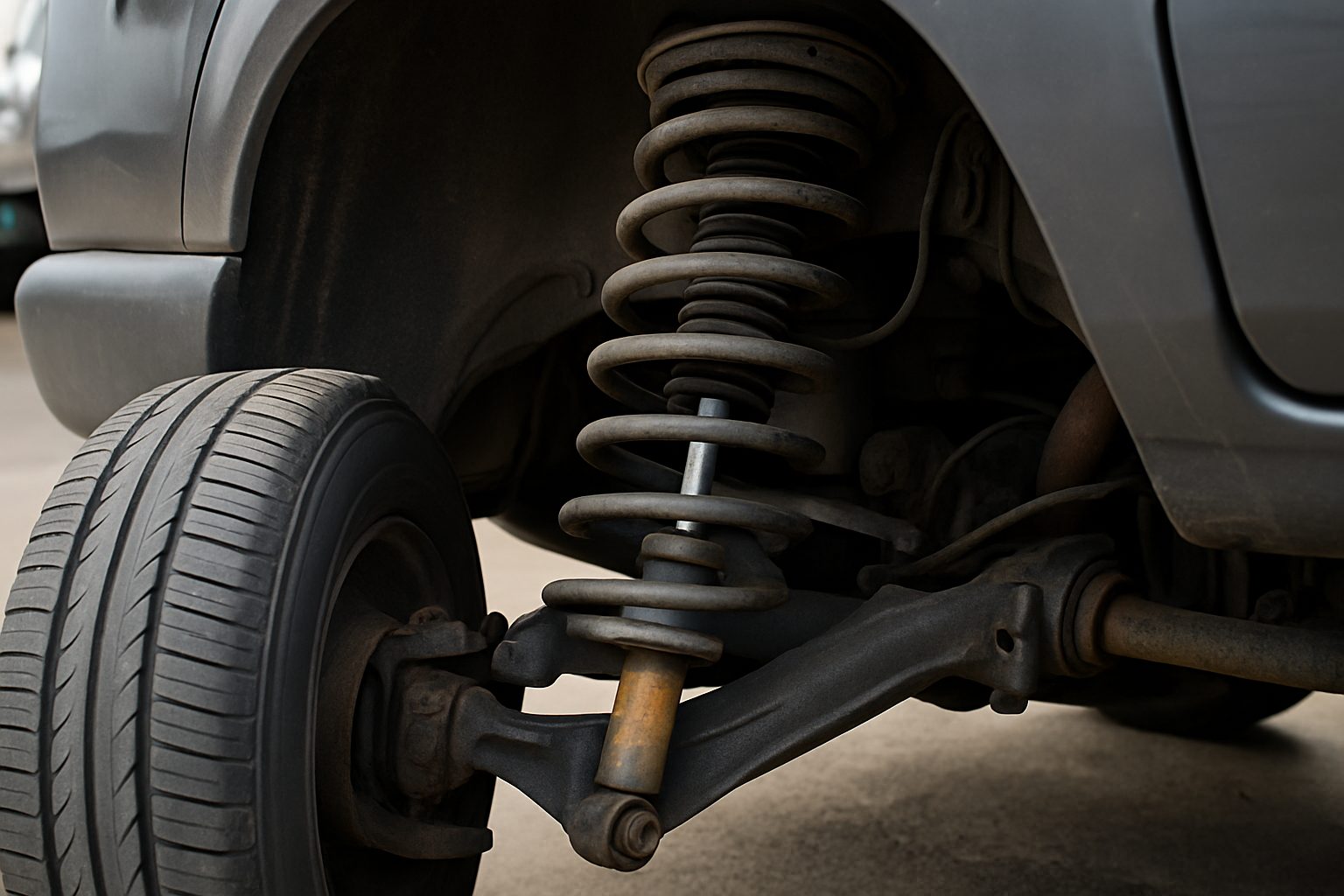
If the rear of your 2018 Chevy Tahoe sits lower than normal, drops after loading passengers or cargo, or fails to level itself after startup, the suspension needs to be inspected. Rear sag may come from weakened coil springs, worn shocks, or a fault in the available Automatic Level Control system.
At Driven Auto Care of Fremont, CA, we serve Milpitas drivers from our Fremont shop. Our suspension services include diagnosis, shock replacement, suspension repair, and wheel alignment.
Some Tahoes Use Automatic Level Control
Chevrolet's 2018 Tahoe owner's manual explains that Automatic Level Control was available on light-duty models and that Magnetic Ride Control was available when equipped. The system uses an air compressor connected to the rear shocks to raise or lower the vehicle's rear and maintain proper vehicle height.
If the system stops adjusting after cargo or passengers are added, the rear may appear low even when the coil springs remain intact.
A Weak Compressor Can Leave the Rear Low
On an ALC-equipped Tahoe, the compressor should respond when the system detects a change in rear ride height. If it does not run, runs constantly, or cannot build enough pressure, the vehicle may stay low.
The problem may involve the compressor, wiring, a height sensor, air lines, or rear shocks. We test the system before replacing parts because several faults may create the same symptom.
Leaking Rear Shocks May Cause Sag
The rear shocks used with Automatic Level Control incorporate air support. A leak in a shock or air connection may allow the rear to settle after the vehicle sits.
You may notice the Tahoe looks level after driving but drops overnight, or the compressor runs frequently to bring it back up. Those patterns help us determine whether the system is losing pressure.
Coil Springs Still Carry Vehicle Weight
The 2018 Tahoe also uses rear coil springs. GM Genuine Parts lists rear coil springs for 2015–2020 Tahoe models and notes coil springs help maintain proper ride height.
A spring weakened by age, corrosion, damage, or heavy use may contribute to sag. If one side sits lower than the other, we compare spring condition and ride height side to side.
Heavy Loads Can Expose a Weak Suspension
Chevrolet designed the available level-control system to compensate for passenger and cargo loads. If the Tahoe looks normal when empty but drops excessively with a moderate load, the leveling system may not be keeping up.
Repeated towing or heavy cargo may also reveal wear in shocks, springs, bushings, or other rear suspension components.
Worn Shocks Do Not Always Cause Static Sag
A worn conventional shock may make the Tahoe bounce, float, or feel unstable, but a shock alone typically does not support the vehicle's weight. This distinction matters on models without Automatic Level Control.
We inspect the springs, shocks, bushings, tires, and ride height together so we do not blame a shock for a spring problem or replace springs when an air-leveling fault is responsible.
Uneven Tire Wear May Appear Too
Rear suspension problems may affect how the tires contact the road. Uneven tread wear, poor stability, or rear-end bounce can accompany suspension wear.
Our suspension process includes a road test, tire-wear check, and inspection for loose, leaking, or damaged suspension components.
Schedule Tahoe Suspension Service Near Milpitas
Driven Auto Care of Fremont, CA provides suspension diagnosis and repair from our Fremont location and serves Fremont, Milpitas, Warm Springs, Sunol, and surrounding East Bay communities.
If your 2018 Chevy Tahoe sits low in the rear, sags under normal loads, leans to one side, or fails to level itself, schedule an inspection. We will determine whether the problem involves coil springs, shocks, Automatic Level Control, or another suspension component, and recommend the repair based on the findings.