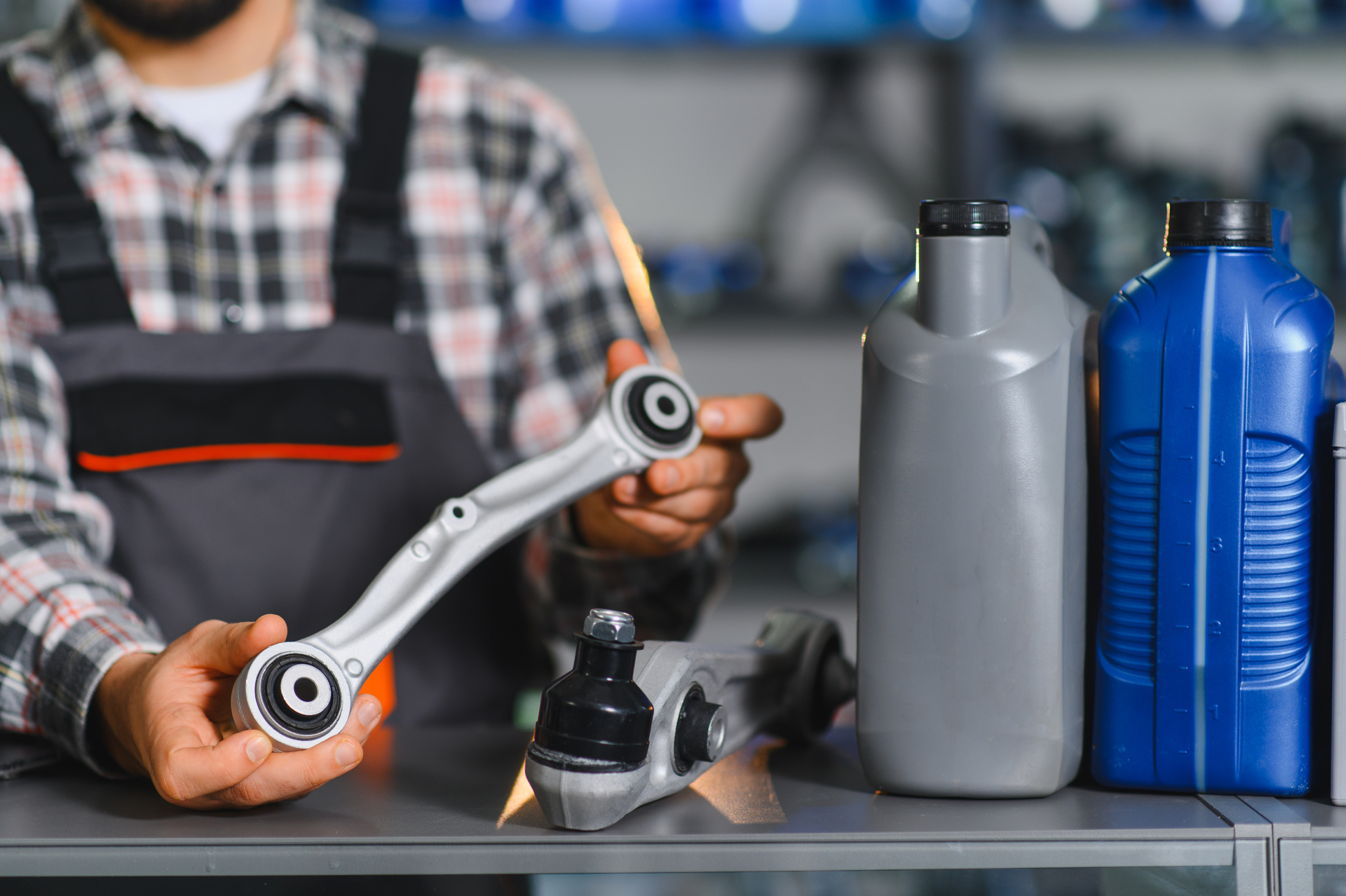
 Audi control arm problems usually manifest in ways drivers feel before they understand which part is failing. The steering starts to feel less precise. The car may wander a bit at highway speed, pull during braking, or make a dull clunk over bumps and driveway entries. Those symptoms make sense once you look at what the control arm and its bushings do. The bushings allow controlled suspension movement while keeping parts properly located. When they wear, crack, or loosen, the suspension no longer maintains its geometry. That change affects both steering response and tire contact with the road.
For Audi owners, steering feel is often the first thing to change. MOOG notes worn control arms can cause unstable steering, wandering, pulling to one side, and steering wheel vibration. Mevotech adds that failing control arm bushings can create a loose steering feel, especially when turning corners, and can also cause pulling when braking or accelerating. On an Audi, where drivers expect a tight, planted feel, even a small amount of extra movement in the front suspension can make the vehicle feel unsettled and less predictable during daily driving.
Tire wear is the other big clue, and it is often the one that costs people the most money. Cars.com explains that worn suspension bushings allow parts to shift, altering wheel alignment and causing uneven tire wear. Mevotech says worn control arm bushings add extra load to the suspension system and create unwanted tire camber, which shows up as uneven wear from side to side or obvious camber wear patterns. MOOG also points to excessive wear on the inner or outer tread edges as a common control arm symptom. In plain terms, bad control arms can chew through a good set of tires long before drivers expect it.
This is why alignment alone is not always the answer. If the control arm bushings or ball joints are already worn, the suspension can move out of position again, even after the alignment machine shows everything in spec. Driven Auto Care says exactly that on a related suspension post: worn components can move out of position as soon as you leave the alignment rack, which is why the shop inspects control arm bushings and related steering parts before recommending alignment. Replacing tires without finding the suspension problem creates the same headache. The fresh tires go on, the worn control arm stays in place, and the new tread starts wearing the same way.
Noise usually joins the party as wear worsens. MOOG says a failing control arm commonly makes clunking noises over bumps and potholes, and while steering, braking, or accelerating. Cars.com notes that worn bushings can also cause rattles and creaks because they no longer properly cushion the gap between suspension parts. That means the issue is no longer just about comfort. Once the suspension starts shifting more than it should, other parts of the steering and front-end system begin to take extra stress. Left alone long enough, a bushing problem can turn into a larger suspension repair.
At Driven Auto Care of Fremont, we service Audi models, including the A4, A6, A3, Q3, Q5, and Q7, and our Fremont shop serves Milpitas drivers throughout the Tri-City and East Bay area. When an Audi comes in with loose steering, front-end clunks, or uneven tire wear, we inspect the control arms, bushings, ball joints, and alignment-related components before recommending repairs. That matters because the goal is not to guess at one noisy part. The goal is to restore solid steering feel, protect the tires, and prevent the suspension from wearing out other parts.
Audi control arm problems usually manifest in ways drivers feel before they understand which part is failing. The steering starts to feel less precise. The car may wander a bit at highway speed, pull during braking, or make a dull clunk over bumps and driveway entries. Those symptoms make sense once you look at what the control arm and its bushings do. The bushings allow controlled suspension movement while keeping parts properly located. When they wear, crack, or loosen, the suspension no longer maintains its geometry. That change affects both steering response and tire contact with the road.
For Audi owners, steering feel is often the first thing to change. MOOG notes worn control arms can cause unstable steering, wandering, pulling to one side, and steering wheel vibration. Mevotech adds that failing control arm bushings can create a loose steering feel, especially when turning corners, and can also cause pulling when braking or accelerating. On an Audi, where drivers expect a tight, planted feel, even a small amount of extra movement in the front suspension can make the vehicle feel unsettled and less predictable during daily driving.
Tire wear is the other big clue, and it is often the one that costs people the most money. Cars.com explains that worn suspension bushings allow parts to shift, altering wheel alignment and causing uneven tire wear. Mevotech says worn control arm bushings add extra load to the suspension system and create unwanted tire camber, which shows up as uneven wear from side to side or obvious camber wear patterns. MOOG also points to excessive wear on the inner or outer tread edges as a common control arm symptom. In plain terms, bad control arms can chew through a good set of tires long before drivers expect it.
This is why alignment alone is not always the answer. If the control arm bushings or ball joints are already worn, the suspension can move out of position again, even after the alignment machine shows everything in spec. Driven Auto Care says exactly that on a related suspension post: worn components can move out of position as soon as you leave the alignment rack, which is why the shop inspects control arm bushings and related steering parts before recommending alignment. Replacing tires without finding the suspension problem creates the same headache. The fresh tires go on, the worn control arm stays in place, and the new tread starts wearing the same way.
Noise usually joins the party as wear worsens. MOOG says a failing control arm commonly makes clunking noises over bumps and potholes, and while steering, braking, or accelerating. Cars.com notes that worn bushings can also cause rattles and creaks because they no longer properly cushion the gap between suspension parts. That means the issue is no longer just about comfort. Once the suspension starts shifting more than it should, other parts of the steering and front-end system begin to take extra stress. Left alone long enough, a bushing problem can turn into a larger suspension repair.
At Driven Auto Care of Fremont, we service Audi models, including the A4, A6, A3, Q3, Q5, and Q7, and our Fremont shop serves Milpitas drivers throughout the Tri-City and East Bay area. When an Audi comes in with loose steering, front-end clunks, or uneven tire wear, we inspect the control arms, bushings, ball joints, and alignment-related components before recommending repairs. That matters because the goal is not to guess at one noisy part. The goal is to restore solid steering feel, protect the tires, and prevent the suspension from wearing out other parts.
Milpitas, CA - How Do Audi Control Arm Issues Impact Steering And Tire Wear?
SYNOPSIS: Audi control arm wear can cause loose steering, noise, and tire wear. Early diagnosis helps Milpitas drivers prevent alignment issues and costly repairs. Steering is often the first to go.
Worn Audi Control Arms Change How Your Car Tracks
BY: Arun Coumar, Driven Auto Care of Fremont, CA
Audi control arm problems usually manifest in ways drivers feel before they understand which part is failing. The steering starts to feel less precise. The car may wander a bit at highway speed, pull during braking, or make a dull clunk over bumps and driveway entries. Those symptoms make sense once you look at what the control arm and its bushings do. The bushings allow controlled suspension movement while keeping parts properly located. When they wear, crack, or loosen, the suspension no longer maintains its geometry. That change affects both steering response and tire contact with the road.
For Audi owners, steering feel is often the first thing to change. MOOG notes worn control arms can cause unstable steering, wandering, pulling to one side, and steering wheel vibration. Mevotech adds that failing control arm bushings can create a loose steering feel, especially when turning corners, and can also cause pulling when braking or accelerating. On an Audi, where drivers expect a tight, planted feel, even a small amount of extra movement in the front suspension can make the vehicle feel unsettled and less predictable during daily driving.
Tire wear is the other big clue, and it is often the one that costs people the most money. Cars.com explains that worn suspension bushings allow parts to shift, altering wheel alignment and causing uneven tire wear. Mevotech says worn control arm bushings add extra load to the suspension system and create unwanted tire camber, which shows up as uneven wear from side to side or obvious camber wear patterns. MOOG also points to excessive wear on the inner or outer tread edges as a common control arm symptom. In plain terms, bad control arms can chew through a good set of tires long before drivers expect it.
This is why alignment alone is not always the answer. If the control arm bushings or ball joints are already worn, the suspension can move out of position again, even after the alignment machine shows everything in spec. Driven Auto Care says exactly that on a related suspension post: worn components can move out of position as soon as you leave the alignment rack, which is why the shop inspects control arm bushings and related steering parts before recommending alignment. Replacing tires without finding the suspension problem creates the same headache. The fresh tires go on, the worn control arm stays in place, and the new tread starts wearing the same way.
Noise usually joins the party as wear worsens. MOOG says a failing control arm commonly makes clunking noises over bumps and potholes, and while steering, braking, or accelerating. Cars.com notes that worn bushings can also cause rattles and creaks because they no longer properly cushion the gap between suspension parts. That means the issue is no longer just about comfort. Once the suspension starts shifting more than it should, other parts of the steering and front-end system begin to take extra stress. Left alone long enough, a bushing problem can turn into a larger suspension repair.
At Driven Auto Care of Fremont, we service Audi models, including the A4, A6, A3, Q3, Q5, and Q7, and our Fremont shop serves Milpitas drivers throughout the Tri-City and East Bay area. When an Audi comes in with loose steering, front-end clunks, or uneven tire wear, we inspect the control arms, bushings, ball joints, and alignment-related components before recommending repairs. That matters because the goal is not to guess at one noisy part. The goal is to restore solid steering feel, protect the tires, and prevent the suspension from wearing out other parts.