 BMW owners usually notice strut trouble first in everyday moments, not during a dramatic breakdown. The car starts feeling less composed on familiar roads. A bump on the commute makes the front end bounce longer than it used to. Braking feels less planted. The steering starts to feel a little less sharp. Driven Auto Care of Fremont serves Warm Springs and works on BMW models like the 3 Series, 5 Series, X3, X5, 4 Series, and X1, so we see how suspension wear changes the way these cars feel long before many drivers realize the struts are the problem.
A failing strut changes more than ride comfort. Struts support vehicle weight, control bounce after bumps, help keep the tires in contact with the road, and influence alignment and steering behavior. When they wear out, tires can lose contact with the road more easily on rough pavement, and the vehicle may bounce more over dips or imperfections. Monroe's technical guidance on worn shocks and struts also notes reduced steering precision, reduced stopping performance, and reduced vehicle stability as wear progresses. On a BMW, where tight handling is part of the whole driving experience, those losses become hard to ignore.
Daily driving symptoms usually build in layers. First, you may hear clunking or knocking over driveway entries, speed bumps, or patched pavement. Then the ride starts to feel floaty or unsettled. Monroe identifies excessive bouncing, nose dive during braking, sway or roll in corners, steering vibration, unusual noises, and fluid leakage on the strut body as common signs of worn struts. Driven Auto Care's recent strut inspection also noted loose steering feel, wandering at speed, uneven tire wear, and visible seepage from the strut body. In plain English, your BMW starts feeling less controlled every week you keep driving it.
One of the fastest ways strut failure gets expensive is through tire and alignment damage. As Monroe explains, worn struts allow extra bouncing, which reduces road-holding force and can create accelerated tire wear, including cupping or scalloping. Driven Auto Care also notes that struts affect alignment angles, meaning the problem does not remain isolated to one part. A BMW with weak struts may start eating through tires while also feeling unstable at highway speed. Owners sometimes blame the tires first, replace them, and still end up with the same wandering, vibration, or rough ride because the real issue was in the suspension all along.
Braking performance is another area where worn BMW struts pose a real risk. Monroe states that a nose-dive during braking can increase stopping distance, and worn shocks and struts reduce stability during normal driving. Driven Auto Care's own strut article explains that the car may feel less steady and require more distance to stop on uneven pavement as struts wear. For a daily driver in Warm Springs traffic, stop-and-go commuting and freeway merging put that weakness on display fast. The car may still move, but it no longer responds with the confidence BMW drivers expect.
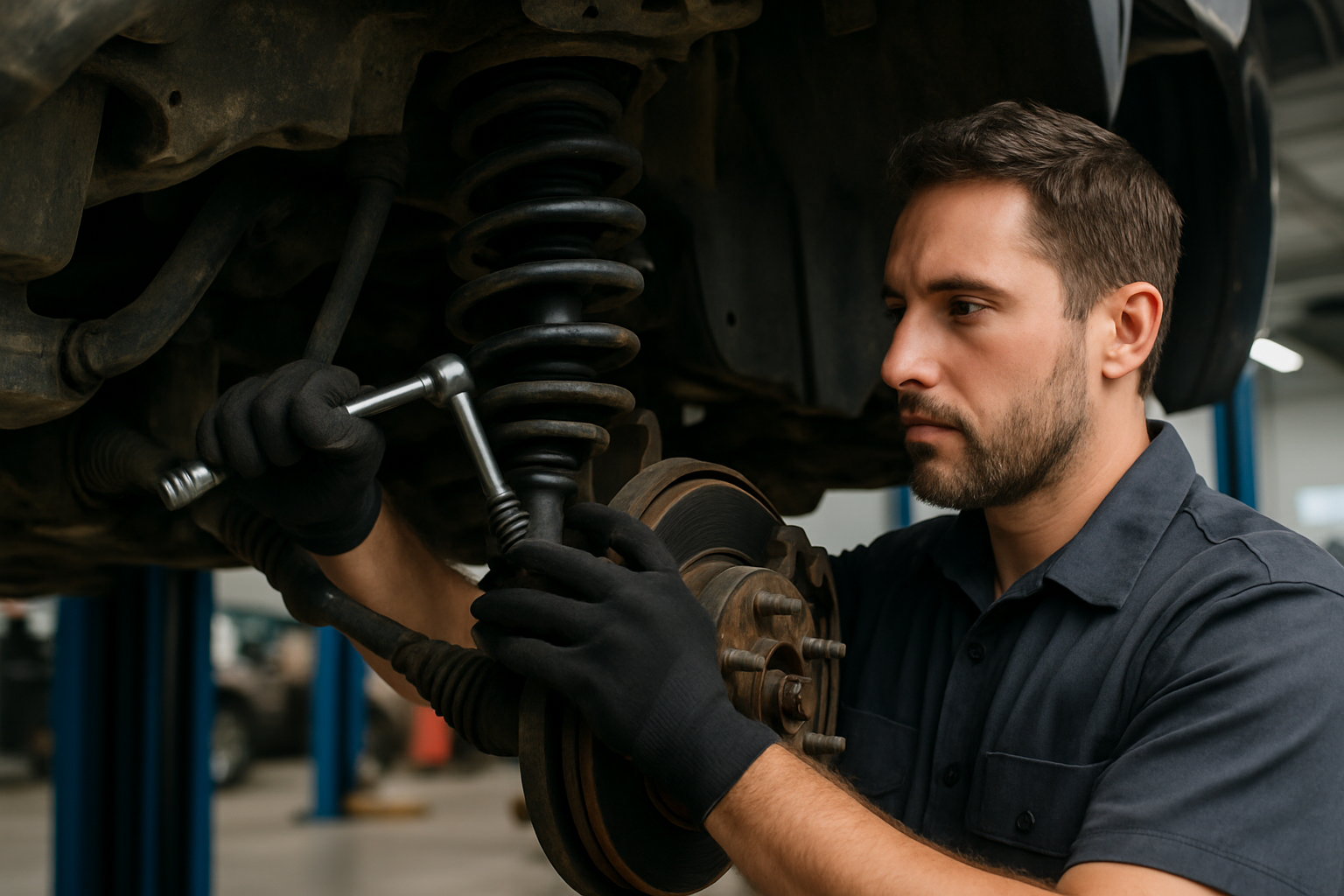
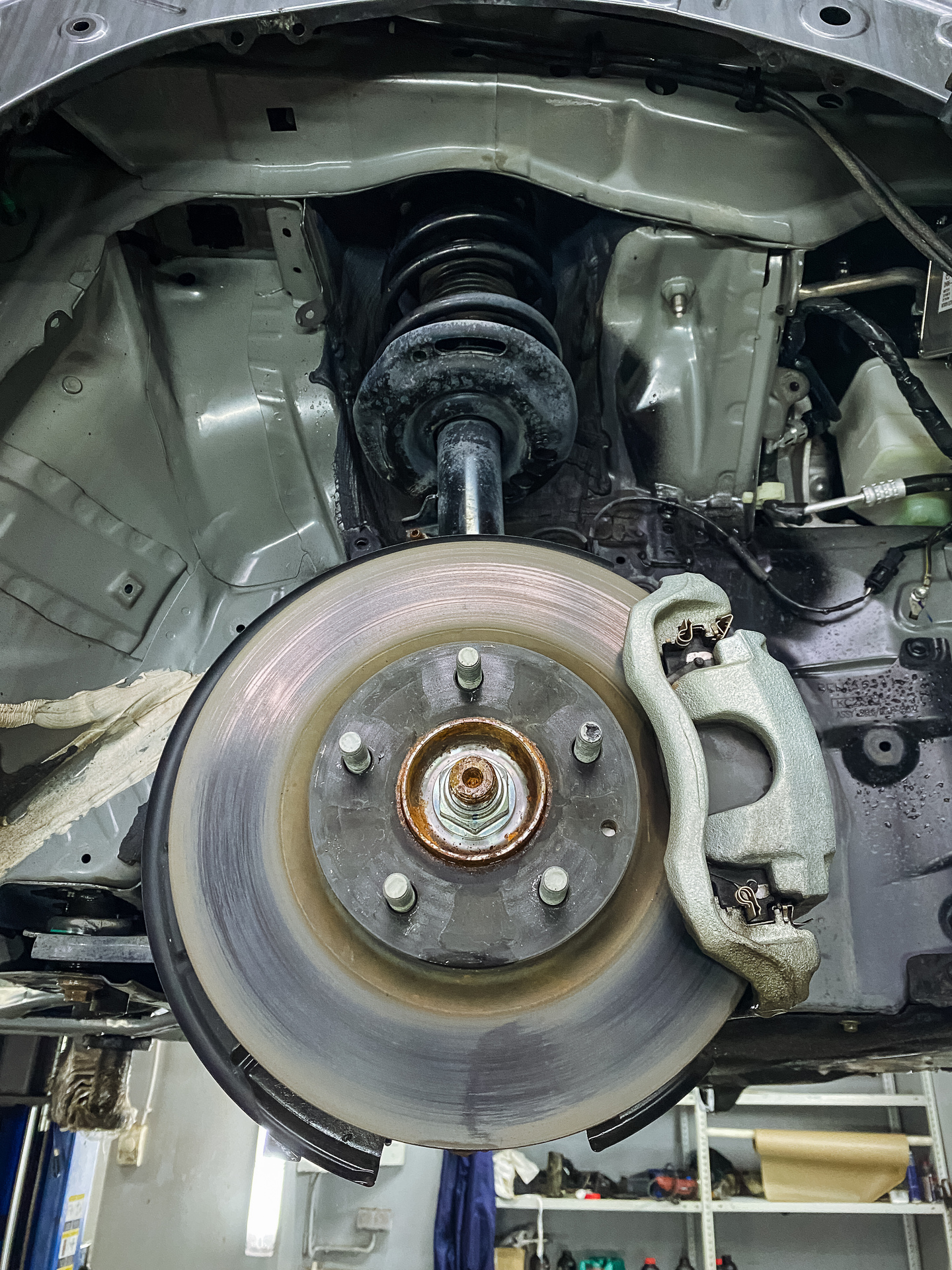
At Driven Auto Care of Fremont, we do not guess with suspension complaints. We road test the vehicle, inspect the struts, mounts, bearings, springs, links, and related front-end parts, then confirm what is worn before recommending repairs. If the struts are bad, we often recommend replacing them in pairs on the same axle and following up with an alignment to restore stable handling and protect the tires. If your BMW in Warm Springs feels bouncy, noisy, loose, or unsettled, it's time to get it checked before a strut problem turns into a much bigger suspension bill.
BMW owners usually notice strut trouble first in everyday moments, not during a dramatic breakdown. The car starts feeling less composed on familiar roads. A bump on the commute makes the front end bounce longer than it used to. Braking feels less planted. The steering starts to feel a little less sharp. Driven Auto Care of Fremont serves Warm Springs and works on BMW models like the 3 Series, 5 Series, X3, X5, 4 Series, and X1, so we see how suspension wear changes the way these cars feel long before many drivers realize the struts are the problem.
A failing strut changes more than ride comfort. Struts support vehicle weight, control bounce after bumps, help keep the tires in contact with the road, and influence alignment and steering behavior. When they wear out, tires can lose contact with the road more easily on rough pavement, and the vehicle may bounce more over dips or imperfections. Monroe's technical guidance on worn shocks and struts also notes reduced steering precision, reduced stopping performance, and reduced vehicle stability as wear progresses. On a BMW, where tight handling is part of the whole driving experience, those losses become hard to ignore.
Daily driving symptoms usually build in layers. First, you may hear clunking or knocking over driveway entries, speed bumps, or patched pavement. Then the ride starts to feel floaty or unsettled. Monroe identifies excessive bouncing, nose dive during braking, sway or roll in corners, steering vibration, unusual noises, and fluid leakage on the strut body as common signs of worn struts. Driven Auto Care's recent strut inspection also noted loose steering feel, wandering at speed, uneven tire wear, and visible seepage from the strut body. In plain English, your BMW starts feeling less controlled every week you keep driving it.
One of the fastest ways strut failure gets expensive is through tire and alignment damage. As Monroe explains, worn struts allow extra bouncing, which reduces road-holding force and can create accelerated tire wear, including cupping or scalloping. Driven Auto Care also notes that struts affect alignment angles, meaning the problem does not remain isolated to one part. A BMW with weak struts may start eating through tires while also feeling unstable at highway speed. Owners sometimes blame the tires first, replace them, and still end up with the same wandering, vibration, or rough ride because the real issue was in the suspension all along.
Braking performance is another area where worn BMW struts pose a real risk. Monroe states that a nose-dive during braking can increase stopping distance, and worn shocks and struts reduce stability during normal driving. Driven Auto Care's own strut article explains that the car may feel less steady and require more distance to stop on uneven pavement as struts wear. For a daily driver in Warm Springs traffic, stop-and-go commuting and freeway merging put that weakness on display fast. The car may still move, but it no longer responds with the confidence BMW drivers expect.
At Driven Auto Care of Fremont, we do not guess with suspension complaints. We road test the vehicle, inspect the struts, mounts, bearings, springs, links, and related front-end parts, then confirm what is worn before recommending repairs. If the struts are bad, we often recommend replacing them in pairs on the same axle and following up with an alignment to restore stable handling and protect the tires. If your BMW in Warm Springs feels bouncy, noisy, loose, or unsettled, it's time to get it checked before a strut problem turns into a much bigger suspension bill.
Warm Springs, CA - What Happens When BMW Struts Fail During Daily Driving?
SYNOPSIS: When BMW struts wear out, daily driving can feel bouncy, loose, noisy, and less stable. Quick suspension diagnosis helps Warm Springs drivers avoid tire wear, longer stops, and bigger repair costs.
BMW Strut Failure Changes Daily Handling
BY: Arun Coumar, Driven Auto Care of Fremont, CA
BMW owners usually notice strut trouble first in everyday moments, not during a dramatic breakdown. The car starts feeling less composed on familiar roads. A bump on the commute makes the front end bounce longer than it used to. Braking feels less planted. The steering starts to feel a little less sharp. Driven Auto Care of Fremont serves Warm Springs and works on BMW models like the 3 Series, 5 Series, X3, X5, 4 Series, and X1, so we see how suspension wear changes the way these cars feel long before many drivers realize the struts are the problem.
A failing strut changes more than ride comfort. Struts support vehicle weight, control bounce after bumps, help keep the tires in contact with the road, and influence alignment and steering behavior. When they wear out, tires can lose contact with the road more easily on rough pavement, and the vehicle may bounce more over dips or imperfections. Monroe's technical guidance on worn shocks and struts also notes reduced steering precision, reduced stopping performance, and reduced vehicle stability as wear progresses. On a BMW, where tight handling is part of the whole driving experience, those losses become hard to ignore.
Daily driving symptoms usually build in layers. First, you may hear clunking or knocking over driveway entries, speed bumps, or patched pavement. Then the ride starts to feel floaty or unsettled. Monroe identifies excessive bouncing, nose dive during braking, sway or roll in corners, steering vibration, unusual noises, and fluid leakage on the strut body as common signs of worn struts. Driven Auto Care's recent strut inspection also noted loose steering feel, wandering at speed, uneven tire wear, and visible seepage from the strut body. In plain English, your BMW starts feeling less controlled every week you keep driving it.
One of the fastest ways strut failure gets expensive is through tire and alignment damage. As Monroe explains, worn struts allow extra bouncing, which reduces road-holding force and can create accelerated tire wear, including cupping or scalloping. Driven Auto Care also notes that struts affect alignment angles, meaning the problem does not remain isolated to one part. A BMW with weak struts may start eating through tires while also feeling unstable at highway speed. Owners sometimes blame the tires first, replace them, and still end up with the same wandering, vibration, or rough ride because the real issue was in the suspension all along.
Braking performance is another area where worn BMW struts pose a real risk. Monroe states that a nose-dive during braking can increase stopping distance, and worn shocks and struts reduce stability during normal driving. Driven Auto Care's own strut article explains that the car may feel less steady and require more distance to stop on uneven pavement as struts wear. For a daily driver in Warm Springs traffic, stop-and-go commuting and freeway merging put that weakness on display fast. The car may still move, but it no longer responds with the confidence BMW drivers expect.
At Driven Auto Care of Fremont, we do not guess with suspension complaints. We road test the vehicle, inspect the struts, mounts, bearings, springs, links, and related front-end parts, then confirm what is worn before recommending repairs. If the struts are bad, we often recommend replacing them in pairs on the same axle and following up with an alignment to restore stable handling and protect the tires. If your BMW in Warm Springs feels bouncy, noisy, loose, or unsettled, it's time to get it checked before a strut problem turns into a much bigger suspension bill.