 Park your Nissan in the same spot tonight and check the concrete tomorrow morning. The location of the stain under the engine tells us which side of the VQ35DE is losing oil, the color tells us which fluid escaped, and the size tells us how long the gasket has been failing. Milpitas drivers who've started noticing dark spots on the garage floor are looking at the first chapter of a diagnostic story, and every detail in that stain narrows the list of possible sources before we open the hood.
Driven Auto Care in Fremont traces oil leaks on 2002 through 2019 Nissan Altima and Maxima V6 models every week, and the VQ35DE engine has three gasket surfaces that fail in a specific order as mileage accumulates.
Dark Brown and Centered Under the Engine
Engine oil that's been through several thousand miles turns dark brown or black, and it leaves a thick, slow-spreading stain. If that stain sits directly below the center of the engine, the oil pan gasket is the likely source. The VQ35DE oil pan seals with a bead of RTV silicone rather than a cut gasket, and that silicone bead shrinks and cracks over time, especially along the rear corners where the pan meets the transmission bellhousing. Oil pools along the pan rail and drips from the lowest point, which is why the stain centers itself at the middle of the car rather than favoring one side.
Stain Shifted Toward the Passenger Side
A spot that favors the right side of the engine bay points toward the passenger-side valve cover gasket or the front crankshaft seal. The VQ35DE's valve cover gaskets sit in a molded channel machined into each cylinder head, and the rubber hardens from heat exposure until the seal can't hold oil pressure at the channel's edges. Oil seeps past the gasket lip, runs down the side of the block, and collects on the subframe or steering rack before dripping onto the ground several inches away from where it escaped. This migration pattern is the reason we can't diagnose a VQ oil leak by looking at the puddle alone.
When Two Leaks Overlap and Confuse the Trail
The oil filter housing on the VQ35DE sits at the front of the engine between the cylinder banks, and its gasket can weep oil down the front of the block at the same time a valve cover gasket is leaking down the side. Both oil paths converge on the same subframe crossmember, and the stain on the driveway looks like one large leak from one source. We've seen shops replace the oil pan gasket on these engines because the stain was centered, only to have the customer return three weeks later with the same spot reforming. The pan was never the problem. The oil was traveling from the valve cover, across the block, along the subframe, and dripping at the center.
How We Separate the Sources
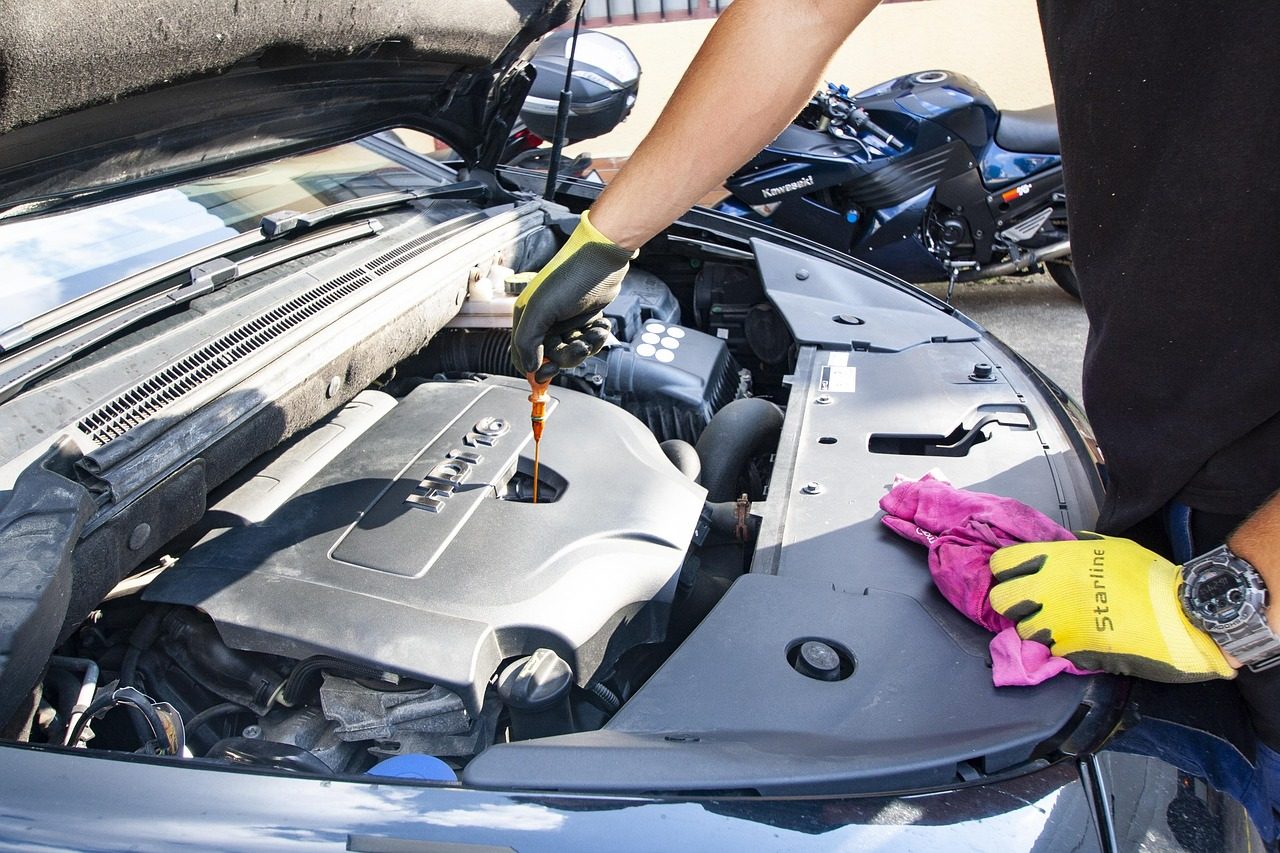
We start with a full solvent degreasing of the engine top, sides, and bottom so every surface is clean and dry. We run the engine to operating temperature on the lift, then inspect with a mirror and focused light, watching for the first wet trail to form on the freshly cleaned surfaces. The first gasket to show oil is the source. If multiple gaskets are seeping, we identify each one and note the severity so the repair addresses every active leak in one visit instead of chasing them one at a time.
Your Driveway Gave You the First Clue
Those oil spots hold information about your VQ35DE that's worth following up on before the leak worsens. Driven Auto Care in Fremont serves Milpitas Nissan owners with methodical leak tracing on a clean engine under controlled conditions. You've already started paying attention to the evidence, so take the next step and call (510) 270-3686 to find out which gasket is talking.
Park your Nissan in the same spot tonight and check the concrete tomorrow morning. The location of the stain under the engine tells us which side of the VQ35DE is losing oil, the color tells us which fluid escaped, and the size tells us how long the gasket has been failing. Milpitas drivers who've started noticing dark spots on the garage floor are looking at the first chapter of a diagnostic story, and every detail in that stain narrows the list of possible sources before we open the hood.
Driven Auto Care in Fremont traces oil leaks on 2002 through 2019 Nissan Altima and Maxima V6 models every week, and the VQ35DE engine has three gasket surfaces that fail in a specific order as mileage accumulates.
Dark Brown and Centered Under the Engine
Engine oil that's been through several thousand miles turns dark brown or black, and it leaves a thick, slow-spreading stain. If that stain sits directly below the center of the engine, the oil pan gasket is the likely source. The VQ35DE oil pan seals with a bead of RTV silicone rather than a cut gasket, and that silicone bead shrinks and cracks over time, especially along the rear corners where the pan meets the transmission bellhousing. Oil pools along the pan rail and drips from the lowest point, which is why the stain centers itself at the middle of the car rather than favoring one side.
Stain Shifted Toward the Passenger Side
A spot that favors the right side of the engine bay points toward the passenger-side valve cover gasket or the front crankshaft seal. The VQ35DE's valve cover gaskets sit in a molded channel machined into each cylinder head, and the rubber hardens from heat exposure until the seal can't hold oil pressure at the channel's edges. Oil seeps past the gasket lip, runs down the side of the block, and collects on the subframe or steering rack before dripping onto the ground several inches away from where it escaped. This migration pattern is the reason we can't diagnose a VQ oil leak by looking at the puddle alone.
When Two Leaks Overlap and Confuse the Trail
The oil filter housing on the VQ35DE sits at the front of the engine between the cylinder banks, and its gasket can weep oil down the front of the block at the same time a valve cover gasket is leaking down the side. Both oil paths converge on the same subframe crossmember, and the stain on the driveway looks like one large leak from one source. We've seen shops replace the oil pan gasket on these engines because the stain was centered, only to have the customer return three weeks later with the same spot reforming. The pan was never the problem. The oil was traveling from the valve cover, across the block, along the subframe, and dripping at the center.
How We Separate the Sources
We start with a full solvent degreasing of the engine top, sides, and bottom so every surface is clean and dry. We run the engine to operating temperature on the lift, then inspect with a mirror and focused light, watching for the first wet trail to form on the freshly cleaned surfaces. The first gasket to show oil is the source. If multiple gaskets are seeping, we identify each one and note the severity so the repair addresses every active leak in one visit instead of chasing them one at a time.
Your Driveway Gave You the First Clue
Those oil spots hold information about your VQ35DE that's worth following up on before the leak worsens. Driven Auto Care in Fremont serves Milpitas Nissan owners with methodical leak tracing on a clean engine under controlled conditions. You've already started paying attention to the evidence, so take the next step and call (510) 270-3686 to find out which gasket is talking.
Milpitas, CA - Nissan Oil Leak Spots on Driveway? Auto Mechanic Explains Causes
SYNOPSIS: Driven Auto Care of Fremont explains how to trace oil leaks on Nissan Altima and Maxima VQ35DE engines and identify the failed gasket before any unnecessary repairs are done.
Nissan Oil Spots? Read the Evidence First
BY: Arun Coumar, Driven Auto Care of Fremont, CA
Park your Nissan in the same spot tonight and check the concrete tomorrow morning. The location of the stain under the engine tells us which side of the VQ35DE is losing oil, the color tells us which fluid escaped, and the size tells us how long the gasket has been failing. Milpitas drivers who've started noticing dark spots on the garage floor are looking at the first chapter of a diagnostic story, and every detail in that stain narrows the list of possible sources before we open the hood.
Driven Auto Care in Fremont traces oil leaks on 2002 through 2019 Nissan Altima and Maxima V6 models every week, and the VQ35DE engine has three gasket surfaces that fail in a specific order as mileage accumulates.
Dark Brown and Centered Under the Engine
Engine oil that's been through several thousand miles turns dark brown or black, and it leaves a thick, slow-spreading stain. If that stain sits directly below the center of the engine, the oil pan gasket is the likely source. The VQ35DE oil pan seals with a bead of RTV silicone rather than a cut gasket, and that silicone bead shrinks and cracks over time, especially along the rear corners where the pan meets the transmission bellhousing. Oil pools along the pan rail and drips from the lowest point, which is why the stain centers itself at the middle of the car rather than favoring one side.
Stain Shifted Toward the Passenger Side
A spot that favors the right side of the engine bay points toward the passenger-side valve cover gasket or the front crankshaft seal. The VQ35DE's valve cover gaskets sit in a molded channel machined into each cylinder head, and the rubber hardens from heat exposure until the seal can't hold oil pressure at the channel's edges. Oil seeps past the gasket lip, runs down the side of the block, and collects on the subframe or steering rack before dripping onto the ground several inches away from where it escaped. This migration pattern is the reason we can't diagnose a VQ oil leak by looking at the puddle alone.
When Two Leaks Overlap and Confuse the Trail
The oil filter housing on the VQ35DE sits at the front of the engine between the cylinder banks, and its gasket can weep oil down the front of the block at the same time a valve cover gasket is leaking down the side. Both oil paths converge on the same subframe crossmember, and the stain on the driveway looks like one large leak from one source. We've seen shops replace the oil pan gasket on these engines because the stain was centered, only to have the customer return three weeks later with the same spot reforming. The pan was never the problem. The oil was traveling from the valve cover, across the block, along the subframe, and dripping at the center.
How We Separate the Sources
We start with a full solvent degreasing of the engine top, sides, and bottom so every surface is clean and dry. We run the engine to operating temperature on the lift, then inspect with a mirror and focused light, watching for the first wet trail to form on the freshly cleaned surfaces. The first gasket to show oil is the source. If multiple gaskets are seeping, we identify each one and note the severity so the repair addresses every active leak in one visit instead of chasing them one at a time.
Your Driveway Gave You the First Clue
Those oil spots hold information about your VQ35DE that's worth following up on before the leak worsens. Driven Auto Care in Fremont serves Milpitas Nissan owners with methodical leak tracing on a clean engine under controlled conditions. You've already started paying attention to the evidence, so take the next step and call (510) 270-3686 to find out which gasket is talking.