 Remember what your Dodge felt like when you drove it off the lot? The steering tracked straight over highway joints, the body stayed planted through on-ramps, and the ride absorbed Sunol's canyon roads without bouncing you around the cab. If that description sounds like a different truck from the one you're driving now, your shocks have been losing damping force for thousands of miles, and the damage they're allowing goes beyond a rough ride.
It Happens So Gradually You Adapt to It
Driven Auto Care in Fremont works on 2009 through 2018 Ram 1500 and Durango models, and the conversation about shocks usually starts with something else. The owner brings the truck in for a tire rotation, and we find cupped wear across the front tread that shouldn't be there on a tire with 20,000 miles on it. Shock degradation is invisible from the driver's seat because it happens over months. You adjust your speed for bumps, grip the wheel a little tighter on the freeway, and brake a little earlier at intersections without connecting those habits to a suspension component that's lost its ability to control the wheel.
What's Happening Inside the Shock Body
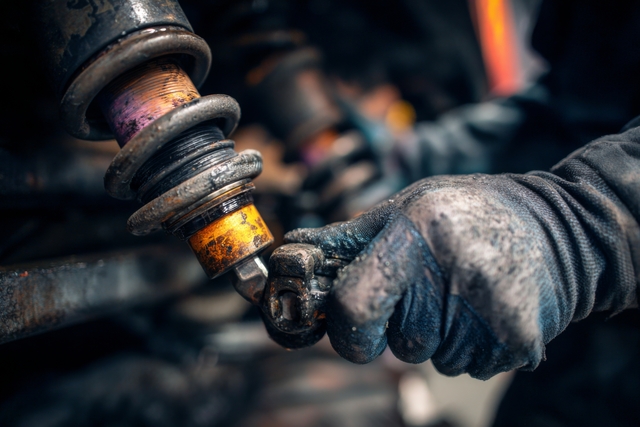
A twin-tube shock absorber controls wheel movement by forcing hydraulic fluid through calibrated valving as the piston moves up and down inside the cylinder. The rod seal at the top of the shock keeps that fluid contained under pressure. After 50,000 to 70,000 miles on a truck that hauls weight or runs uneven terrain around Sunol and Niles Canyon, the rod seal wears enough that fluid weeps past it and coats the outside of the shock body. Once the fluid level drops inside the cylinder, the piston moves through air pockets instead of pressurized oil, and the damping force that keeps your tire pressed to the pavement disappears.
The Tire Wear Pattern That Tells the Whole Story
Cupping shows up as a series of scalloped dips across the tread face, repeating every few inches in a wave pattern. Each dip represents a moment where the tire bounced off the pavement and landed again, grinding rubber away at the contact patch. A shock with proper damping keeps the tire loaded against the road surface through every bump and dip; a worn shock lets the tire skip like a stone. You won't spot cupping by glancing at the tire from the side of the truck. You'll find it by running your hand across the tread and feeling the high and low spots that have formed in a repeating rhythm.
Your Braking Distance Changed and You Didn't Know
Worn front shocks let the nose of the truck dive under braking, shifting weight forward and reducing rear tire contact with the pavement. The front brakes absorb more energy than they're designed to handle in that posture, and the truck takes longer to stop. This isn't something you'll notice at a single stoplight; it accumulates in how much following distance you've subconsciously added on I-680 without thinking about why.
Run Your Hand Across the Tread Tonight
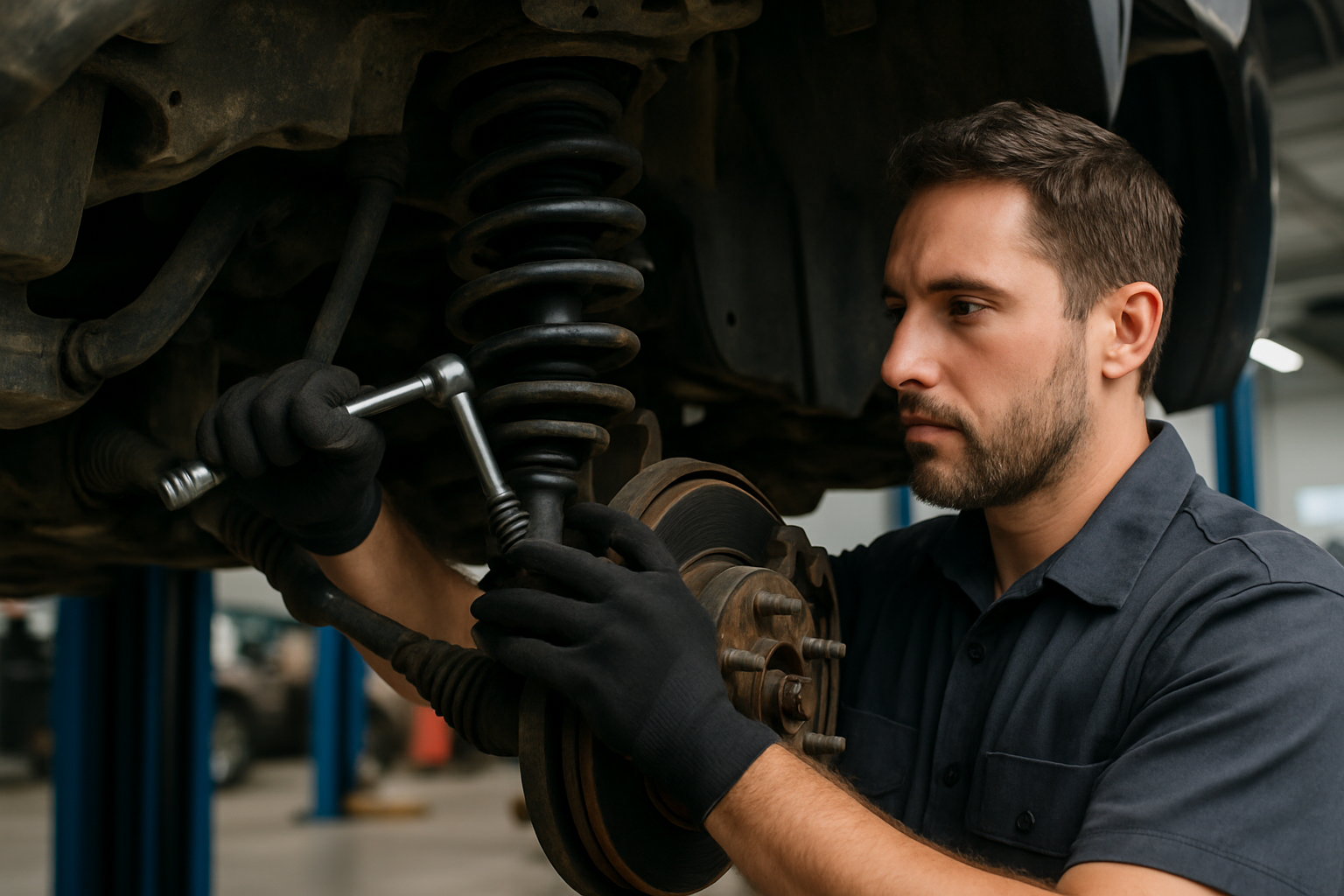
That one check tells you more about your shocks than any bounce test from the parking lot. If you feel scalloped dips repeating across the face of your front tires, your shocks have been worn long enough to cost you rubber and braking grip. Driven Auto Care in Fremont evaluates Dodge suspension systems for Sunol drivers with a lift inspection, rod seal check, and side-to-side damping comparison. The number is (510) 270-3686, and we'll tell you what your tires already know.
Remember what your Dodge felt like when you drove it off the lot? The steering tracked straight over highway joints, the body stayed planted through on-ramps, and the ride absorbed Sunol's canyon roads without bouncing you around the cab. If that description sounds like a different truck from the one you're driving now, your shocks have been losing damping force for thousands of miles, and the damage they're allowing goes beyond a rough ride.
It Happens So Gradually You Adapt to It
Driven Auto Care in Fremont works on 2009 through 2018 Ram 1500 and Durango models, and the conversation about shocks usually starts with something else. The owner brings the truck in for a tire rotation, and we find cupped wear across the front tread that shouldn't be there on a tire with 20,000 miles on it. Shock degradation is invisible from the driver's seat because it happens over months. You adjust your speed for bumps, grip the wheel a little tighter on the freeway, and brake a little earlier at intersections without connecting those habits to a suspension component that's lost its ability to control the wheel.
What's Happening Inside the Shock Body
A twin-tube shock absorber controls wheel movement by forcing hydraulic fluid through calibrated valving as the piston moves up and down inside the cylinder. The rod seal at the top of the shock keeps that fluid contained under pressure. After 50,000 to 70,000 miles on a truck that hauls weight or runs uneven terrain around Sunol and Niles Canyon, the rod seal wears enough that fluid weeps past it and coats the outside of the shock body. Once the fluid level drops inside the cylinder, the piston moves through air pockets instead of pressurized oil, and the damping force that keeps your tire pressed to the pavement disappears.
The Tire Wear Pattern That Tells the Whole Story
Cupping shows up as a series of scalloped dips across the tread face, repeating every few inches in a wave pattern. Each dip represents a moment where the tire bounced off the pavement and landed again, grinding rubber away at the contact patch. A shock with proper damping keeps the tire loaded against the road surface through every bump and dip; a worn shock lets the tire skip like a stone. You won't spot cupping by glancing at the tire from the side of the truck. You'll find it by running your hand across the tread and feeling the high and low spots that have formed in a repeating rhythm.
Your Braking Distance Changed and You Didn't Know
Worn front shocks let the nose of the truck dive under braking, shifting weight forward and reducing rear tire contact with the pavement. The front brakes absorb more energy than they're designed to handle in that posture, and the truck takes longer to stop. This isn't something you'll notice at a single stoplight; it accumulates in how much following distance you've subconsciously added on I-680 without thinking about why.
Run Your Hand Across the Tread Tonight
That one check tells you more about your shocks than any bounce test from the parking lot. If you feel scalloped dips repeating across the face of your front tires, your shocks have been worn long enough to cost you rubber and braking grip. Driven Auto Care in Fremont evaluates Dodge suspension systems for Sunol drivers with a lift inspection, rod seal check, and side-to-side damping comparison. The number is (510) 270-3686, and we'll tell you what your tires already know.
Sunol, CA - Dodge Shocks Worn Out? Auto Repair Shop Explains Ride Damage
SYNOPSIS: Driven Auto Care of Fremont, CA breaks down how worn shocks on Dodge Ram 1500 and Durango models damage tires, increase braking distance, and degrade ride control long before the driver notices.
Dodge Ride Gone Soft in Sunol? Check Your Shocks
BY: Arun Coumar, Driven Auto Care of Fremont, CA
Remember what your Dodge felt like when you drove it off the lot? The steering tracked straight over highway joints, the body stayed planted through on-ramps, and the ride absorbed Sunol's canyon roads without bouncing you around the cab. If that description sounds like a different truck from the one you're driving now, your shocks have been losing damping force for thousands of miles, and the damage they're allowing goes beyond a rough ride.
It Happens So Gradually You Adapt to It
Driven Auto Care in Fremont works on 2009 through 2018 Ram 1500 and Durango models, and the conversation about shocks usually starts with something else. The owner brings the truck in for a tire rotation, and we find cupped wear across the front tread that shouldn't be there on a tire with 20,000 miles on it. Shock degradation is invisible from the driver's seat because it happens over months. You adjust your speed for bumps, grip the wheel a little tighter on the freeway, and brake a little earlier at intersections without connecting those habits to a suspension component that's lost its ability to control the wheel.
What's Happening Inside the Shock Body
A twin-tube shock absorber controls wheel movement by forcing hydraulic fluid through calibrated valving as the piston moves up and down inside the cylinder. The rod seal at the top of the shock keeps that fluid contained under pressure. After 50,000 to 70,000 miles on a truck that hauls weight or runs uneven terrain around Sunol and Niles Canyon, the rod seal wears enough that fluid weeps past it and coats the outside of the shock body. Once the fluid level drops inside the cylinder, the piston moves through air pockets instead of pressurized oil, and the damping force that keeps your tire pressed to the pavement disappears.
The Tire Wear Pattern That Tells the Whole Story
Cupping shows up as a series of scalloped dips across the tread face, repeating every few inches in a wave pattern. Each dip represents a moment where the tire bounced off the pavement and landed again, grinding rubber away at the contact patch. A shock with proper damping keeps the tire loaded against the road surface through every bump and dip; a worn shock lets the tire skip like a stone. You won't spot cupping by glancing at the tire from the side of the truck. You'll find it by running your hand across the tread and feeling the high and low spots that have formed in a repeating rhythm.
Your Braking Distance Changed and You Didn't Know
Worn front shocks let the nose of the truck dive under braking, shifting weight forward and reducing rear tire contact with the pavement. The front brakes absorb more energy than they're designed to handle in that posture, and the truck takes longer to stop. This isn't something you'll notice at a single stoplight; it accumulates in how much following distance you've subconsciously added on I-680 without thinking about why.
Run Your Hand Across the Tread Tonight
That one check tells you more about your shocks than any bounce test from the parking lot. If you feel scalloped dips repeating across the face of your front tires, your shocks have been worn long enough to cost you rubber and braking grip. Driven Auto Care in Fremont evaluates Dodge suspension systems for Sunol drivers with a lift inspection, rod seal check, and side-to-side damping comparison. The number is (510) 270-3686, and we'll tell you what your tires already know.