 The alignment printout shows perfect green numbers. Every angle sits within the factory specification. You pay, drive home confident the pull is fixed, and within two weeks, your BMW drifts right exactly like before. At Driven Auto Care in Fremont, CA, we help Milpitas drivers who've chased this pattern through three or four alignment shops without anyone explaining why adjustments keep failing. The answer sits in rubber bushings that look fine standing still but move significantly under acceleration, braking, and cornering loads that static measurements never capture.
How Worn Bushings Defeat Perfect Alignment Settings
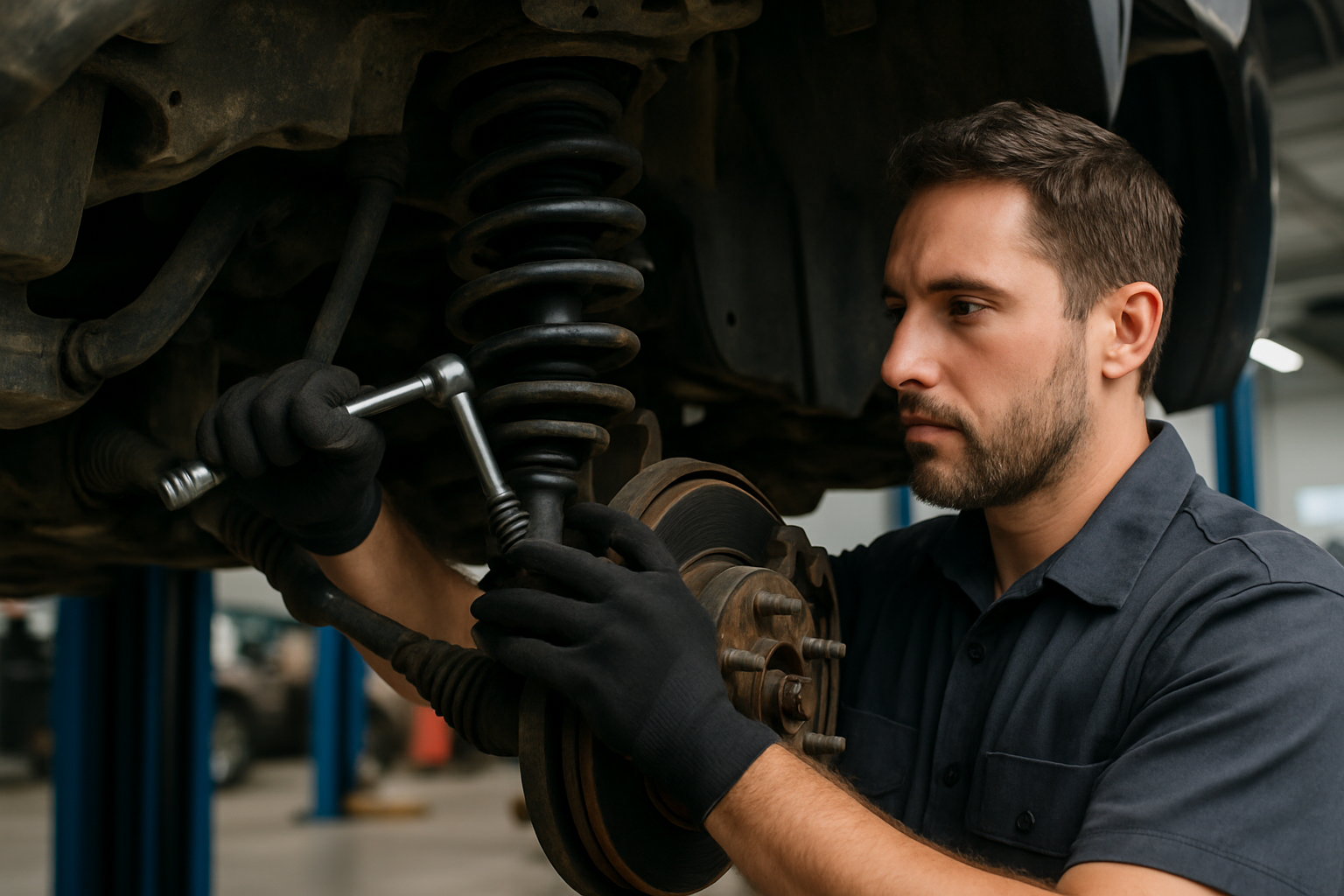
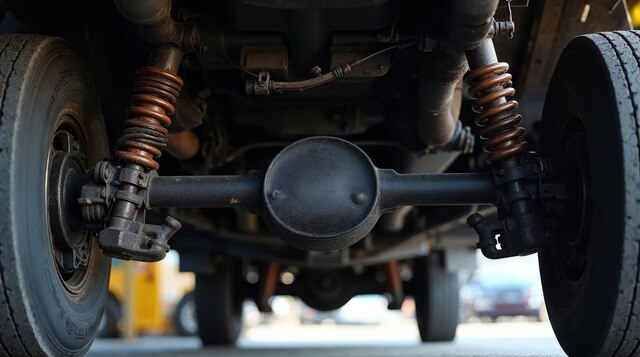
Control arms position the front wheels relative to the chassis with precision measured in fractions of degrees. Camber, caster, and toe angles must hold steady through suspension travel as wheels rise over bumps and settle back down. The rubber bushings inside those arms absorb vibration and allow controlled flex, but heat cycling between cold morning startups and hot afternoon operation hardens rubber compounds over the years until cracking develops. Once the rubber fails, the wheel position shifts under every dynamic load. Your BMW pulls toward whichever side shows more deflection because the toe angle changes constantly instead of holding the specification printed on your alignment receipt.
Thrust Arms And Lower Arms Serve Different Functions
BMW front suspensions use multiple control arms that inexperienced shops often confuse when diagnosing pull complaints. Thrust arms control fore-and-aft wheel positioning, and worn thrust arm bushings create that unsettling highway wander requiring constant small steering corrections to maintain your lane. Lower control arms handle lateral wheel positioning, and their worn bushings produce more noticeable pulling during braking when weight transfers forward and loads the front suspension heavily. We inspect both arm types under load conditions, revealing which specific component actually requires replacement rather than recommending complete front-end rebuilds when only one bushing failed.
Ball Joints Wear Independently From Bushings
The ball joints connecting control arms to steering knuckles deteriorate separately and need individual inspection protocols. They typically outlast bushings by twenty to thirty thousand miles, but X-drive models carrying additional component weight develop joint play earlier than rear-wheel-drive variants. We check for play by rocking tires at twelve and six o'clock while watching ball joint movement at the arm connection points. Any detectable play means replacement alongside bushing work saves significant labor cost compared to addressing ball joints later, after bushings are already done.
Subframe Bushings Add Another Variable
The subframe supporting your entire front suspension bolts to the unibody through large rubber bushings that also deteriorate with age and mileage. When these wear, the entire front suspension assembly shifts under load and creates instability that control arm replacement alone cannot correct. E90 and F30 models show subframe bushing deterioration around 80,000 miles with regularity, we can almost predict. We check the subframe condition during every pull diagnosis because ignoring worn subframe mounts means replacing control arms on a foundation that still moves.
End The Alignment Chase Permanently
Milpitas BMW owners shouldn't keep paying for alignments that fail within weeks. Call Driven Auto Care at (510) 270-3686 to identify exactly which bushings are worn and restore the precise handling your BMW delivered from the factory.
The alignment printout shows perfect green numbers. Every angle sits within the factory specification. You pay, drive home confident the pull is fixed, and within two weeks, your BMW drifts right exactly like before. At Driven Auto Care in Fremont, CA, we help Milpitas drivers who've chased this pattern through three or four alignment shops without anyone explaining why adjustments keep failing. The answer sits in rubber bushings that look fine standing still but move significantly under acceleration, braking, and cornering loads that static measurements never capture.
How Worn Bushings Defeat Perfect Alignment Settings
Control arms position the front wheels relative to the chassis with precision measured in fractions of degrees. Camber, caster, and toe angles must hold steady through suspension travel as wheels rise over bumps and settle back down. The rubber bushings inside those arms absorb vibration and allow controlled flex, but heat cycling between cold morning startups and hot afternoon operation hardens rubber compounds over the years until cracking develops. Once the rubber fails, the wheel position shifts under every dynamic load. Your BMW pulls toward whichever side shows more deflection because the toe angle changes constantly instead of holding the specification printed on your alignment receipt.
Thrust Arms And Lower Arms Serve Different Functions
BMW front suspensions use multiple control arms that inexperienced shops often confuse when diagnosing pull complaints. Thrust arms control fore-and-aft wheel positioning, and worn thrust arm bushings create that unsettling highway wander requiring constant small steering corrections to maintain your lane. Lower control arms handle lateral wheel positioning, and their worn bushings produce more noticeable pulling during braking when weight transfers forward and loads the front suspension heavily. We inspect both arm types under load conditions, revealing which specific component actually requires replacement rather than recommending complete front-end rebuilds when only one bushing failed.
Ball Joints Wear Independently From Bushings
The ball joints connecting control arms to steering knuckles deteriorate separately and need individual inspection protocols. They typically outlast bushings by twenty to thirty thousand miles, but X-drive models carrying additional component weight develop joint play earlier than rear-wheel-drive variants. We check for play by rocking tires at twelve and six o'clock while watching ball joint movement at the arm connection points. Any detectable play means replacement alongside bushing work saves significant labor cost compared to addressing ball joints later, after bushings are already done.
Subframe Bushings Add Another Variable
The subframe supporting your entire front suspension bolts to the unibody through large rubber bushings that also deteriorate with age and mileage. When these wear, the entire front suspension assembly shifts under load and creates instability that control arm replacement alone cannot correct. E90 and F30 models show subframe bushing deterioration around 80,000 miles with regularity, we can almost predict. We check the subframe condition during every pull diagnosis because ignoring worn subframe mounts means replacing control arms on a foundation that still moves.
End The Alignment Chase Permanently
Milpitas BMW owners shouldn't keep paying for alignments that fail within weeks. Call Driven Auto Care at (510) 270-3686 to identify exactly which bushings are worn and restore the precise handling your BMW delivered from the factory.
Milpitas, CA - BMW Control Arm Replacement for Steering Pull Issues | Repair New
SYNOPSIS: Driven Auto Care of Fremont, CA serves Milpitas BMW owners with suspension diagnostics identifying what's actually worn and then fixing it fast and correctly the first time.
Why Your BMW Pulls After Every Alignment
BY: Arun Coumar, Driven Auto Care of Fremont, CA
The alignment printout shows perfect green numbers. Every angle sits within the factory specification. You pay, drive home confident the pull is fixed, and within two weeks, your BMW drifts right exactly like before. At Driven Auto Care in Fremont, CA, we help Milpitas drivers who've chased this pattern through three or four alignment shops without anyone explaining why adjustments keep failing. The answer sits in rubber bushings that look fine standing still but move significantly under acceleration, braking, and cornering loads that static measurements never capture.
How Worn Bushings Defeat Perfect Alignment Settings
Control arms position the front wheels relative to the chassis with precision measured in fractions of degrees. Camber, caster, and toe angles must hold steady through suspension travel as wheels rise over bumps and settle back down. The rubber bushings inside those arms absorb vibration and allow controlled flex, but heat cycling between cold morning startups and hot afternoon operation hardens rubber compounds over the years until cracking develops. Once the rubber fails, the wheel position shifts under every dynamic load. Your BMW pulls toward whichever side shows more deflection because the toe angle changes constantly instead of holding the specification printed on your alignment receipt.
Thrust Arms And Lower Arms Serve Different Functions
BMW front suspensions use multiple control arms that inexperienced shops often confuse when diagnosing pull complaints. Thrust arms control fore-and-aft wheel positioning, and worn thrust arm bushings create that unsettling highway wander requiring constant small steering corrections to maintain your lane. Lower control arms handle lateral wheel positioning, and their worn bushings produce more noticeable pulling during braking when weight transfers forward and loads the front suspension heavily. We inspect both arm types under load conditions, revealing which specific component actually requires replacement rather than recommending complete front-end rebuilds when only one bushing failed.
Ball Joints Wear Independently From Bushings
The ball joints connecting control arms to steering knuckles deteriorate separately and need individual inspection protocols. They typically outlast bushings by twenty to thirty thousand miles, but X-drive models carrying additional component weight develop joint play earlier than rear-wheel-drive variants. We check for play by rocking tires at twelve and six o'clock while watching ball joint movement at the arm connection points. Any detectable play means replacement alongside bushing work saves significant labor cost compared to addressing ball joints later, after bushings are already done.
Subframe Bushings Add Another Variable
The subframe supporting your entire front suspension bolts to the unibody through large rubber bushings that also deteriorate with age and mileage. When these wear, the entire front suspension assembly shifts under load and creates instability that control arm replacement alone cannot correct. E90 and F30 models show subframe bushing deterioration around 80,000 miles with regularity, we can almost predict. We check the subframe condition during every pull diagnosis because ignoring worn subframe mounts means replacing control arms on a foundation that still moves.
End The Alignment Chase Permanently
Milpitas BMW owners shouldn't keep paying for alignments that fail within weeks. Call Driven Auto Care at (510) 270-3686 to identify exactly which bushings are worn and restore the precise handling your BMW delivered from the factory.