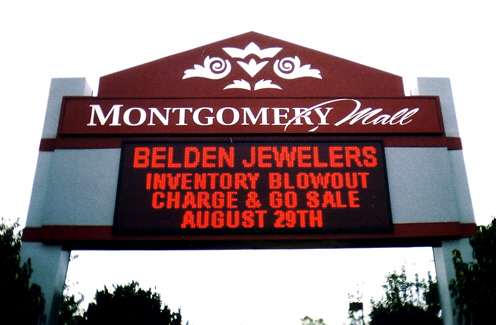
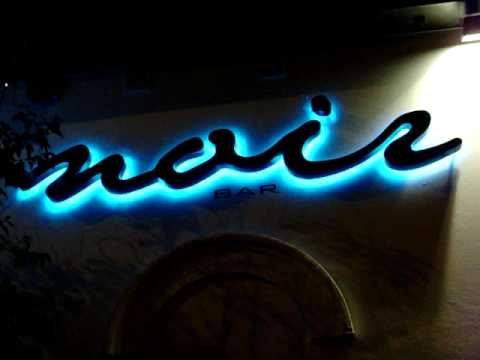
- · As to color – Color or monochrome? Your LED sign could go either way depending on the needs of your business. If images, pictures or graphics are needed to effectively present your product or service to the public, a color signage is the ideal choice. It may cost a bit more than a monochrome sign but the additional cost may be a justifiable expense in the long term. An example would be a car dealership sign.
- · As to size – The size of your signage may vary depending on the density and lanes of traffic fronting it, the viewing distance, the location within your premises and the content of the sign. Whether you choose a big or small sign, the most important thing to consider is that the content should easily be understood by the viewing public. This is where the role of pixels and pitch come in. For instance, a small sign with high resolution can clearly be seen by customers even from a distance. However, for people in cars who are passing by, a bigger sign with a larger pitch would be the better option. It can even get more complicated with color signs. The best thing to do is contact a trust led sign provider to help you determine the proper size.
- · As to LED density – Led density determines how bright or dull your LED sign is. More LEDs in each pixel means a brighter sign while lesser LEDs means an unreadable display which is less likely to be noticed by customers and, therefore, will not help you increase sales. The density of LEDs is also vital because LED diodes, just like everything else, they have a life of their own. They have an estimated lifespan of 100,000 but they can loose 20% of their initial brightness after 2000 hours of use. Thus, a high LED density can help maintain the needed brightness of your sign.
- · As to viewing angle – Wide viewing angle LED signs are preferred over narrow viewing ones because the images in the former have uniform colors and consistent brightness at any point within a 140 degree viewing angle.