Title
Coaching the Whole Bench, Not One Star
Synopsis
Article
Field notes from years of coaching leadership teams, written with private equity in mind.
Private equity lives or dies on operator quality. You can model the thesis perfectly and still watch returns drain away because the leadership bench at a portfolio company wasn't deep enough to execute. This is why group business coaching fits the model so well. Coaching a standout executive helps one person. Coaching a leadership team raises the floor under an entire company, and a stronger floor is what protects the investment when conditions get rough.
Note one: the room teaches faster than the one-on-one
When I coach a team together, people learn from each other's hard questions, not only from mine. A CFO hears how the head of sales frames a tradeoff and borrows the move. Patterns surface in a group that stays hidden in private sessions. For a sponsor watching several portfolio companies, this matters: shared coaching builds a common operating language across leaders who otherwise default to whatever they each picked up somewhere else.
Note two: alignment is the real deliverable
The most expensive problem inside a portfolio company is rarely strategy. Its leaders are quietly pulling in different directions. I've sat with leadership teams where the dysfunction wasn't talent but the absence of an agreed picture of what good looked like. We fix this directly. We define clear lines of responsibility, build metrics so every leader knows the standard, and turn divisive energy into focused ownership. In one young, fast-growing company, leadership teamwork like this was central to a climb from $1.5 million to $13 million in four years.
Note three: groups make accountability social
Willpower fades. Cadence holds. A leadership team meeting a coaching rhythm together creates a quiet, healthy pressure that no individual program matches. Commitments get made in front of peers, and progress gets reviewed in front of those same peers. For a sponsor, this is the difference between a hundred-day plan on a slide and a hundred-day plan people actually run.
Note four: it scales the way a fund needs it to
A single executive coach embedded at one company doesn't help the other six in the portfolio. Group coaching frameworks travel. The same disciplines around clarity, communication, priority management, and leadership apply whether the asset is in light manufacturing or services. A sponsor can install a consistent approach to operator development instead of hoping each management team figures it out alone.
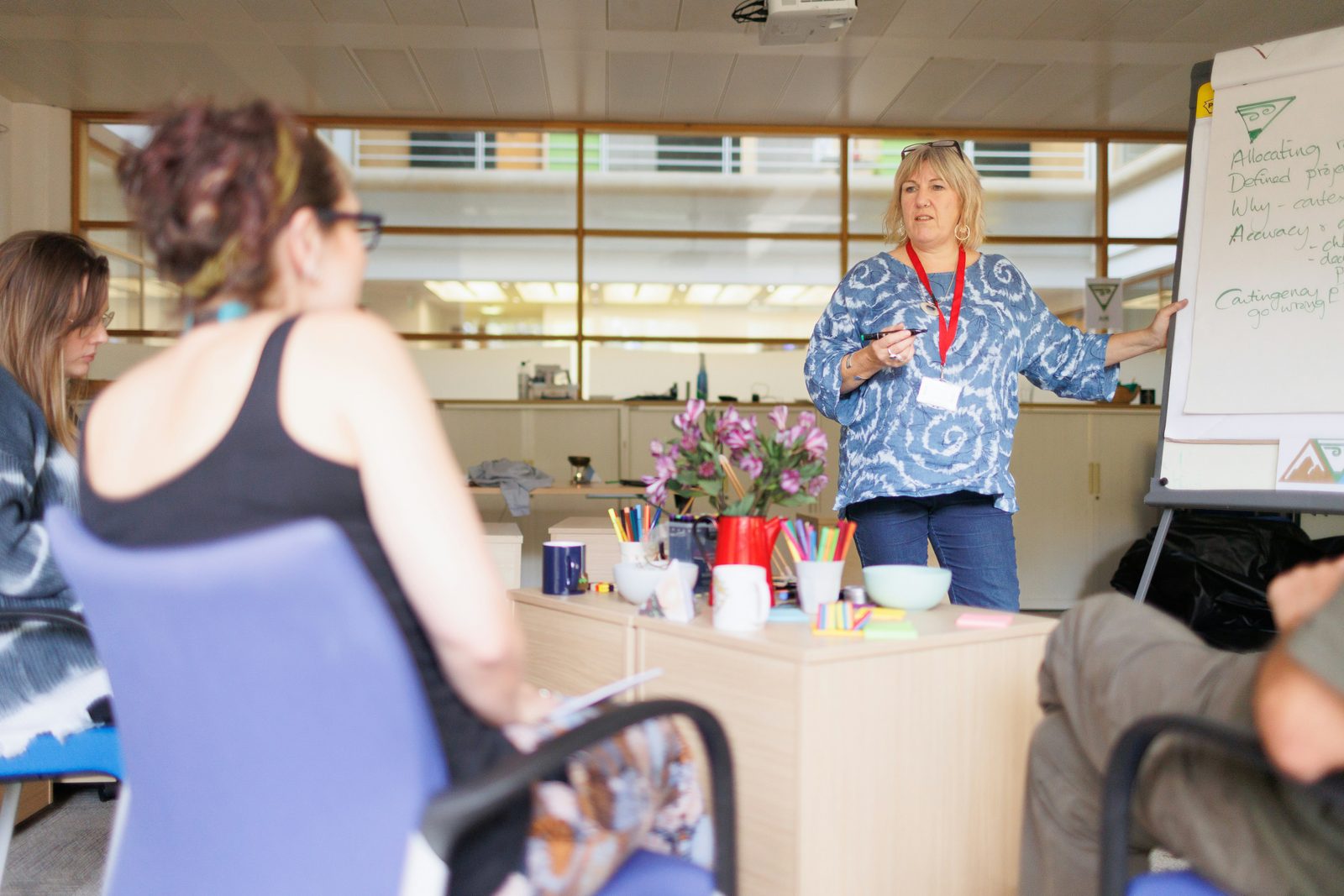
A caution from the field: group coaching is not a town hall. It works because the group is small enough for candor and structured enough to produce decisions. When I run these sessions, phones are down, the conversation stays honest, and every meeting ends with decisions made, owners named, and a clear next step. The size and the structure are what make the room safe enough for the truth.
One more observation. The leadership teams improving fastest usually share a trait: they're willing to be questioned by someone with no stake in internal politics. I work under strict confidentiality, which lets a CEO and a direct report sit in the same room and still speak plainly. That candor is the asset. Everything else is technique.
Private equity is patient about strategy and impatient about execution, and execution is a leadership problem long before it's a spreadsheet problem.
I'm Danny Creed, recognized as one of the 10 Most Inspiring Transformational Coaches globally. If you oversee a portfolio and want the leadership benches to mature faster, let's schedule a conversation about your operators and where the gaps are.