A jammed finger and a rolled wrist get treated as minor injuries. You tape it, ice it, and get on with your day. And plenty of the time that's fine. But hands are unforgiving about injuries that get handled carelessly, and a finger that heals stiff or crooked is a problem you carry for years.
Why Hands Are Different
Your hand runs on tiny joints, thin ligaments, and tendons that have to glide through narrow spaces to work at all. There's very little margin in there. Swelling that would be trivial in a knee can lock a finger joint down completely. A ligament that heals slightly loose leaves a knuckle unstable for good.
That's the case for taking a small hand injury more seriously than it feels like it deserves.
The Injuries We See Most
- Jammed fingers, where the joint gets compressed and stiffens up
- Sprained finger ligaments, especially at the thumb
- Wrist sprains from catching yourself on an outstretched hand
- Mallet finger, where the fingertip won't straighten on its own
- Small fractures that seemed like bad sprains at first
That last one comes up often. Several fractures in the hand and wrist pass for sprains, and one in particular in the wrist has a habit of healing poorly if it goes unrecognized.
What Therapy Actually Does
The work runs on two fronts at once, which is the whole trick with hands: protecting the injured tissue while keeping the joints moving.
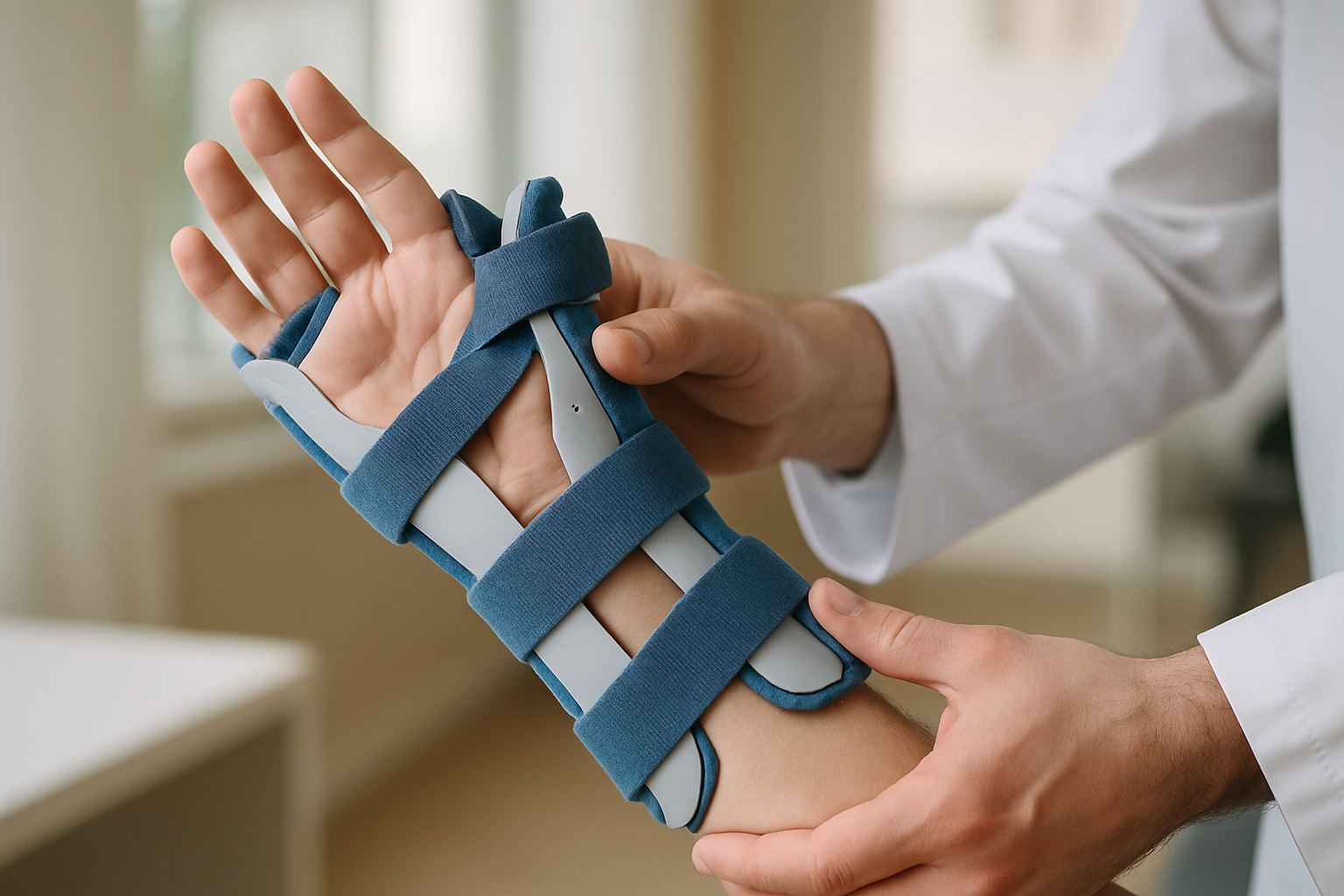
A custom splint holds the injured part at the right angle while leaving the rest free. Swelling management comes early, since a swollen finger won't bend and a finger that won't bend gets stiff fast. Then motion work to preserve what range you have, followed by strengthening and grip work as things heal. Scar management matters too, if there was a wound or surgery involved.
The Stiffness Problem
Here's what people don't anticipate. The finger heals, the pain goes away, and the joint still won't fully bend. That stiffness is the most common lasting consequence of a hand injury, and it's largely preventable with the right early care.
Once a hand joint has been stiff for months, loosening it is slow, uncomfortable work, and sometimes you don't get all of it back. Starting motion at the right time, not too early and not too late, is what avoids that entirely.
When To Get It Looked At
It's worth an evaluation if it's still swollen after a few days, if a finger won't fully straighten or bend, if there's obvious deformity, or if pain isn't settling the way you'd expect. Better to check and be told it's minor than to find out in six months.
Finger or wrist not coming around? Modern Medicine of Peoria, AZ has hand therapists who can sort it out. Reach us by phone or the online booking form.