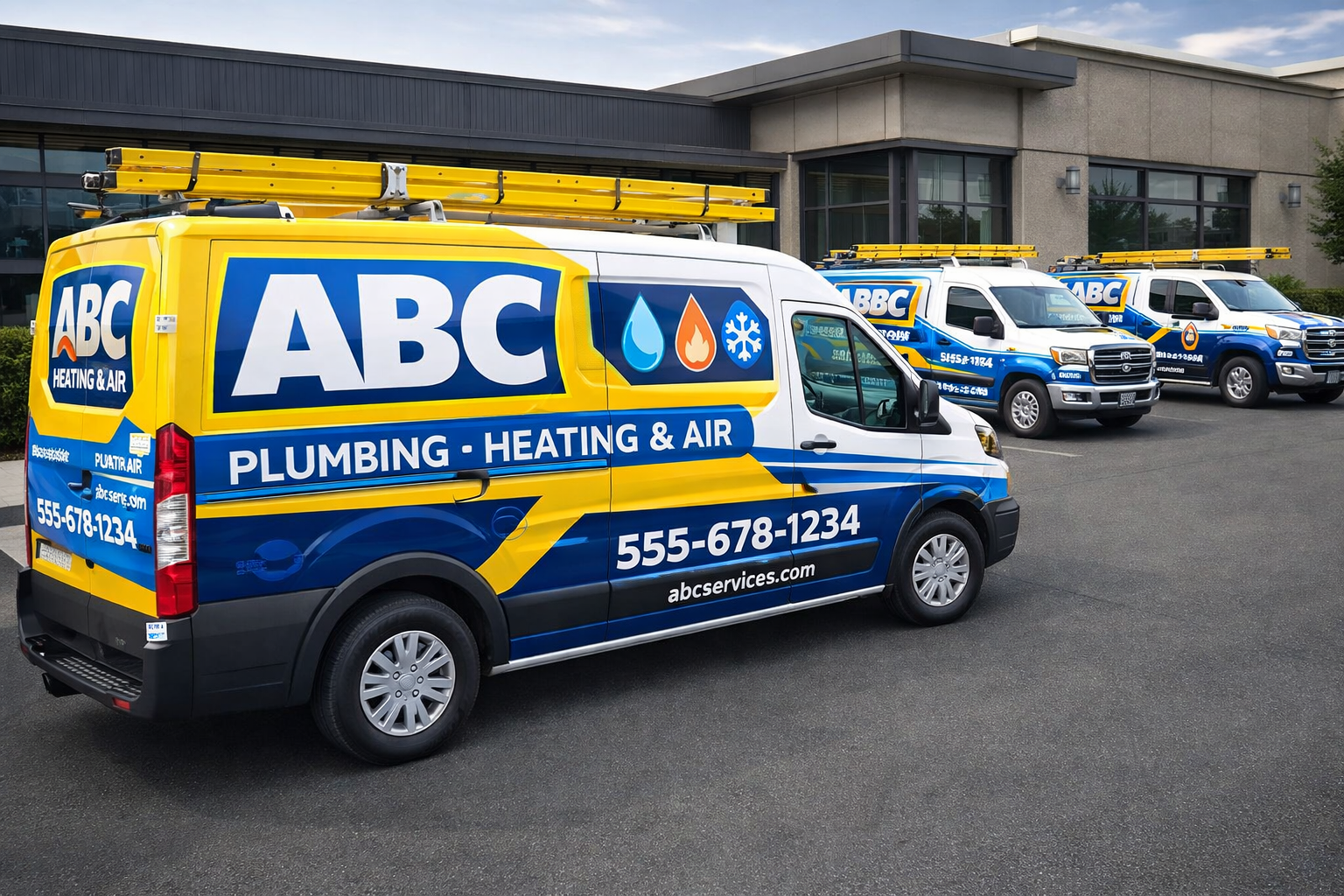
 A truck with peeling edges, bubbling panels, or faded colors doesn’t just look neglected. It broadcasts something worse: this company cuts corners. Customers notice, even if they never say anything. They form opinions about your business based on how your vehicles present on the road, and those opinions start forming before anyone reads your phone number or website. Smithfield businesses running fleets have thousands of daily interactions through their vehicles. Allmark Signs & Graphics, located in Pawtucket, RI, serves Smithfield with fleet wraps built to perform in conditions that destroy inferior work.
Cast Vinyl Versus Calendered Vinyl
These two materials look similar on the roll but behave completely differently on a vehicle. Cast vinyl starts as liquid poured into molds, creating a thin, flexible film that conforms to curves without memory or shrinkage. Calendered vinyl gets pressed through rollers, producing a stiffer material that works fine on flat surfaces but fights compound curves. When installers stretch calendered vinyl around door handles, mirrors, and body lines, it wants to return to its original shape. That shrinkage creates lifted edges and exposed seams within months.
Surface Preparation Determines Bonding
Vinyl adhesive bonds to clean surfaces. Wax, oil, silicone residue, and road film create barriers that prevent proper adhesion regardless of how good the vinyl is. Professional installation starts with chemical cleaning, sometimes multiple passes with different solvents for different contaminants. Skipping this step saves time during installation and creates callbacks within weeks. The adhesive didn’t fail; the surface was never ready.
Temperature Controls Everything
Vinyl manufacturers specify minimum application temperatures, typically between 50 and 60 degrees Fahrenheit. Below that threshold, the adhesive doesn’t activate properly, and the vinyl doesn’t conform. Above optimal ranges, vinyl can overstretch during application, leading to distortion and premature failure. Professional shops control their environment or schedule outdoor installations for appropriate conditions. Rushed jobs in cold garages or hot parking lots create problems that show up later.
Post-Heat Treatment Locks It Down
After positioning vinyl on curves and recesses, installers use heat guns to help the material conform and activate the adhesive in stressed areas. This step matters around rivets, body seams, and anywhere the vinyl had to stretch. Without post-heating, those areas remain under tension. Road vibration and temperature cycling work against that tension until something gives. The vinyl didn’t fail randomly; it failed where the installation left it vulnerable.
New England Demands Specific Materials
Road salt accelerates wear on unprotected graphics. UV exposure fades pigments that aren’t stabilized for outdoor use. Temperature swings between summer asphalt heat and winter freezing stress repeatedly strain adhesive bonds. Fleet wraps in Rhode Island face conditions that would never occur in milder climates. Laminates rated for these exposures cost more than economy alternatives, but economy alternatives don’t survive New England winters.
Your Trucks Already Have Attention
Every vehicle in your fleet generates impressions, whether wrapped or not. Blank panels say nothing. Damaged graphics say something negative. Quality wraps turn routine driving into brand exposure that works while your team handles other tasks. The question isn’t whether fleet graphics matter; it’s whether yours are helping or hurting. Allmark Signs & Graphics builds fleet wraps for Smithfield businesses that hold up to the roads, the salt, and the scrutiny. Call (401) 232-7080 and put your trucks to work.