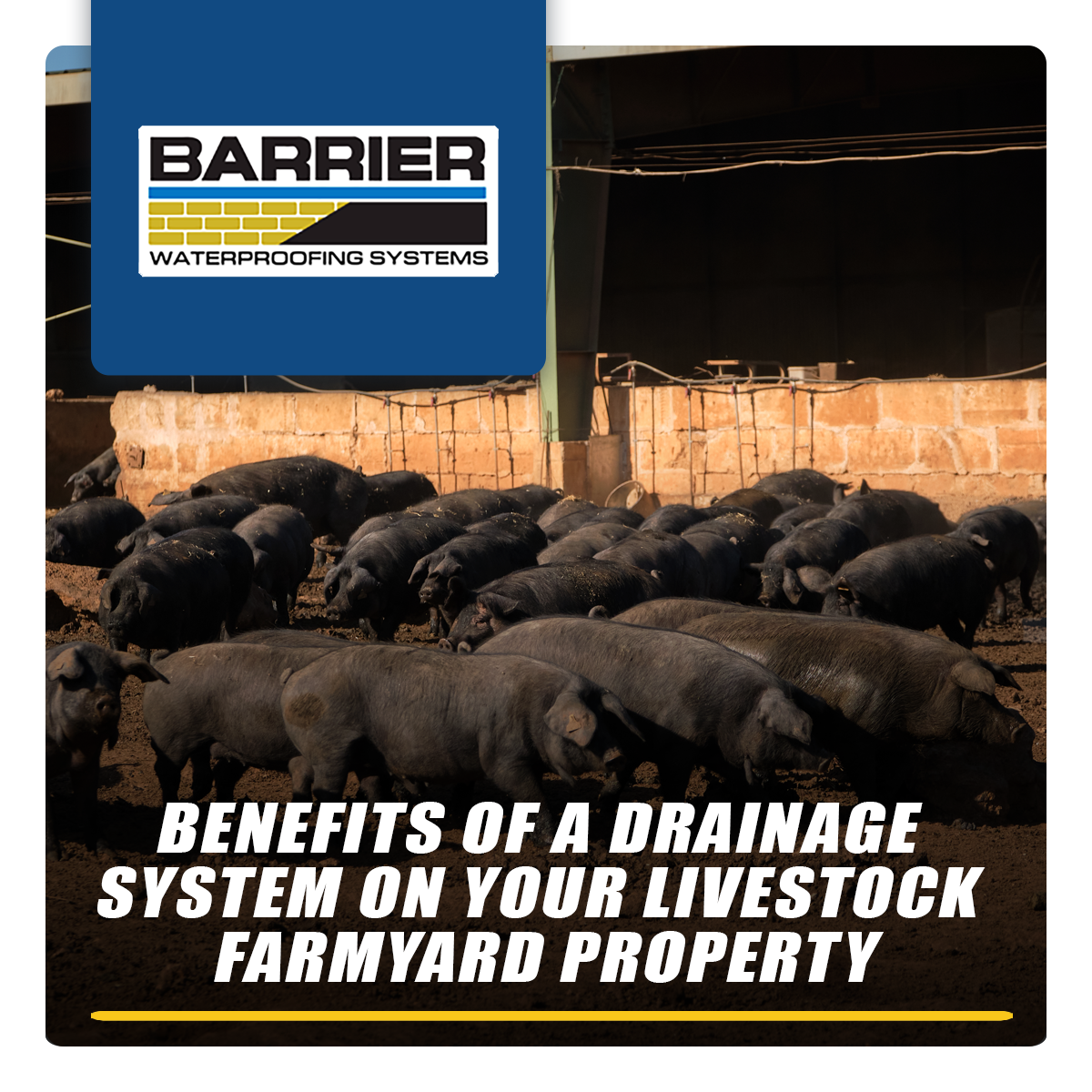
 Drainage needs can occur on many different types of property. From commercial businesses to residential homes to livestock properties, runoff and water buildup can be undesirable. (Essentially, they are bad for all structures!) French and trench drains are the most effective way to protect your land from wet weather, including livestock enclosures. Flexible land drainage systems are available in a variety of diameters and lengths. Installing a land drain tends to increase yield and improve quality.
The Advantages Of Installing A Drainage System On Your Livestock Property Include:
- Installing drainage on a slope can help reduce the risk of soil slippage.
- Drainage promotes good soil structure, which is beneficial to root development and heavy load support.
- Farm drainage systems can prevent soil erosion; if water continues to sit in the soil for an extended time, the soil can begin to erode or become severely displaced from regular activity.
- It can increase the value of your land; well-drained regions of land are more valuable than un-drained, poor-quality land. Keeping your land in excellent condition is critical and making the most of it with the rising demand for arable land, whether selling or growing livestock.
- Installing proper drainage on your farmyard can also gain your machinery better traction. Better traction on the ground means your tractors will work more efficiently, saving you money on fuel.
- There is also a lower possibility of machinery or livestock becoming entangled in water-logged, wet areas.
Identifying A Livestock Yard:
Efficient handling of livestock yards helps reduce potential contamination of surface and groundwater. In many places, all animal feeding operations must now control runoff into surface waters. Even if your yard doesn't meet the legal meaning of an AFO (or Animal Feeding Operations), good yard management will help protect our waters while also improving herd health and milk and/or meat production quality. Livestock yards ought to be located so that drainage or seepage does not pollute ground or surface water. Yards should be located downslope of all wells to prevent runoff from contaminating your well.Managing The Runoff Water:
A runoff control method decreases the risk of surface or groundwater contamination. These systems collect livestock yard runoff, separate manure solids, and direct the excess liquid to storage locations away from streams, ditches, waterbodies, and porous soil spots. The accumulated runoff water can be utilized for later land applications. Without a runoff control system, a livestock yard typically has an earthen surface compressed by animal traffic. Animal traffic typically mixes decaying manure into the soil. Heavily polluted runoff from a working feedlot may penetrate through the soil and endanger the underground water or enter irrigation ditches, canals, or rivers. For existing livestock yards on sites facing severe water infiltration, eradicating the yard and switching to either total incarceration of farm animals or providing paved yards with liquid-tight basins to store yard runoff may be the best options for protecting underground water.Clean Water Diversion:
Reducing the amount of clean water entering livestock yards is one method of reducing pollution.- Waterways, small terraces, and roof gutters can all be used to keep water out of livestock yards.
- An earthen ridge or terrace built across a livestock yard's slope upgrade will keep runoff out of the yard.
- If a diversion terrace isn't feasible, a catch basin with a tile outlet above the livestock yard will keep clean water out of your farmyard.