 There are several different types of foundations that your home could have been built on. Whether your home sits on a crawl space, concrete slab, basement, or other foundation types, it's important to keep the foundation intact for the safety of your home's structure.
Every foundation type has its pros and cons, however, we here at BARRIER Waterproofing Systems recommend other foundation types over a Monolithic Slab foundation. In this article, we will explain the benefits and disadvantages of a monolithic slab foundation, as well as what solutions are available to you to maintain your current monolithic slab home.
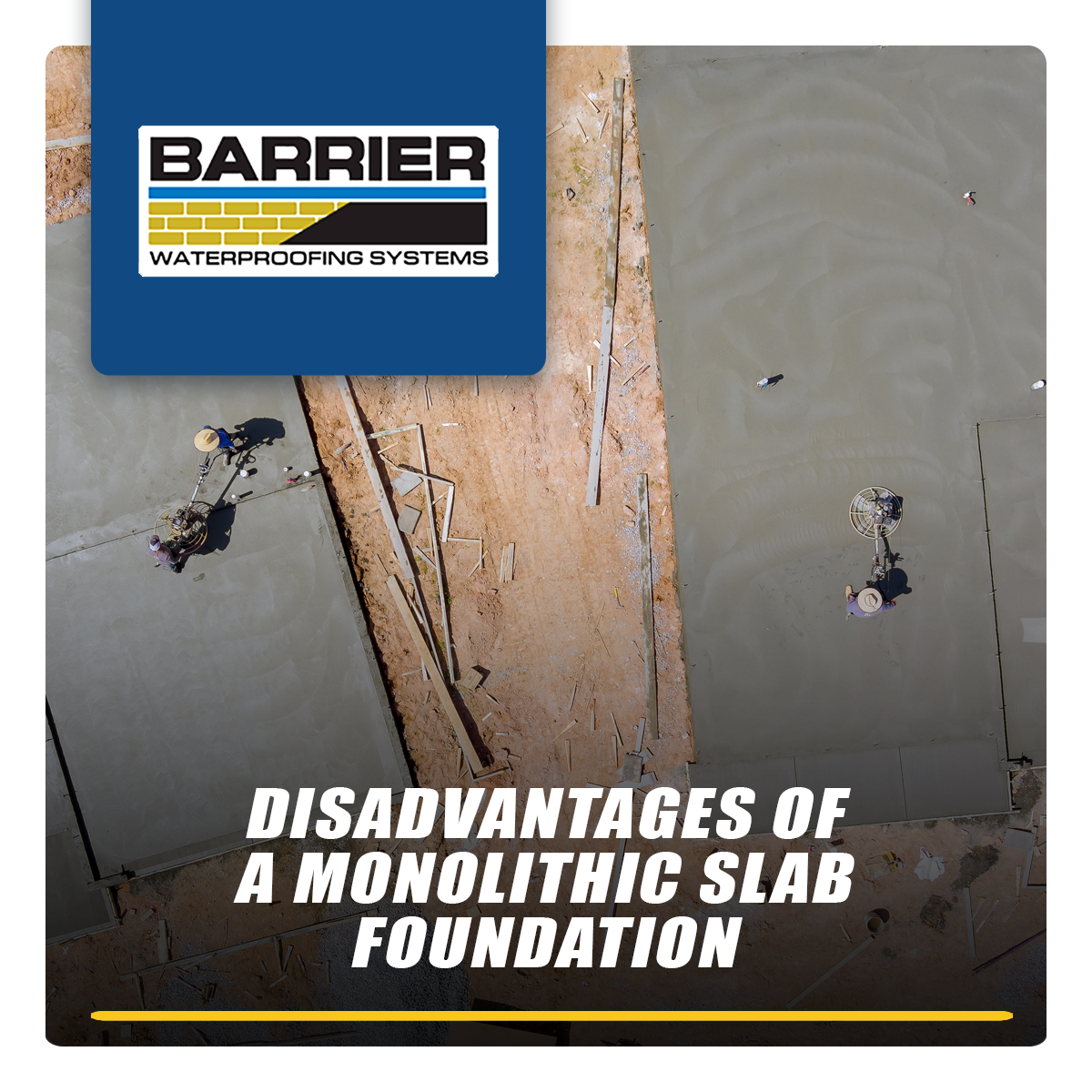
Monolithic slabs are single-application "slab on grade" foundations that are poured. They are known as all-in-one pour or single pour foundations in the foundation repair industry. Simply put, monolithic slab foundations are made of a single pour of cement, with thicker concrete used in sections that support load-bearing walls around the perimeter.
The word monolithic derives from the Greek word monólithos, which means "made of one stone." One of the most common foundations in the United States, these slabs typically measure 6 to 8 inches thick and are inexpensive to build.
There are several different types of foundations that your home could have been built on. Whether your home sits on a crawl space, concrete slab, basement, or other foundation types, it's important to keep the foundation intact for the safety of your home's structure.
Every foundation type has its pros and cons, however, we here at BARRIER Waterproofing Systems recommend other foundation types over a Monolithic Slab foundation. In this article, we will explain the benefits and disadvantages of a monolithic slab foundation, as well as what solutions are available to you to maintain your current monolithic slab home.
Monolithic slabs are single-application "slab on grade" foundations that are poured. They are known as all-in-one pour or single pour foundations in the foundation repair industry. Simply put, monolithic slab foundations are made of a single pour of cement, with thicker concrete used in sections that support load-bearing walls around the perimeter.
The word monolithic derives from the Greek word monólithos, which means "made of one stone." One of the most common foundations in the United States, these slabs typically measure 6 to 8 inches thick and are inexpensive to build.
How Do Monolithic Slabs Work?
Monolithic slabs offer a level, secure, and safe surface area upon which to build the framework and structure of your home. Given that a significant percentage of the home's weight will be evenly distributed, the thicker perimeter gives additional reinforcement and stability. In other words, monolithic slabs work to distribute the weight of the house as equally as is feasible.Monolithic Slab Foundation Benefits
For homeowners, monolithic slabs have some advantages:- Monolithic Slabs are Energy-Efficient – As there is no open area beneath the foundation, it uses less energy to heat and cool your home than a stem wall or post-and-pad foundation.
- The installation of monolithic slabs is simple, and they cure more quickly than other cement foundation types.
Problems With Monolithic Slab Foundations
Our experts encounter many problems with monolithic foundation slabs while servicing residential homes across the state. Here are some of the conclusions below:Risk of flooding in your home's lower levels
Homes are raised only about 6 inches up from ground level with this foundation installation. This makes it much easier for high rising waters to enter your home easily.Expensive repair costs
Damaged monolithic slabs are costly to repair since they consist of one solid piece of concrete material. If they become cracked or misshapen, the damage usually affects the integrity of the whole slab.Value reduction when selling your home
Due to the nature of monolithic slabs incurring damage, they can lower the resale value of your home in some circumstances. Factors like age and condition will come into play, however, so be sure to check in on the health of your monolithic slab when planning to sell your home!Other Problems With These Common Slabs
No matter how simple it is to install these foundations, there are some common issues that homeowners can still encounter.- If your monolithic slab foundation happens to crack, some more serious damage can occur. If the crack is substantial enough, the walls can become separated from the slab (or "cold joints"). Once these narrow openings have been created, water, pests, and other problems can find their way into your home.
- A significant increase in moisture within the soil surrounding the home, in addition to improper construction, can affect the overall structure of your home on this slab foundation. Stable surfaces such as floors and walls can become unlevel in these circumstances.
- If the foundation experiences some shifting or movement, structures inside the home, such as doors and windows, can become affected. This can cause sticking doors and windows as well as cracks in the walls.