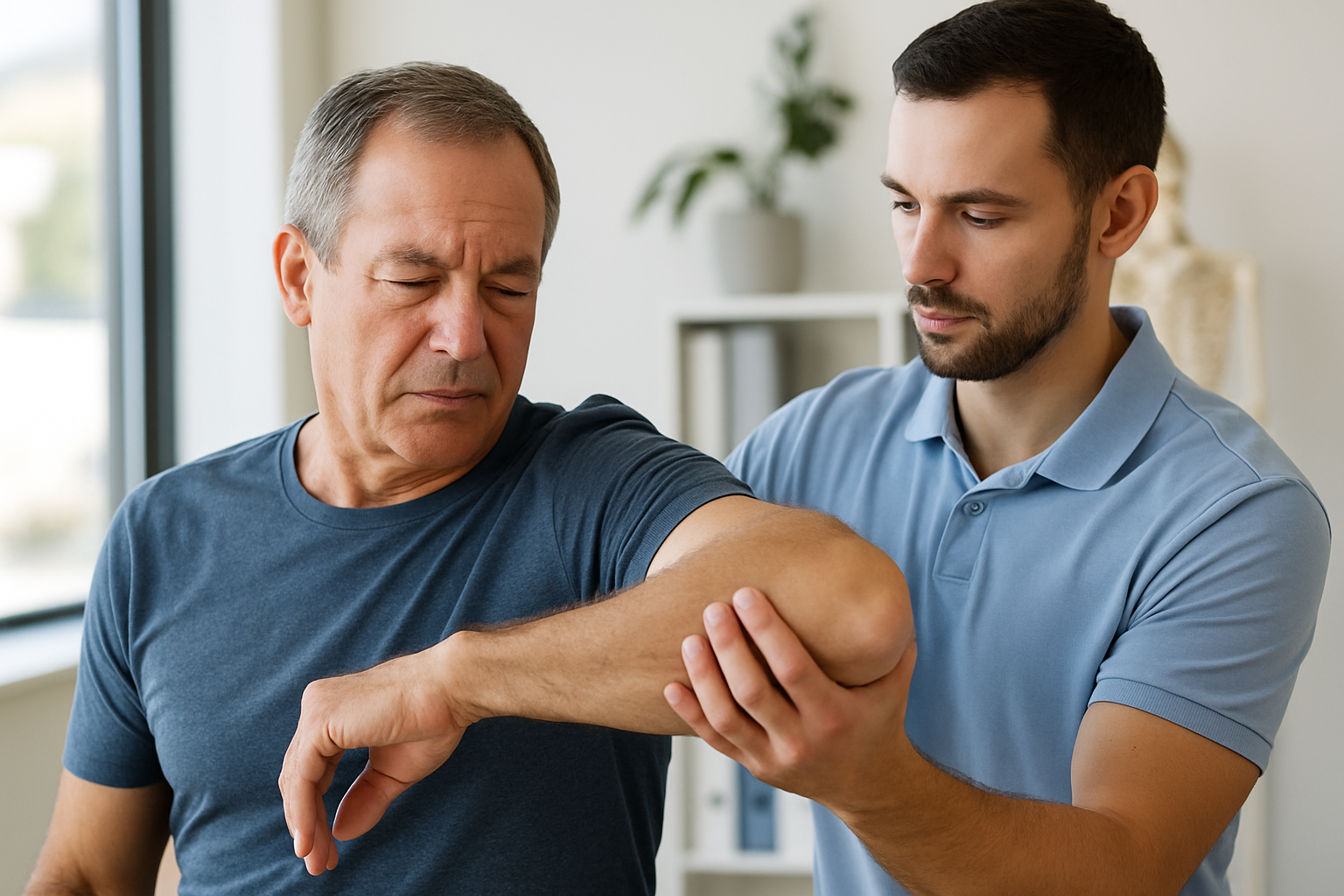
A torn labrum sounds like it demands surgery. For plenty of people, it doesn't, and physical therapy is what gets the shoulder working again. The reason comes down to what the labrum actually does and what else can take over some of its job.
What Is The Labrum?
Your shoulder is a ball-and-socket joint, but the socket is shallow, more like a saucer than a cup. That shallowness is what gives your shoulder its enormous range of motion, and it's also what makes it the least stable joint in the body.
The labrum is a ring of cartilage that lines the rim of that socket, deepening it and helping hold the ball centered. It also serves as an anchor point for some of the surrounding tissue. Tear it, and the shoulder loses some of that built-in stability.
How Tears Happen
- A fall onto an outstretched arm or a direct blow
- Repeated overhead throwing, common in baseball and similar sports
- Years of overhead work that wears the labrum down
- A dislocation, which frequently damages the labrum on the way out
Symptoms usually include a deep ache in the joint, catching or clicking with certain movements, and a sense that the shoulder isn't quite secure.
Why Therapy Can Work
Here's the key idea. The labrum contributes to stability, but it's not the only thing holding your shoulder together. The rotator cuff and the muscles controlling your shoulder blade provide a huge share of that stability, and unlike cartilage, muscle responds well to training.
So when therapy builds those muscles up, they can compensate for what a torn labrum no longer provides. The shoulder becomes stable through muscular control rather than through the damaged cartilage.
What The Work Involves
Therapy starts by settling the irritation and protecting the joint from the positions that stress the tear. Then the rebuilding begins. Rotator cuff strengthening to keep the ball centered in that shallow socket. Shoulder blade control, because the blade is the base your arm moves from and a wobbly base makes everything else harder. Work on your sense of joint position, which often gets scrambled after a labral injury. And a graded return to the reaching, lifting, and overhead activity you actually need.
Where Surgery Still Comes In
We'll be honest about the limits. A shoulder that keeps dislocating, a large tear in a young overhead athlete, or a shoulder that stays unstable despite solid rehab may genuinely need repair. But plenty of people do well without it, which is why starting with therapy usually makes sense.
Shoulder catching, aching, or feeling unstable? Modern Medicine of Goodyear, AZ can assess it and build the rehab plan. Call or book through the online form.