 Acura recommends a brake inspection every 15,000 miles. This is about a year’s worth of driving and is a cheap way to head off brake problems. Brakes wear as they do the job of slowing you down. Here’s the long version of how brakes work and what to look for with an incipient problem. When you step on the brake you push a piston in the master cylinder to compress the brake fluid. The pressure you create is transferred to the other brake components through brake lines to each wheel. Like all
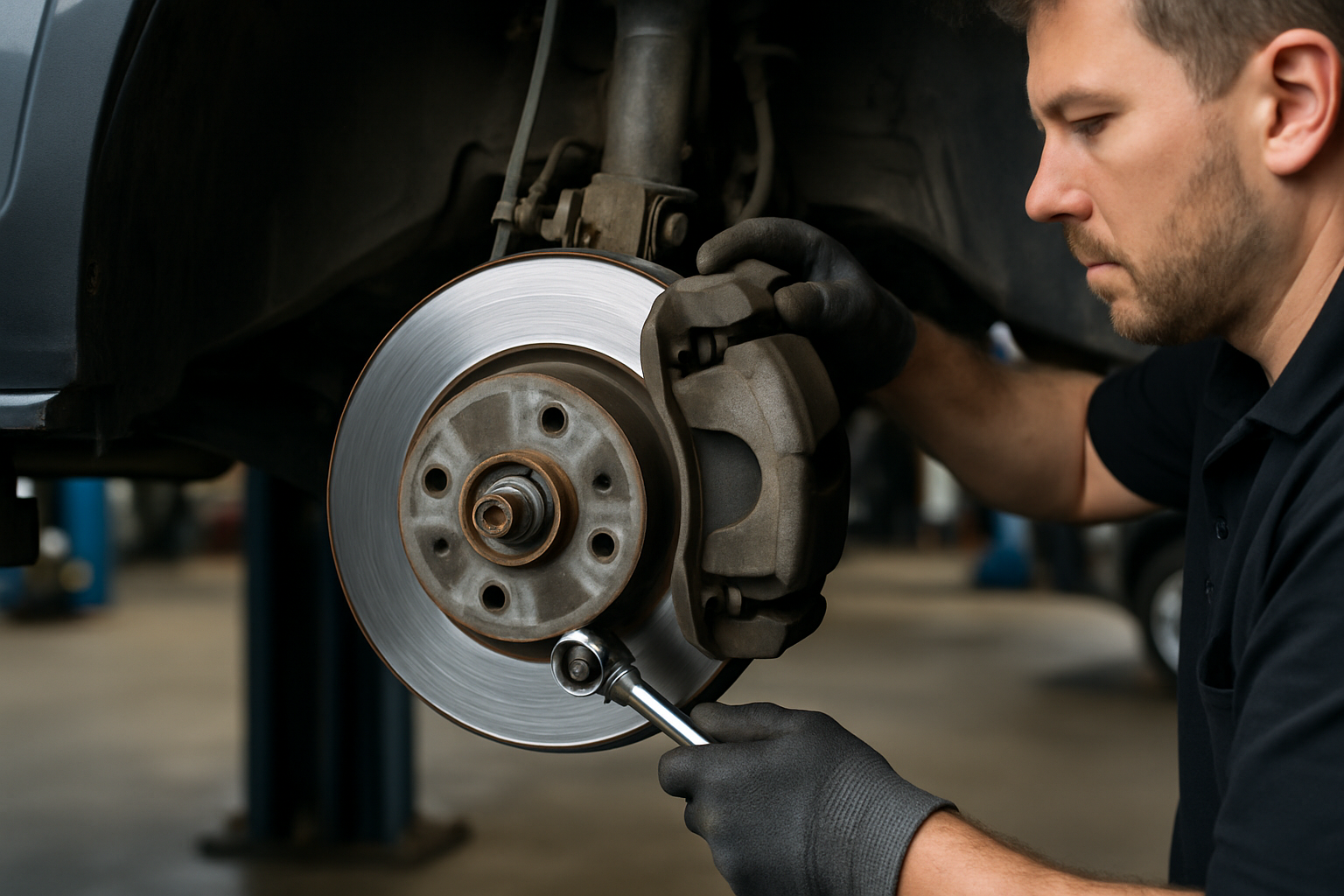
Brakes function by pressing pads, flat parts contained in a non-wearing part called a caliper, against a rotor, a disk-shaped steel part that rotates at the speed of your wheels. The friction generated by this action converts your kinetic energy of motion to heat energy. As well as slowing your car, the pads and rotors lose a small amount of their material every time you brake. By having frequent brake inspections done on your Acura, you may be able to replace only the pads, which will save you some money. The Acura factory specifies a wear limit; if the rotors have not reached this, they do not need to be changed. Everyone’s brakes wear at different rates relating to highway miles vs. stop-and-go driving, how aggressively you use your brakes, and hill driving. Because of these individual differences, frequent inspections should be important to you. Developing brake problems can often go along with the following symptoms:
Acura recommends a brake inspection every 15,000 miles. This is about a year’s worth of driving and is a cheap way to head off brake problems. Brakes wear as they do the job of slowing you down. Here’s the long version of how brakes work and what to look for with an incipient problem. When you step on the brake you push a piston in the master cylinder to compress the brake fluid. The pressure you create is transferred to the other brake components through brake lines to each wheel. Like all
Brakes function by pressing pads, flat parts contained in a non-wearing part called a caliper, against a rotor, a disk-shaped steel part that rotates at the speed of your wheels. The friction generated by this action converts your kinetic energy of motion to heat energy. As well as slowing your car, the pads and rotors lose a small amount of their material every time you brake. By having frequent brake inspections done on your Acura, you may be able to replace only the pads, which will save you some money. The Acura factory specifies a wear limit; if the rotors have not reached this, they do not need to be changed. Everyone’s brakes wear at different rates relating to highway miles vs. stop-and-go driving, how aggressively you use your brakes, and hill driving. Because of these individual differences, frequent inspections should be important to you. Developing brake problems can often go along with the following symptoms:
- Brake warning lights that will turn on to notify you of a possible issue
- Pulsation or vibrating in the steering wheel or brake pedal
- Squealing or screeching when braking
- Pulling to one side while braking
- Burning odor
- Grinding noise when the brakes are applied
- Should you encounter these, bring your Acura in for service immediately.