Here's the short answer, since this particular question has a clear one. Moissanite is a laboratory created stone, so the stone in a moissanite ring is never antique. That's a fact about the calendar rather than a criticism of the material, which is a fine one. Here at Judy's Jewelry we work out of Fort Myers, and Naples buyers come to us looking for antique character on the hand. Figuring out what you mean by the word antique is where this gets useful, so start there. What follows answers the question in five pieces, and you can stop at whichever one settles it for you.
Where Did Moissanite Come From?
Henri Moissan found the first crystals in 1893, in meteorite rock. He thought he had diamonds, and it took him until 1904 to identify the material as silicon carbide. Natural moissanite is so rare that no jewelry supply exists, which is why every moissanite in jewelry grew in a laboratory. Gem quality moissanite reached jewelry counters in the late 1990s, once a company finally worked out how to grow the material at a size you could set in a ring. An antique piece is generally a hundred years old or older, which is the threshold the trade and the auction houses both use. That is nowhere near a century, and even vintage, which is a looser word, usually starts at a few decades.
How Does It Look Next To A Diamond?
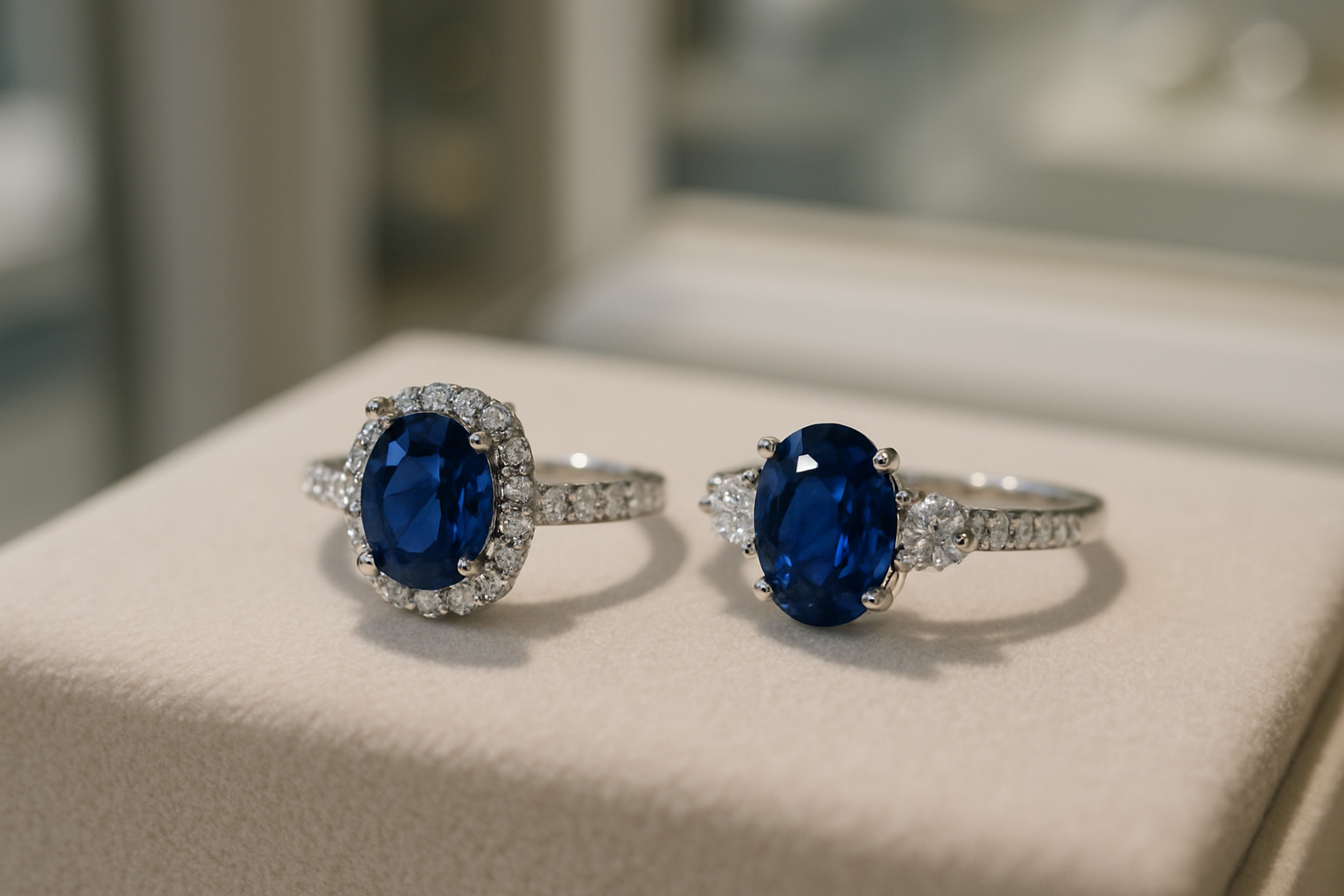
Moissanite bends light harder than diamond does, and it splits that light into color more than twice as strongly, which is where the rainbow effect comes from. On your hand you'll see broad rainbow flashes, where a diamond shows fine white sparkle with color mixed into it. Plenty of buyers love that effect and choose it on purpose, while others find it busy under bright light. Neither reaction is wrong, because this is a question of taste. The effect grows more obvious as the stone gets bigger, so size matters. Look at one in daylight and again under a lamp before you decide anything, because the two settings show it very differently.
Can You Tell Them Apart Yourself?
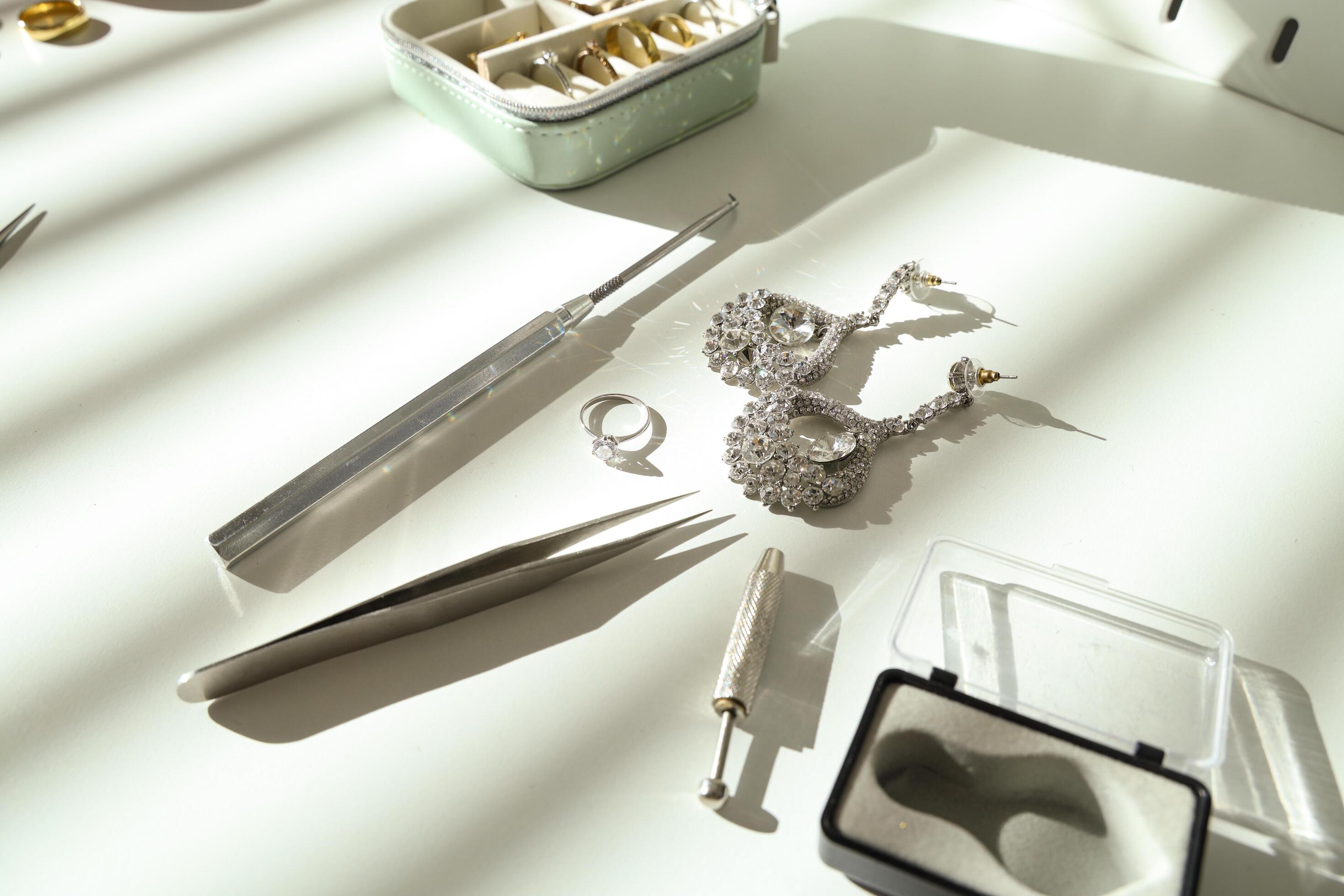
Light entering moissanite splits into two paths on its way through the stone. Diamond doesn't behave that way, and the difference is visible to you with a ten power loupe. Tilt the ring and look down through the crown at an angle rather than straight through the flat top facet, since a straight down view makes the effect much harder to catch. On moissanite the facet edges on the far side appear doubled, so one line shows up as two slightly offset lines. Doubling shows best on larger stones and takes practice on small ones. Jewelers use this check because diamond cannot double the way moissanite does.
What Are You Asking For When You Say Antique?
Two questions settle this faster than any amount of browsing will. First, do you want a ring somebody made a century ago, or a ring built recently in an older style? Second, does the look you want come from the stone or from the metalwork around it? The look people call antique sits mostly in the metalwork, meaning hand engraving and milgrain edges on a low mounting. That work belongs to the setting and has nothing to do with what's held in the center. Answer both of them and your search narrows down to a manageable set of options.
Which One Holds Up To Daily Wear?
Hardness is where moissanite does well, sitting just under diamond and above sapphire on the scale. All three of them survive daily wear on a hand without drama. On an antique style ring the part that fails first is almost never the stone in the middle, and the mounting is where you should be looking instead. Thin Victorian shanks wear through, and prongs lose height over decades. At Judy's Jewelry we repair pieces, and a mounting looked at early saves you the bigger job later on. Whatever stone you choose, the metal around it governs how your ring ages.
Here at Judy's Jewelry we take calls at (239) 481-9600 from anywhere in Naples. Describe what you're considering, and we can say what would need looking at in person.