Nobody likes the not-knowing part. Every time you pull the seatbelt across, your shoulder lets you know about it, or it’s been two weeks since you turned your ankle hiking the Hieroglyphic Trail and it’s still the size of a lemon. So you get an X-ray, it shows nothing, and somebody says the word MRI, which usually means another appointment and another few weeks of guessing. In a lot of these cases, diagnostic ultrasound can give us answers during the same visit, right there in the exam room.
What Ultrasound Can Show
The probe sends out sound you can’t hear, and the echoes turn into a moving image on the screen next to you. Tendons, muscles, and ligaments show up really well this way, and honestly, that’s where most sports and overuse injuries live anyway. We can see tendons, ligaments, muscles, and the fluid around joints.
These are some of the things we use it to look at most:
- A shoulder that hurts when you reach overhead, where we’re checking the rotator cuff for fraying or a tear.
- The outer or inner elbow on golfers, gardeners, and people who swing a hammer.
- The Achilles, and those small ligaments on the outside of the ankle that get stretched when you roll it.
- A knee or wrist that keeps puffing up, so we can see if there’s fluid in there.
- Numb fingers, because we can measure the nerve at the wrist and see if it’s swollen.
What the Scan Is Like
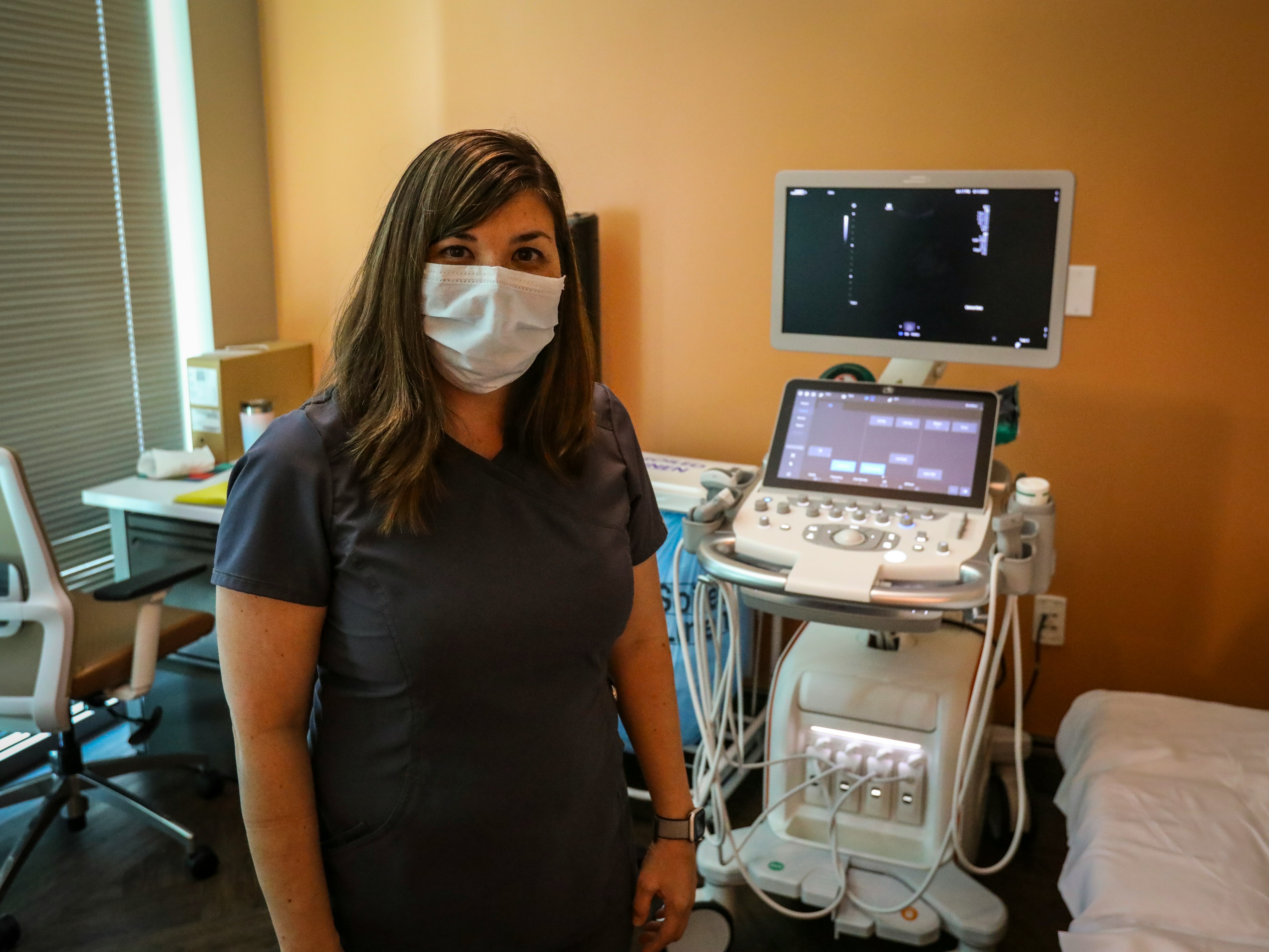
It’s a lot like the ultrasound people get during pregnancy. We put a little gel on your skin and move a small probe over the sore area. There’s no radiation, no loud machine, and no lying still in a tube. It usually takes about fifteen to thirty minutes.
One big advantage is that the picture moves. We can ask you to lift your arm or bend your ankle and watch what the tendon does while it’s moving. Some problems only show up that way. We can also scan the other side and compare the two, which helps us tell what’s normal for you and what isn’t.
Why It Helps With Treatment Too
Since we see the results right away, we can talk about them with you during the visit. You can look at the screen and see the swollen tendon or the torn fibers yourself. That makes it a lot easier to understand why we’re recommending a certain plan, such as a targeted physical therapy program.
Cases Where an MRI Is the Better Tool
Ultrasound can’t do everything. If we’re worried about something deep inside a joint, like a meniscus tear in the knee, or about a bone injury, an MRI may still be the better choice. We’ll tell you why if we think you need one.
If you’ve got an injury that hasn’t been clearly explained yet, schedule a visit with Modern Medicine of East Mesa, AZ. We’ll take a look and help you figure out what’s going on.