 What “Daily Movement Quality” Really Means
Most people think about movement only when something hurts. But movement quality shows up before that. It’s how you get out of bed without feeling like you need a minute to “warm up.” It’s whether you can step off a curb without that awkward wobble. It’s reaching into the back seat without a sharp grab in the shoulder. It’s carrying groceries without bracing your whole body like you’re about to lift a barbell. When movement quality is off, you don’t always feel pain right away. You just start doing little shortcuts.
The Quiet Signs Your Movement Has Changed
A lot of people tell us, “I’m fine, I’m just stiff.” Then we watch them stand up from a chair, and they push off with their hands every time. Or they take stairs sideways. Or they turn their whole body to look behind them because their neck and upper back won’t rotate. Those are small changes, but they add up. You can also see it in daily habits like always carrying bags on the same side, avoiding deep bending, or sitting in positions that keep hips locked up. The body gets good at adapting. It just doesn’t always adapt in a way that protects joints.
Why Movement Quality Drops Over Time
Most of the causes are boring, which is why people miss them. Long sitting tightens the hips and upper back. Old injuries change how you load one side, even after the pain fades. Weakness in the hips, core, or shoulder support muscles makes joints take more stress than they should. Stress and poor sleep can also make your body clamp down. People start holding their breath during simple tasks. They tense through the belly or shoulders without noticing. That tension changes movement quality fast.
How PT Spots The Real Problem
PT is not only “exercise.” It’s testing how you move, then figuring out what’s driving the pattern. We look at how you walk, how you step, how you bend, and how you reach. We check joint motion, and we check the muscles that should be stabilizing you. Two people can have the same complaint, like “knee pain,” but one needs hip strength and the other needs ankle mobility. That’s why the evaluation matters. It keeps you from doing the wrong work for months.
How PT Improves Daily Movement InA Practical Way
We don’t chase perfect form. We aim for movement that feels easier and holds up during real life. First, we reduce the things that make your body guard, like limited motion or poor control. Then we rebuild strength in the right places so joints stop taking the full load. After that, we practice the tasks that matter to you, like stairs, getting off the floor, lifting at work, or returning to workouts. The plan should feel connected to your day, not like a random routine.
An appointment today with Modern Physical Therapy & Sports Medicine of East Mesa, AZ can help you move better each and every day.
What “Daily Movement Quality” Really Means
Most people think about movement only when something hurts. But movement quality shows up before that. It’s how you get out of bed without feeling like you need a minute to “warm up.” It’s whether you can step off a curb without that awkward wobble. It’s reaching into the back seat without a sharp grab in the shoulder. It’s carrying groceries without bracing your whole body like you’re about to lift a barbell. When movement quality is off, you don’t always feel pain right away. You just start doing little shortcuts.
The Quiet Signs Your Movement Has Changed
A lot of people tell us, “I’m fine, I’m just stiff.” Then we watch them stand up from a chair, and they push off with their hands every time. Or they take stairs sideways. Or they turn their whole body to look behind them because their neck and upper back won’t rotate. Those are small changes, but they add up. You can also see it in daily habits like always carrying bags on the same side, avoiding deep bending, or sitting in positions that keep hips locked up. The body gets good at adapting. It just doesn’t always adapt in a way that protects joints.
Why Movement Quality Drops Over Time
Most of the causes are boring, which is why people miss them. Long sitting tightens the hips and upper back. Old injuries change how you load one side, even after the pain fades. Weakness in the hips, core, or shoulder support muscles makes joints take more stress than they should. Stress and poor sleep can also make your body clamp down. People start holding their breath during simple tasks. They tense through the belly or shoulders without noticing. That tension changes movement quality fast.
How PT Spots The Real Problem
PT is not only “exercise.” It’s testing how you move, then figuring out what’s driving the pattern. We look at how you walk, how you step, how you bend, and how you reach. We check joint motion, and we check the muscles that should be stabilizing you. Two people can have the same complaint, like “knee pain,” but one needs hip strength and the other needs ankle mobility. That’s why the evaluation matters. It keeps you from doing the wrong work for months.
How PT Improves Daily Movement InA Practical Way
We don’t chase perfect form. We aim for movement that feels easier and holds up during real life. First, we reduce the things that make your body guard, like limited motion or poor control. Then we rebuild strength in the right places so joints stop taking the full load. After that, we practice the tasks that matter to you, like stairs, getting off the floor, lifting at work, or returning to workouts. The plan should feel connected to your day, not like a random routine.
An appointment today with Modern Physical Therapy & Sports Medicine of East Mesa, AZ can help you move better each and every day.
Tempe, AZ – How Physical Therapy Services Improve Daily Movement Quality
SYNOPSIS: This article covers what movement quality looks like in real life, why it often slips without you noticing, and how PT helps your body move with less effort and fewer flare-ups.
Move Better Every Day with Physical Therapy
BY: Josh Adams, Modern Medicine of East Mesa, AZ
What “Daily Movement Quality” Really Means
Most people think about movement only when something hurts. But movement quality shows up before that. It’s how you get out of bed without feeling like you need a minute to “warm up.” It’s whether you can step off a curb without that awkward wobble. It’s reaching into the back seat without a sharp grab in the shoulder. It’s carrying groceries without bracing your whole body like you’re about to lift a barbell. When movement quality is off, you don’t always feel pain right away. You just start doing little shortcuts.
The Quiet Signs Your Movement Has Changed
A lot of people tell us, “I’m fine, I’m just stiff.” Then we watch them stand up from a chair, and they push off with their hands every time. Or they take stairs sideways. Or they turn their whole body to look behind them because their neck and upper back won’t rotate. Those are small changes, but they add up. You can also see it in daily habits like always carrying bags on the same side, avoiding deep bending, or sitting in positions that keep hips locked up. The body gets good at adapting. It just doesn’t always adapt in a way that protects joints.
Why Movement Quality Drops Over Time
Most of the causes are boring, which is why people miss them. Long sitting tightens the hips and upper back. Old injuries change how you load one side, even after the pain fades. Weakness in the hips, core, or shoulder support muscles makes joints take more stress than they should. Stress and poor sleep can also make your body clamp down. People start holding their breath during simple tasks. They tense through the belly or shoulders without noticing. That tension changes movement quality fast.
How PT Spots The Real Problem
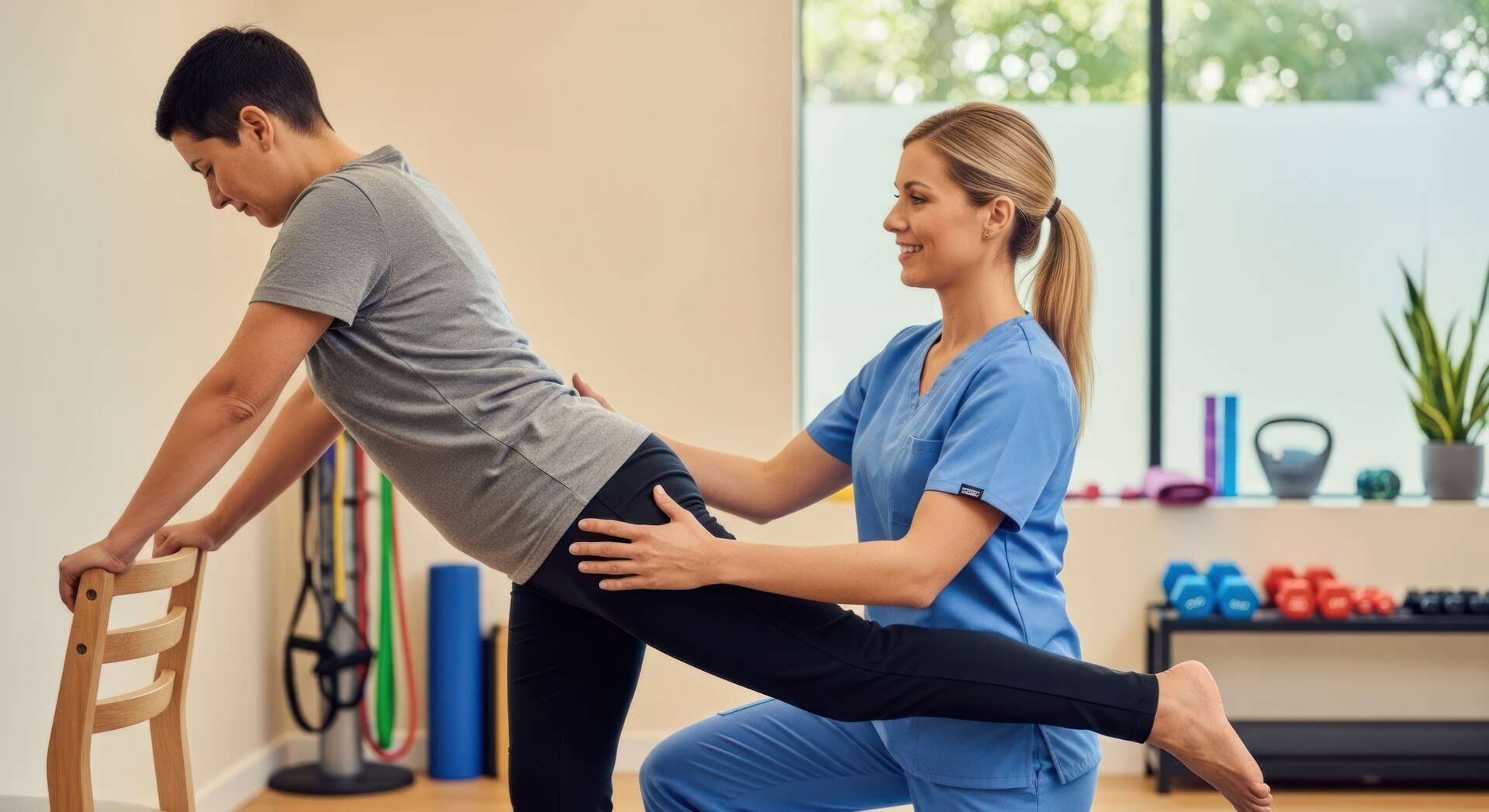
PT is not only “exercise.” It’s testing how you move, then figuring out what’s driving the pattern. We look at how you walk, how you step, how you bend, and how you reach. We check joint motion, and we check the muscles that should be stabilizing you. Two people can have the same complaint, like “knee pain,” but one needs hip strength and the other needs ankle mobility. That’s why the evaluation matters. It keeps you from doing the wrong work for months.
How PT Improves Daily Movement InA Practical Way
We don’t chase perfect form. We aim for movement that feels easier and holds up during real life. First, we reduce the things that make your body guard, like limited motion or poor control. Then we rebuild strength in the right places so joints stop taking the full load. After that, we practice the tasks that matter to you, like stairs, getting off the floor, lifting at work, or returning to workouts. The plan should feel connected to your day, not like a random routine.
An appointment today with Modern Physical Therapy & Sports Medicine of East Mesa, AZ can help you move better each and every day.