Why Runners Need More Than Running
Running builds endurance, but repeating the same movement mile after mile can expose weaknesses in the hips, core, glutes, and stabilizing muscles. For runners near Poway, adding Pilates to a training schedule offers a low-impact way to strengthen areas responsible for posture, balance, and controlled movement.
At SALTVAULT of Del Mar, we use mat-based Pilates to help guests strengthen the body beyond the muscles doing the obvious work during a run. Better core and hip control can support running mechanics while giving runners another training option without adding more repetitive impact.
Core Strength Helps Stabilize Each Stride
Every running stride involves more than the legs. The core helps stabilize the pelvis and trunk while the arms and legs move repeatedly. When those stabilizing muscles fatigue, posture may change, and movement can become less efficient.
Pilates targets the abdominal muscles, lower back, hips, and glutes through controlled exercises that require balance and precision. A stronger center helps runners maintain a steadier torso as they move forward.
This does not mean Pilates automatically changes someone’s running form overnight. Instead, it develops strength and awareness runners can carry into their regular training.
Strong Hips Support Better Running Mechanics
Hip strength plays an important role in controlling the legs during running. Weakness or poor control around the hips can contribute to unwanted movement at the pelvis and knees.
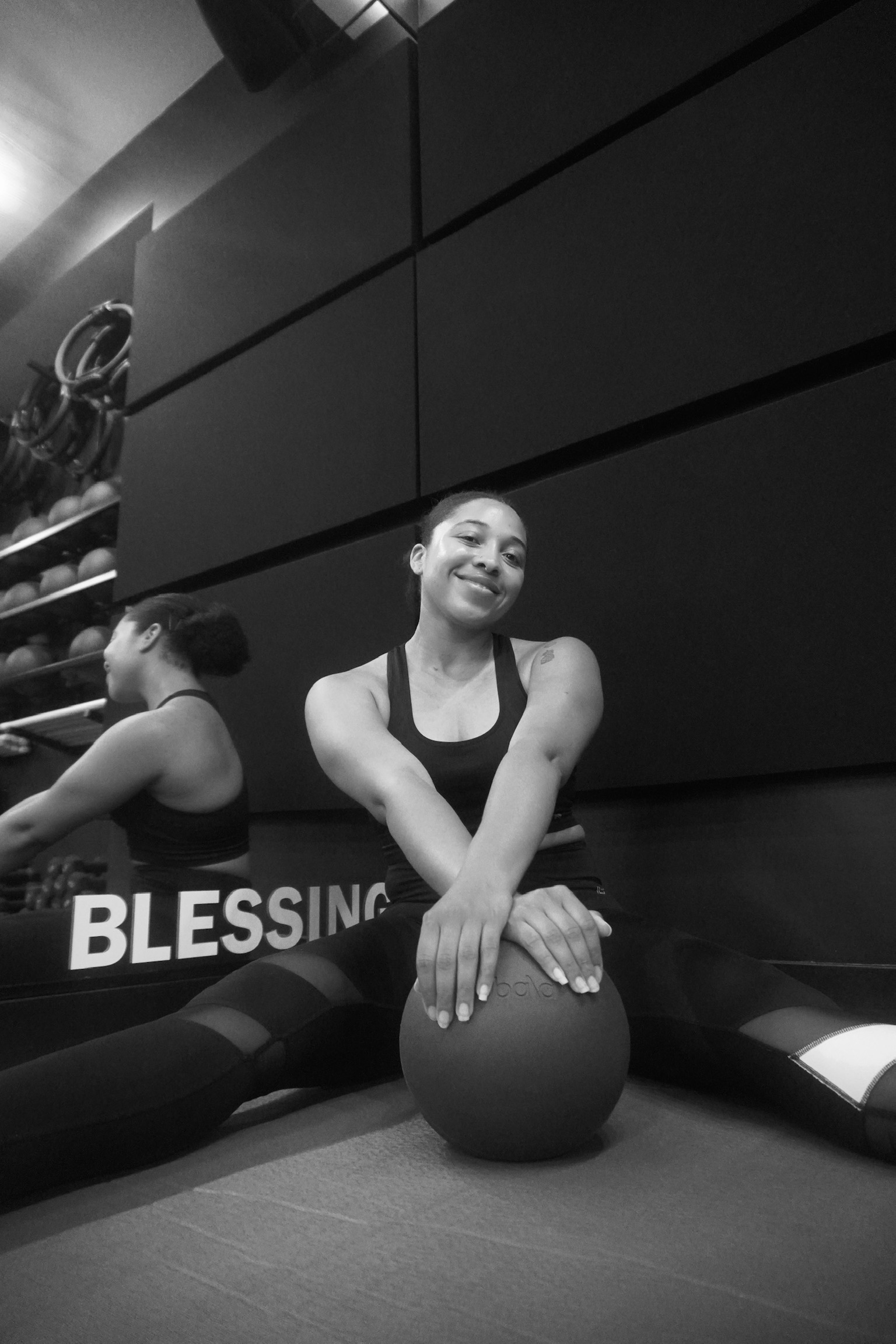
Pilates uses bridges, leg sequences, side-lying work, holds, and resistance exercises to challenge the hips and glutes without requiring heavy impact. Props such as resistance bands, light weights, Pilates balls, and the magic circle can increase difficulty as strength improves.
For runners, this creates an opportunity to strengthen supporting muscles without adding another run to the week.
Mobility Helps the Body Move Freely
Stride quality also depends on enough mobility through the hips, spine, and surrounding muscles. Tightness can make the body feel restricted and may encourage compensation elsewhere.
Our ZEST format focuses on unheated mat work, spinal movement, trunk strength, breath, precision, and control. Runners seeking a lower-intensity cross-training day may appreciate this approach. SPICE adds infrared heat and more challenging resistance work, while SAVOR combines Pilates principles with faster-paced conditioning and endurance.
Each format gives runners a different way to complement their normal mileage.
Can Pilates Help Reduce Injury Risk?
No exercise program will guarantee an injury-free season. Running injuries can come from training load, previous injuries, footwear, mechanics, recovery, and many other factors.
However, sports medicine guidance consistently recommends strength training and cross-training as part of a balanced running program. Strengthening the core and hips can address muscular imbalances, while lower-impact cross-training gives runners a way to improve fitness without repeating the same daily stress.
Runners experiencing persistent pain, swelling, or changes in gait should speak with a medical or sports medicine professional rather than trying to train through the problem.
Add Pilates to Your Running Routine
Pilates will not replace running practice, but it can be a valuable partner to it. At SALTVAULT of Del Mar, we help guests build core strength, hip stability, mobility, balance, and body awareness through controlled mat-based movement.
If you are a runner near Poway looking for a smarter way to support your stride and overall training, visit our website to explore SPICE, SAVOR, ZEST, Mat Pilates, and our other class options.