A water pump failure while driving in the heat of summer can overheat your Silverado’s engine in a very short period of time. In order to prevent any damage to your engine, it is recommended to stop driving your truck as soon as possible and allow it to cool off. If not given the proper time to cool off, the engine can suffer serious damage, including damaged head gaskets.
What the Water Pump Does
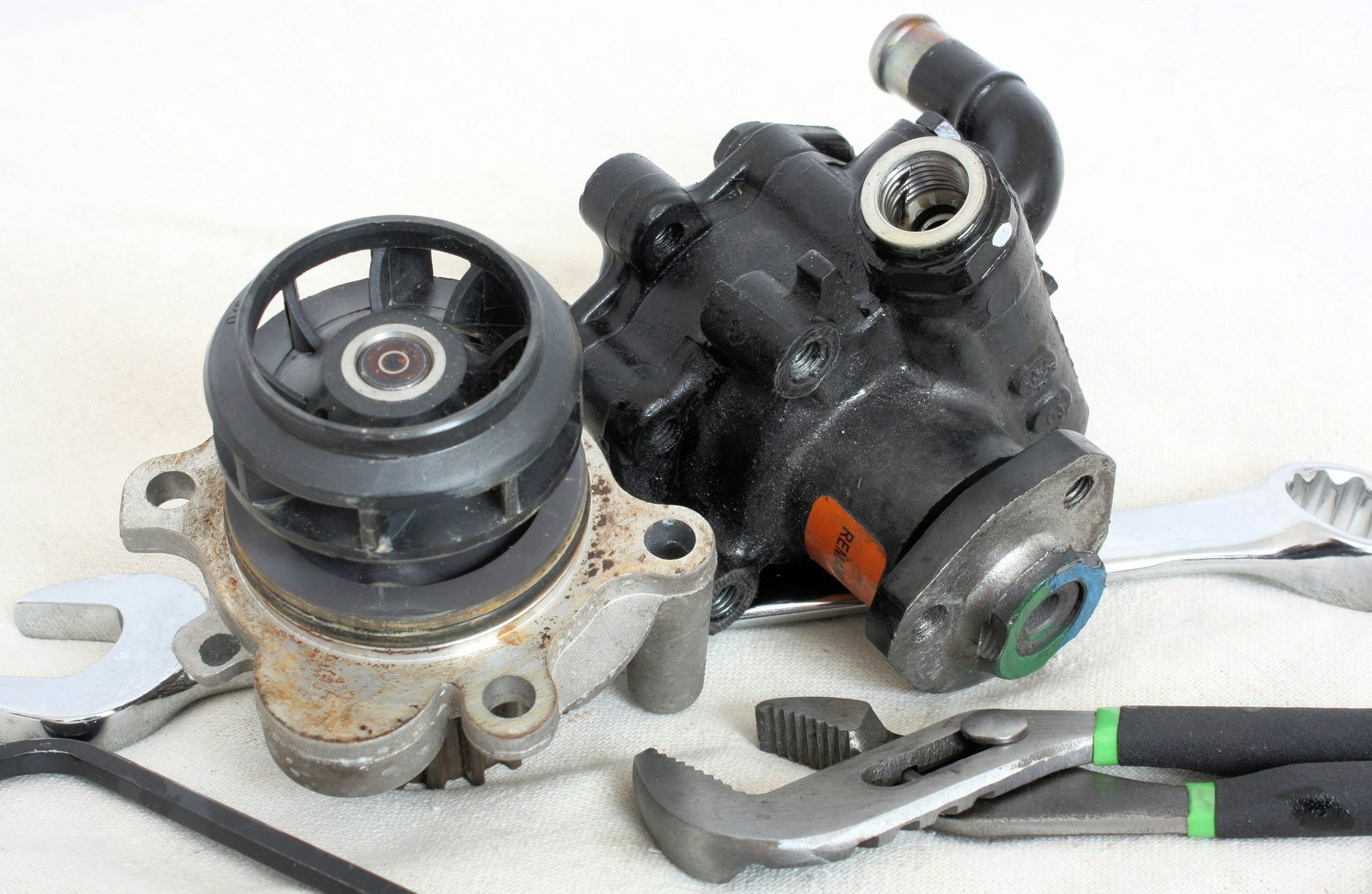
The water pump in your Silverado serves the function of cooling by circulating the coolant throughout your engine. The water pump is a constantly running part (along with the serpentine belt) in your Silverado’s engine that could potentially fail at some point. When a water pump fails, it begins to leak or even starts making strange noises. Over time, all water pumps wear and the seal on the pump will begin to leak in addition to the bearing on the back of the pump wearing as well.
Why Summer Is So Hard on It
As mentioned above, the most critical factor is heat. In cool weather, the cooling system has plenty of margin for error and a somewhat failing water pump may not cause any problems. But in hot weather, when in traffic, towing a trailer, etc., the demand on the cooling system increases dramatically. A somewhat weak water pump may not be able to keep up the required flow of coolant to keep the engine at a safe operating temperature. As a result, it can fail suddenly in hot weather, often in July rather than January.
Warning Signs to Watch For
Your Silverado is giving you warning signs before this part fails completely.
- The temperature gauge climbing in traffic, while towing, or on a hot day
- A sweet smell after the truck has been running
- Coolant dripping from the front of the engine
- A stain or crust around the water pump where the seal is weeping.
- A grinding or whining noise near the front of the truck.
Most water pumps have a small weep hole which leaks a few drops of fluid before the seal fails completely. The leak often forms a hard stain on the surrounding engine component before the pump’s fluid level begins to drop. In many cases, this hard stain is noticed before any drop of fluid is seen on the ground.
Why You Shouldn’t Push It in the Heat
So if your Silverado’s temperature starts to rise, and you’re still far from home, it’s best to pull over and let the engine cool. Continuing to drive your Silverado with an overheated engine can cause severe damage including head gaskets and even engine block damage. This type of damage is far more expensive than the repair for the water pump failure in the first place.
How We Handle It
At Driven Auto Care of Castro Valley we can test your cooling system for leaks when the engine is cold. We look for leaks of the water pump, including a weeping seal, a stained weep hole, and a noisy or loose bearing. We also look at the rest of the cooling system including the radiator, hoses and thermostat for any signs of leaks.
Is your Silverado running hot? Have it diagnosed today by the experts at Driven Auto Care of Castro Valley. We service Castro Valley, Hayward, San Lorenzo, Dublin, and the surrounding Bay Area communities. Contact us today.